Updated every Monday!   Subscribe to free weekly newsletter.

Stop & Shop Makes Digital Coupons Easy

Stop & Shop Savings Center KioskTwo years ago, five national consumer advocacy organizations, including Consumer World and Consumer Reports, called on a dozen supermarket CEOs to stop digital discrimination and make digital coupons more accessible to less tech-savvy shoppers. There are significant numbers of seniors and lower income folks who do not use the internet or have smartphones and thus they they have been shut out of advertised digital-only offers.

Sample digital coupon

Digital coupons like the one above are advertised in a chain’s weekly sale circular. Generally stores have required shoppers to go to the coupon section of the store’s website or app, and then find and e-clip each particular coupon individually that they want.

Now, one supermarket chain finally heard our call and took decisive action to fix this. Last week, Stop & Shop, the largest supermarket chain in the Northeast, announced it was rolling out “Savings Station” kiosks to the entire chain after successfully completing a one-year test of them in a handful of stores. Installation will be complete by the end of January.

The kiosk is essentially a freestanding screen and barcode reader located at the front of the store. All a customer has to do is scan their loyalty card or enter their phone number on the device, and then all that week’s advertised digital coupons are automatically loaded onto their card or account. It takes as little as five seconds! No more futsing with apps or the coupon section of the store’s website (except for manufacturers coupons). This is NOT a computer in the store where you have to go through all the steps of loading coupons as you would at home. [See earlier video demo.]

This should come as welcome news to the 70-percent of Consumer World readers who told us in a 2022 survey that they would prefer an easy offline in-store method to activate digital coupon savings. Frankly, even for those of us for whom doing stuff online comes more easily, this is a huge time saver.

Hat tip to EntryPoint, the company that developed these kiosks and has launched them in other chains like Food Lion and Winn Dixie also.

We applaud Stop & Shop for taking this innovative step to help digitally-disconnected shoppers finally be able to access digital discounts and to cut their ever-climbing grocery bill.

Now it’s time for other supermarket chains to follow Stop & Shop’s lead and help all their customers get easier access to digital discounts. Albertsons… hello? Kroger… hello?

Share this story:


ADV
Updated every Monday!   Subscribe to free weekly newsletter.

Mandatory Arbitration Requirement Found Hidden Inside Nutrition Product Package

Vital ProteinsCompanies generally do not like to be sued by consumers particularly in class action lawsuits. So, many of them have incorporated mandatory arbitration clauses into their contracts, or sometimes buried in the terms and conditions section of their websites.


Consumer World reader Dave L. recently wrote to us pointing out a most novel way that one company was attempting to foist a mandatory arbitration requirement onto its customers.

I recently bought my wife some Vital Proteins Collagen Peptides protein powder dietary supplement at BJ’s (Stoneham, Mass.) and noticed the packaging had changed. … After she opened the new outer container, she noticed fine print on a seal that said she was bound by terms and conditions …

*MOUSE PRINT:

Vital Proteins inner lid

There, under the new paper cap, is a disclosure that says:

READ THIS: By opening and using this product, you agree to be bound by our Terms and Conditions, fully set forth at VitalProteins.com/tc, which includes a mandatory arbitration agreement. If you do not agree to be bound, please return this product immediately.

What chutzpah of this company ignoring basic contract law that requires disclosure and agreement BEFORE a contract is entered into! You have already bought the product and destroyed the new paper package’s top, and you are then supposed to return the product if you don’t agree to these terms? As our consumer wrote, “this is nuts.”

In addition, on the company’s website, part of its terms and conditions, seeks to absolve itself of errors, including incorrect prices and inaccurate product descriptions.

*MOUSE PRINT:

V. Availability, errors and inaccuracies

… The information found on the Service may contain errors or inaccuracies and may not be complete or current. Products or services may be mispriced, described inaccurately, or unavailable on the Service and we cannot guarantee the accuracy or completeness of any information found on the Service.

Why is this company, now owned by Nestlé Health Science, doing this? It seems they have been subject to various legal actions before by a competitor and a public interest health group, and they had a product recall in 2023.

We asked Nestlé twice to comment on why they thought they could rope purchasers into a mandatory arbitration agreement that was only disclosed to them after they bought the item at a retail store. They did not respond.

Share this story:


ADV
Updated every Monday!   Subscribe to free weekly newsletter.

Eggland’s Best Sued Over Free-Roaming Claims

Two Illinois consumers just sued Eggland’s Best for misrepresenting the pleasant and leisurely life its hens that lay cage free eggs supposedly experience.

The company claims inside every carton of its cage free eggs:

Eggland's Best Claim

That says “every hen is free to roam in a pleasant natural environment…” This conjures up images of hens freely taking a leisurely stroll through a lush pasture.

Hens strolling along

Of course, nothing could be further from the truth.

*MOUSE PRINT:

The lawsuit alleges:

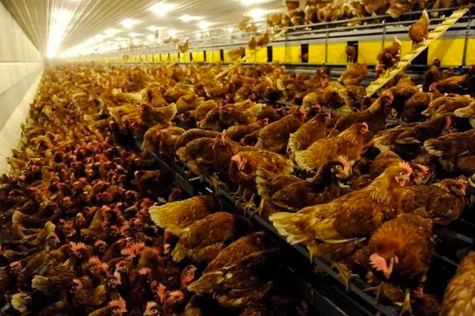
The truth is that many hens producing Cage Free eggs live in typical factory farming conditions. They are confined indoors 24 hours a day, 365 days a year. They live in windowless structures made of concrete, metal, and dirt. The structures contain hundreds of thousands of hens packed so closely together that each bird has around one square foot of floor space (or less) to itself, and many hens living in these structures never see the sun or breathe fresh air.

Eggland's old supplier2009 photo of an Eggland’s Best supplier

After the lawsuit was filed, the company appears to have modified how they describe the “pleasant natural environment” in which the hens live:

*MOUSE PRINT:

Eggland's new claim

In their legal case, the lawyers contend that these consumers paid a premium for Eggland’s Best eggs compared to conventional ones, expecting the hens to be humanely treated in the conditions described on the carton. They further contend they would not have paid extra or purchased these eggs at all if they knew the actual conditions where the eggs were harvested. They are suing the company for misrepresentation and deceptive business practices.

Share this story:


ADV