Updated every Monday!   Subscribe to free weekly newsletter.

Apple iPad Version Changes Confuse Buyers

Last week, one retail chain was offering the iPad “3” for only $399.99 — $100 off the regular price. [Hint: if you run to Micro Center, you might get one. Ends 12/12.] MrConsumer’s friend who had just purchased an iPad 2 for the same price was not too happy, but he wondered how in the world this chain could be selling the iPad “3” for $100 less than the full list price knowing that Apple closely controlled advertised retail prices.

As it turns out, Apple had recently discontinued the iPad “3” and had quietly introduced an iPad “4”, which might explain the discount. Much of the confusion, however, has to do with Apple’s decision not to explicitly name each new iPad by number. There was the original iPad, then iPad 2, then iPad (no number, but referred to by retailers as “third generation”), and now iPad with Retina Display (again no number, but referred to by retailers as “fourth generation”).

So if you are looking for the latest “iPad”, you might wind up with either the “iPad 3” or the “iPad 4” because they are both just called iPad (sans number). What is the difference between the two? You have to look at the fine print.

*MOUSE PRINT:

iPad 3 and 4

They both have the same gorgeous Retina display. The primary differences are three for the iPad 4: the Facetime camera is better, the processor they say goes twice as fast, and iPad 4 has that new obnoxious connector that makes all your old i-accessories obsolete.

So, if you are shopping for an iPad, and you pick up a box, how do you know if it is an iPad 3 or 4? You have to look at the tiny label to find the model number.

*MOUSE PRINT:

ipad 3 label

One 16-gig white iPad 3 has a model number of MD336LL/A for example, while a similar iPad 4 has a model number of MD513LL/A.

In our view, Apple made a big mistake to not clearly identify iPads after the iPad 2 by number to avoid consumer confusion.

Updated every Monday!   Subscribe to free weekly newsletter.

Would You Let a Company Impersonate You on Facebook?

Lowe’s just sent out an email to shoppers on its mailing list inviting them to participate in its “Black Friday Showdown.” Doing so will give you an opportunity to preview 16 Black Friday specials and win them if you “like” Lowe’s on Facebook.

Lowe's Black Friday

Sure, why not, thought MrConsumer.

Upon reaching their Facebook page, you discover that not only does Lowe’s want a “like” in exchange for your chance at winning all those prizes, they also want to install a Facebook app that will let them post messages as if they were you on Facebook.

*MOUSE PRINT:

Lowe's Facebook app

Excuse me? You want me to allow you to probably send advertisements about Lowe’s to my friends but make it seem like I wrote those messages? I don’t think so. You can keep your 16 prizes.

On closer scrutiny of their Facebook page, however, there is a way to have your cake and eat it too.

*MOUSE PRINT:

Lowe's posting exclusion

Many people may have overlooked it, as did MrConsumer, but there is an option to control to whom the Lowe’s app would send their advertisements. As shown above, it defaults to sending those incognito ads to all your friends. However, you can change the setting so that Lowe’s only sends them to just you.

Mouse Print* asked Lowe’s to comment on their use of this questionable means of advertising, and here their response:

Lowe’s is not posting on behalf of the user without the user taking action and opting to share information. If a customer chooses to not share, then the app will not post any information on behalf of the customer. It is completely user initiated.

Lowe’s Facebook app and its ability to communicate is done in the same format as many other apps like it and is compliant within Facebook’s terms and services. The app notifies a user before they install it that it will post on content. However, it is important to note that the customer at that point has the ability to adjust who within their network will see the post. For example, it can be adjusted by the consumer so that no one can see any posts from this app should they choose. Again – this is standard protocol used by many brands.

To be clear, the only time the app actually does post is when the user chooses to ‘share’ their winning product on their Facebook wall. It will not post automatically. — Public Relations Manager, Lowe’s

This type of advertising just seems like it is overreaching.

In fact, similar invasions are becoming commonplace not just on Facebook, but when you download free apps to your smartphone. See Exposing Your Personal Informatio​n – There’s An App for That .

Updated every Monday!   Subscribe to free weekly newsletter.

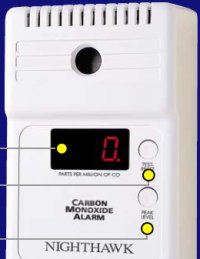
Carbon Monoxide Detectors: Guaranteed to Fail in 7 Years

Kidde alarmTo help prevent illness and death, some states require carbon monoxide alarms to be installed in various parts of your home.

Kidde is one of the large, recognized brands of smoke alarms and other fire prevention products. Certain of their carbon monoxide detectors, however, come with conflicting promises and warnings.

In the manual’s introduction for one of their basic carbon monoxide detectors, it reassures customers they have made a good choice:

“Thank you for making Kidde a part of your complete home safety program. With proper installation and use, your new Kidde CO alarm will provide you with years of dependable service.”

Buried on page 8, however, is some starting news:

*MOUSE PRINT:

Kidde 7 years

A similar disclosure appears in fine print on the box itself. On one hand, the company seems to take safety seriously and doesn’t want to give customers a false sense of reassurance that their detectors are working when they have really lost the ability to sense carbon monoxide. On the other hand, one would not normally expect to have to throw out a $25 to $70 product after only seven years.

What’s going on here? The answer is that carbon monoxide detectors do indeed have a limited life. Inside many detectors is an electro-chemical cell that reacts in the presence of carbon monoxide. It tends to be very accurate. But, over time, the chemical can degrade and its performance is diminished. Accordingly, a national safety standard for carbon monoxide detectors published by Underwriters Laboratories (UL) requires that manufacturers build in a warning system to alert consumers that the unit is no longer functioning properly.

*MOUSE PRINT:

8.1 The unit (including the sensor) shall have a specified lifetime of at least 3 years from the date of manufacture, or from the date the unit is placed into service.

38.1.6 The unit shall indicate end-of-life, based on the manufacturer’s specified lifetime, with an end-of-life signal (see 3.11). This signal shall be triggered either by an internal timer or by a self-diagnostic test(s).

3.11 END-OF-LIFE SIGNAL – An audible signal, differing from the alarm signal, intended to indicate that the device has reached the end of its useful life and should be replaced. … The end-of-life signal shall repeat once every 30 – 60 seconds ±10 percent. — UL 2034, Standard for Single and Multiple Station Carbon Monoxide Alarms.

So, no matter what brand of carbon monoxide detector you buy, the unit will automatically commit suicide at the end of its useful life.

Note: MrConsumer is a member of UL’s Consumer Advisory Council.
Â