Updated every Monday!   Subscribe to free weekly newsletter.

Are Stihl’s Tools All “Made in America?”

Products that carry the “Made in USA” slogan have a distinct marketing advantage, particularly among a big segment of the population that believes in buying American-made products. So it is no wonder that many companies like to wrap themselves in the flag as part of their sales strategy.

A regular reader, David B., recently brought this commercial to our attention from Stihl, a leading maker of portable outdoor power tools.

Did you catch that virtually unreadable fine print footnote on the screen for three seconds at the end of commercial?

*MOUSE PRINT:

Stihl Made in America

“A majority of Stihl products are made in America of U.S. and foreign made materials.”

That statement probably doesn’t square with the net impression that the commercial conveys to the average viewer. The orally unqualified “Made in America” claim drowns out the tiny disclaimer that most people probably couldn’t read. Taken literally, the fine print could mean that as few as 51% of their products are actually made in the USA.

In the last year, the Federal Trade Commission has gotten more active in investigating “made in USA” claims, publicizing its advertising guidelines, issuing a new “Made in USA” labeling rule, and settling a number of cases. Key in these settlements is the requirement that the company must not make any representation, expressly or by implication, that a product or service is “Made in the United States” unless:

A. … all or virtually all ingredients or components of the product are made and sourced in the United States; or

B. A Clear and Conspicuous qualification appears immediately adjacent to the representation that accurately conveys the extent to which the product contains foreign parts, ingredients or components, and/or processing; …

In our opinion, Stihl’s fine print limitation on their “Made in America” claim is not clear and conspicuous and could subject them to FTC scrutiny. We asked the company about that, what percentage of their products are made here, what percentage contain foreign parts, and whether the company plans to modify their advertisement. The company responded in relevant part:

Over 75% of STIHL outdoor power equipment sold in the United States is manufactured in the United States in our Virginia Beach facility of foreign and domestic components.
…
STIHL Inc. firmly believes that its advertising of the significant manufacturing processes occurring in Virginia Beach is in line with FTC guidance. STIHL Inc. does not make an unqualified “Made in America” claim, and consistently and clearly disclaims that qualifying equipment is made of U.S. and foreign components. The specific disclaimer at issue is clearly visible on the screen the entire time the “made in America” claim is being made (spoken or written), and is sufficient to qualify the claim, per FTC guidelines.

Share this story:


ADV
Updated every Monday!   Subscribe to free weekly newsletter.

Burger King Sued for Exaggerating Portion Sizes

Fast food companies have a knack for making their burgers and chicken sandwiches look much larger than they really are.

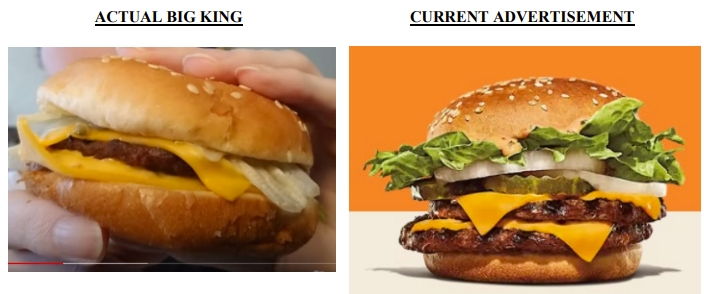
Now a new class action lawsuit has been filed against Burger King alleging that certain of their burgers are depicted in advertising as much larger than they actually are.

*MOUSE PRINT:

Whoppers
Big King

The complaint goes on to allege:

A side-by-side comparison of Burger King’s former Whopper advertisement to the current Whopper advertisement shows that the burger increased in size by approximately 35% and the amount of beef increased by more than 100%.

Whoppers

The court is being asked to require Burger King to pay damages to all affected consumers, and to stop misrepresenting the size of their sandwiches in advertising and on menu boards.

It is about time that restaurants are called on the carpet for exaggerating their portion sizes.

Share this story:


ADV
Updated every Monday!   Subscribe to free weekly newsletter.

Devilish Scam Bombards Victims With Spam to Hide Fraudulent Credit Card Purchases

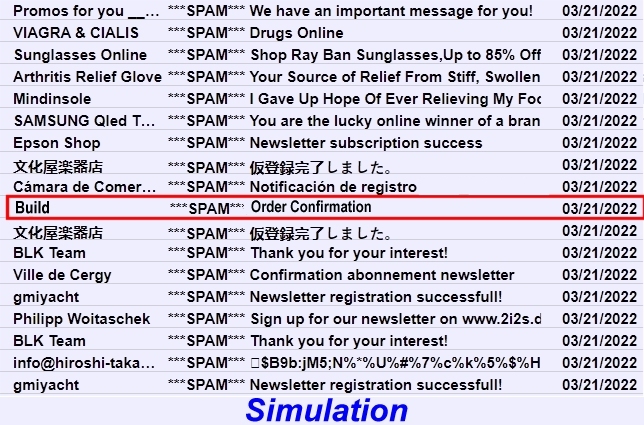
This was a new one on MrConsumer. A New York friend recently called to say he was getting deluged with spam all of a sudden — over 120 in an hour. They kept mounting up in his inbox and for some reason they generally were not even going into his spam folder.

In the midst of this flurry of junk mail, he was trying to do his taxes and started reviewing his American Express account online. He noticed a $2000+ pending charge at Build.com. My friend knew immediately he did not make that purchase so he called AMEX. They canceled his card on the spot since its use at that online store was fraudulent.

My poor friend, one minute he is being spammed to death and the next he is the victim of credit card fraud. How unlucky can one get to have these two independent events happen to you in the span of an hour? Or were they really a coincidence?

MrConsumer postulates they were all part of a grand scheme by a very clever crook. Someone clearly gained access to my friend’s existing Build.com account which might have had his American Express number saved for future use. Or the scammer separately obtained his American Express account number some other way. With that information, it was easy to make a purchase (or many of them) and send the loot to anyone in the country.

But what does that have to do with the spam bomb that my friend experienced? Since online sellers usually immediately send a purchase confirmation email after an order is placed, the crook had to do something to lessen the chance that my friend would see it in his in-box. So he bombarded him with tons of spam emails at the very time the order confirmation was likely to be received hoping it would go unnoticed, get mistaken for spam, and be deleted along with the rest of the junk mail.

*MOUSE PRINT:

Spam Bomb

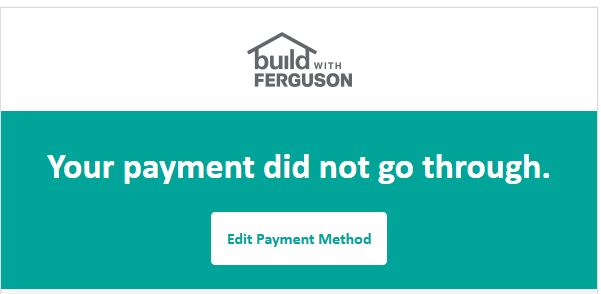
Fortunately, my friend was able to contact Build.com in time to cancel the order slated for next day delivery. Their security system also flagged the transaction.

order canceled

So here’s the moral of the story. If all of a sudden you get hit with an unusually large deluge of spam, go through each one looking for an order(s) you never placed. Call your primary credit card issuer(s) to ask about any unusual activity they see on your account, including recent purchases and address changes. Delete any saved credit card numbers from online stores where you make purchases. And change passwords on any affected accounts.

Share this story:


ADV