Updated every Monday!   Subscribe to free weekly newsletter.

Oh Gee, Cell Carriers Fudge 4G Claims

If you just landed here from Mars and needed data service to phone home, you would be confused because most cell companies each make you think they have the biggest 4G data networks. Actually, earthlings might be experiencing the same confusion.

AT&T claims:

AT&T

Verizon claims:

Verizon

T-Mobile claims:

T-Mobile

How in the world can AT&T claim that its 4G network has 2000 more cities than Verizon at the same time that Verizon claims to have more 4G LTE coverage than all other networks combined?

The answer is simple (and deceptive): they all define 4G differently.

*MOUSE PRINT:

On AT&T’s website, they disclose that the company calls two different technologies “4G”:

4G AT&T

AT&T defines 4G as including its HSPA+ and LTE networks, while Verizon only counts its LTE network. Which one is fudging the numbers? According to the Wall Street Journal, it’s AT&T:

*MOUSE PRINT:

AT&T Pins 4G Label to Existing Network

AT&T Inc. flipped a switch and turned on its 4G wireless network Wednesday. The switch, however, was in the company’s marketing department.

By relabeling its existing 3G network, the country’s second-largest wireless carrier joined the noisy fray over so-called fourth-generation wireless technology, which promises mobile Internet speeds so fast that huge files can be downloaded in minutes and streaming video can be watched without the interruptions of earlier-generation technologies.

As recently as September, AT&T executives had referred to the company’s current network, which runs on a technology it calls HSPA-plus, as 3G. — WSJ, January 5, 2011

So, AT&T is making people think their 4G network is larger by simply rebranding its 3G network as 4G, and adding the 53 markets it offers 4G LTE to it. (LTE is commonly viewed as the truly faster 4G network, and the future of 4G.) Verizon, on the other hand, only counts its 4G LTE cities as part of its 4G network.

Our advice: forget the marketing labels. Find out what actual speeds the various networks in your area provide, and make your cell service choices based on real numbers. (Use SpeedTest.net at cell stores to check actual speeds.)

Note: MrConsumer is a member of Verizon’s Consumer Advisory Board (and often criticizes them for advertising missteps).
Updated every Monday!   Subscribe to free weekly newsletter.

The Straight Poop About Online Product Reviews

A friend is constantly annoyed by seeing help wanted postings on Craigslist where business people are looking for common folks to write and post favorable reviews about their products and services in return for compensation.

Since so many shoppers read and rely on product reviews written by actual purchasers when deciding whether to buy a particular product, no wonder sellers are eager to display positive reviews. The problem, of course, is that the reader cannot tell whether the review is genuine, fake, or possibly tainted because the reviewer has been paid for his or her comments.

Enter the Federal Trade Commission.

Under their revised testimonial guidelines, even bloggers are required to disclose in their reviews if they have been compensated for their review or received the product free that they are reviewing:

“When there exists a connection between the endorser and the seller of the advertised product that might materially affect the weight or credibility of the endorsement (i.e., the connection is not reasonably expected by the audience), such connection must be fully disclosed.” — 16 CFR 255.5

Now how often have you seen a blogger make such a disclosure?

Enter MrConsumer.

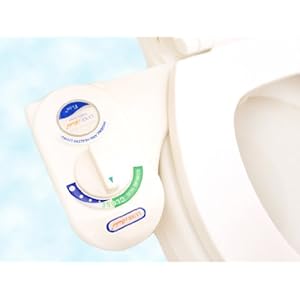
bidetLast week, I received an email from the company that sells the bidet that I recently purchased from Amazon. (This bidet is an attachment you install on an existing toilet to rinse your heinie with a narrow jet of water.) They asked if I would write an “honest review” of the product and post it on Amazon. (Seriously, I was NOT asked to write a positive review, but rather an honest one.) In return, they would send me a second bidet free.

Since I was intending to write a review anyway (I love the product), this was the prompt I needed to actually do it. And of course, who wouldn’t want another bidet for nothing?

I wrote the review “So Long Toilet Paper”, and included the following disclosure that I dare to say no other poster has ever included in their review:

*MOUSE PRINT:

“NOTE: As required by Federal Trade Commission guidelines, I am disclosing that I was promised compensation for posting an honest review. And the review is just that — my honest opinion — something I would have written exactly as you see it irrespective of any future compensation that I might receive.”

Upon hitting the submit button, Amazon flashed up a notice that it may be up to 48 hours before the review is posted because they have to examine it first. Well, I said to myself, they will never approve this. Funny thing, later that night, they did.

I then notified the bidet company of its posting. Well, I said to myself, they will never send me the free bidet. Funny thing, almost immediately, they thanked me for my “wonderful review.”

I guess no one reads anything thoroughly anymore. In any event, at least shoppers who read the review will be put on notice, as required, that I was promised compensation in return for the review.

Updated every Monday!   Subscribe to free weekly newsletter.

The Touch, The Feel of Cotton — NOT

One of those daily deal sites recently sent out an email offering a “Queen-sized Egyptian sheet set” from Pulse TV for 75% off — only $20. MrConsumer has never seen an Egyptian cotton sheet set for such a low price.

When clicking through to the seller’s site, this is what you see in part:

The name of the product is “Egyptian Comfort 1200”. Wow, 1200 thread count sheets. What luxury! A little further down, however, the true nature of the offer was disclosed.

*MOUSE PRINT:

So these are really NOT Egyptian cotton at all, but rather microfiber. We asked the customer service department what the actual fiber composition of these sheets was — cotton, cotton-blend, polyester, nylon, etc., and what the thread count was.

Their response was “The Sheets compare to a 1200 thread count” and to view this video on their website:

The spokesperson in the video says, in an uncharacteristically candid way, wincing:

“I wanted to address a couple of issues. First of all, it says it compares to a 1200-sheet count, I am sorry, cotton thread count. I’ll be honest with you. I don’t think so. I’d say it is more along the lines of between a 400 and 600.”

In a newer video, the spokesperson says:

“They say on this that it compares to a 1200 thread count cotton. Simply not true. I’d say it is more like a 300 to 400 count.”

Did I hear right? The spokesperson is saying don’t believe what our company just said about 1200-thread count!

When we asked customer service to once again tell us what fiber these sheets were made of, and what the actual thread count was, since neither question was answered in the video, we never got a subsequent response.

Microfiber sheets are cheap, but very soft feeling. At Kmart last year, a queen set was only $9.99, and made of 100% polyester.