Updated every Monday!   Subscribe to free weekly newsletter.

“Does Not Contain High Fructose Corn Syrup”

High fructose corn syrup is a dirty word to many shoppers. They have heard that the body doesn’t digest and absorb the fructose in this cheap sugar substitute the way ordinary sugar is metabolized. The liver is forced to convert the fructose into fat, and we get the urge to eat more.

No wonder a number of products have reformulated their brands and tout the fact that they no longer contain high fructose corn syrup.

One such product is Log Cabin syrup, which boasts this on their front label:

Log Cabin

Great, thought Bryan A., a Mouse Print* reader. Then he read the ingredients statement on the back:

*MOUSE PRINT:

Log Cabin back

“If a banner across the front trumpets ‘NO HIGH FRUCTOSE CORN SYRUP’ one doesn’t expect the first ingredient to be corn syrup,” explained Bryan. We agree.

There is, however, a difference between high fructose corn syrup and regular corn syrup.

“… corn starch is broken down into individual glucose molecules, the end product is corn syrup, which is essentially 100% glucose. To make high fructose corn syrup, enzymes are added to corn syrup in order to convert some of the glucose to another simple sugar called fructose. High fructose corn syrup is ‘high’ in fructose [thus making it sweeter] compared to the pure glucose that is in corn syrup.” — Food and Drug Administration.

We asked Pinnacle Foods, the maker of Log Cabin, twice to comment on this issue, and they did not respond.

Updated every Monday!   Subscribe to free weekly newsletter.

Readers Spot the “Gotchas” in the Fine Print (Part 1)

Mouse Print* readers have been busy scouring the fine print of ads and product labels, and have come up with some doozies. (Here’s how to submit your finds.)

Example 1

sheets

Cathy S. found these sheets at a flea market and also noted that some people online were complaining about them. Why?

*MOUSE PRINT:

These sheets that appear to be “1600 thread-count Egyptian cotton” aren’t 1600 thread-count and aren’t even cotton! The fine print above that claim says “experience the same comfort, luxury, and softness as” 1600 thread count Egyptian cotton. How deceptive can you get? Incidentally, the label above is enlarged from the original, so the qualifying language is even harder to read.


.

.
Example 2

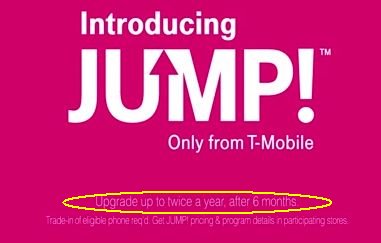
T-Mobile just introduced a new plan whereby customers can upgrade their phones whenever they want.

Becky sent along this commercial and urged us to focus on the fine print rather than the spoken words.


http://www.youtube.com/watch?v=7HbLXtlsuCM

While the words say “upgrade when you want,” the hard-to-read fine print says something else.

*MOUSE PRINT:

Jump

“Upgrade up to twice a year after 6 months” is not exactly “when you want” says Becky. We agree.


.

.

Mouse Print* is a service of
Consumer World

Visit Consumer World for the latest consumer news, money-saving tips, and a free weekly newsletter.

Updated every Monday!   Subscribe to free weekly newsletter.

Twinkies Upsized, Downsized, Upsized

Lost in the hoopla of Hostess reintroducing Twinkies starting July 15 is how the size of that sweet treat has changed over time.

Here is a short but incomplete photographic history of Twinkies over the past 40 years.

*MOUSE PRINT:

Twinkies 70s
1970s – 13 oz. – $1.19

Twinkies 2001
2001 – 15 oz. – $3.49

Twinkies Jan 12
January 2012 – 15 oz.

Twinkies Dec 12
December 2012 – 13.5 oz. – $4.29

Twinkies July 13
July 2013 – 13.58 oz – $3.99

In a rollercoaster history, Twinkies have gotten bigger, gotten smaller, and gotten slightly bigger again with today’s release. And while the price has more than tripled over four decades, it appears to have just been lowered by 30 cents.

And if you haven’t heard, the shelf-life of the product has been “improved” from 26 days to 45 days.