Updated every Monday!   Subscribe to free weekly newsletter.

PayPal Sending Out Unsolicited Debit Cards

MrConsumer got quite a surprise in a letter from PayPal recently. It announced that the company was going to send him a business debit Mastercard to accompany his PayPal account. Say what?

PayPal letter

*MOUSE PRINT:

“If you don’t want this card, log in to PayPal at PayPal.com/nothanks… and we won’t ship it.”

So, one has to opt-out to stop them from sending the debit card.

But isn’t sending an unsolicited card illegal, you ask?

Federal law bans the sending of an unsolicited credit card to a consumer. But this was a debit card being sent for a business account.

Under federal law, an unactivated debit card can even be sent to a consumer unsolicited.

As a side note, remember, federal law does not generally extend the same credit card or debit card protections to business cards… therefore you have more rights with consumer cards.

So PayPal did nothing wrong legally. However, we think it is a better business practice to ask if customers want a card rather than automatically sending it out to them.

Updated every Monday!   Subscribe to free weekly newsletter.

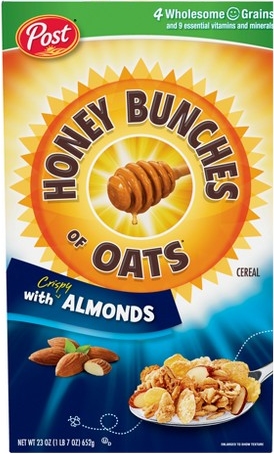
Where’s the Honey in Honey Bunches of Oats?

Honey Bunches of OatsFor years, we’ve all seen the commercials for Post’s Honey Bunches of Oats cereal where the female assembly line worker waxes poetic about her crispy crunchy bunches.

Last year, a health-conscious California consumer bought a box of this cereal thinking that honey would be a more healthy sweetener to have rather than sugar or corn syrup. Soon thereafter he learned (probably from a class action lawyer rather than a nutritionist) that the product in fact had almost no honey.

A check of the ingredients statement on the side of the package revealed the not-so-sweet truth.

*MOUSE PRINT:

Honey Bunches of Oats Ingredients

There are three other sweeteners in the product — sugar, corn syrup and molasses — all of which are in greater amounts than any honey. In fact, there was more salt in the cereal than honey. (Barley malt extract is also a sweetener, incidentally.)

So our consumer sued Post claiming false advertising and misrepresentation. He believed the packaging conveyed the impression that honey was either the only sweetener or certainly a significant one in the product.

Post argued among other things that no reasonable consumer would understand that the cereal’s packaging was making a claim about the amount of honey in the product. MrConsumer always loves when a company tries to assert that only stupid consumers would believe the baloney the manufacturer shows and tells them right on the package.

The company asked the judge to dismiss the case, but she sided with the consumer in her procedural decision.

In applying the reasonable consumer standard, however, the packaging must be considered in context. That is, the image of a radiating sun, the words “HONEY BUNCHES OF OATS,” and the honey dipper dripping honey occupy about two-thirds of the front of the packaging. Although the package does not make any objective representations about the amount of honey in the cereal, a reasonable consumer could see the prominent honey-related words and imagery and be deceived into thinking the cereal contained relatively less refined sugar and more honey. If so misled, the reasonable consumer is not expected to pick up the product and examine the fine print of the ingredient list. –Judge Yvonne Gonzalez Rogers, U.S. District Court

And so the case moves forward. We’ll keep you “Posted,” so to speak.

Updated every Monday!   Subscribe to free weekly newsletter.

Holy Sheet: Is This How They Sell Magazines Now?

John G. wrote to Mouse Print* last week after buying a queen set of Better Homes and Gardens sheets at Walmart, which came with an unexpected surprise.

BHG Sheets


The package says that by buying this set of sheets you also get a one-year subscription to Better Homes and Gardens magazine. That’s a nice bonus. And this was inside the package:

Better Homes and Gardens offer card

The card explained that a one-year magazine subscription was included as a “thank you” for the purchase. So far, so good. But our consumer became disenchanted when he read the details shown in tiny print above:

*MOUSE PRINT:

“If you do not wish to receive a one-year subscription to Better Homes and Gardens (valued at $6) as part of your qualifying purchase, fill out the card, write “refund” and mail to BHG Refund…”

So while it first appeared to him that he was getting the magazine as a free bonus in this specially marked package, he says “reading the fine print on the enclosed postcard makes it clear that I’ve ALREADY PAID for the subscription!”

And that is our opinion too. By definition, you are only offered a refund for something you have already paid for. So, it seems the cost of the magazine was embedded in the purchase price of the sheets.

We contacted the magazine’s publisher, Meredith Corp., and their vice president of corporate and brand communications provided the company’s position:

The subscription is a gift included with purchase with a stated value of $6.00. The cost of the sheets is independent of the fact that there is a gift subscription that comes with the purchase. The consumer does not pay $6.00 for the subscription (BH&G licensed products at Walmart are not marked-up to cover the subscription value of $6.00).

The company spokesperson went on to say that this promotion has been in use for over 10 years, it was approved by the entity best known for certifying that a publication’s circulation claims are accurate, and no consumer has ever complained.

Whether the cost of the magazine was rolled into the purchase price or not, we can only guess that very few sheet buyers even know they are entitled to $6 back because of the inconspicuous way the refund option is disclosed. When we gave the company spokesperson two opportunities to reply that they would consider making the refund offer more conspicuous in the future, she did not say that they would.