
 There has been a movement lately by federal and state consumer authorities to make cancellation of subscriptions much easier. It is often said that cancellations need to be as easy as initial sign-ups.
In fact, the federal law called Restore Online Shoppers’ Confidence Act (“ROSCA”) has been on the books since 2010. It says for negative option plans, like subscriptions that continue from month to month until canceled provides:
*MOUSE PRINT:
…simple mechanisms for a consumer to stop recurring charges from being placed on the consumer’s credit card, debit card, bank account, or other financial account.
The New York Attorney General decided to go after SiriusXM for making it difficult for customers to cancel. They alleged that subscribers had to speak to a live agent, who, working from a prepared script, presented ever-more-enticing retention offers to discourage the member from cancelling. Basically, they were instructed not to take no as an answer.
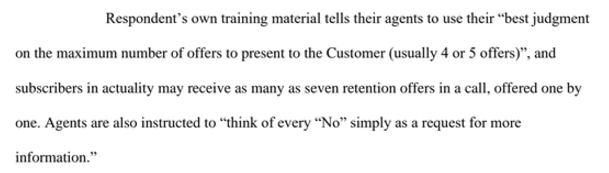
The New York Supreme Court took up the matter and ruled. While finding in favor of SiriusXM on various of the state’s legal theories of state law violations, they found that Sirius’ actions violated ROSCA. Specifically, the court pointed to a 2021 interpretive statement from the FTC that said in part that cancellation methods have to be as easy as their sign-up method, and that the companies should not subject consumers to new offers or similar attempts that unreasonably delay the consumer’s cancellation efforts.
Given those requirements, the court found in favor of New York and ordered that (monetary) damages be assessed.
(This story comes from the Mouse Print* archive of unpublished stories of consumer interest.)
Why are you printing a story about something that happened two years ago? Things have gotten much, much worse since then.
Why are you publishing stories like this now – late – when there are many more stories about things getting worse?
George… I published it because most of the time we find just-filed cases and it is years before a decision is made. This was one that had a decision. The subject of “click to cancel” is very much in the news today. Just two weeks ago, NYC enacted a click to cancel regulation.
Siruis is THE WORST. And you’re speaking to someone in the Phillipines who English is likely terrible.
Last week I had the misfortune to have a problem with Chase Bank after getting a new cell phone. The guy who answered my call was, as it turned out in Mumbai and I only understood 10% of what he was saying, his English was so bad. On my second attempt I got a nice young lady sitting somewhere in Manila whose English was excellent. You never know who you will get when a large American company outsources it’s call center overseas. We are now in the process of transferring our bank accounts, etc. to a financial institution with better customer service.
This is really interesting. One of my biggest wishes for cases like this is that the money paid in fines went somewhere besides the government itself.
I know trying to track down every customer that might have been affected and send them a check would obviously be too complicated, but I wish there was some other method.
I don’t think it should be flat out against the law for companies to make a retention offer, but as a subscriber of SiriusXM for years I can tell you they don’t make it easy to cancel.
Subscription models where it is difficult or impossible to cancel, seem morally, ethically and legally defective. These models have even spread to refrigerator water filters, where on my GE Profile refrigerator, the computer inside looks for an official GE RFID tag on the filter, and starts a 6 month timer. If the computer inside the fridge doesn’t see the filter has been changed at six months, with an official GE replacement with a fresh RFID tag on it, the icemaker and water dispenser both shut off and then cannot be used. This seems an effort to lock owners into purchasing GE branded filters at a price higher than aftermarket filters. GE offers a bypass filter, but one must speak to an agent and then wait one month to get this part that once was included at time-of-purchase. TMobile made it so difficult to cancel 5G home internet, it was necessary to wait to speak to an agent who then gave the hard customer retention sell, where I then show up in-person at one of their stores, where the live person refused to accept surrender of the device they owned, without my waiting 90 minutes. It was necessary to drop the device on their counter, take a date and time-stamped picture with a witness present, and then leave. My new mantra is no subscription purchases of any kind, except only for a newspaper of periodical.
Glenn… this is reminiscent of Hewlett Packard only allowing HP-branded ink cartridges to be used in their machines.
Not only do they only allow HP cartridges, but if you try to use a remanufactured, off-brand or refilled cartridge, the printer (at least mine did) shuts doen permanently.
I haven’t been in the position to try this, but if the subscription to charged to a credit card, can’t the consumer call the credit card company ask them to stop the recurring charge? Wouldn’t this be a form of disputing a charge?
Better yet, buy a pay-as-you-go Visa or Mastercard, and only keep it charged with enough to pay your subscription through the current term. If you want to stop the subscription, let the card run out of money.
I had to contact my bank, changed my account number & have them refuse to pay. I had to do it twice as they changed their name! This went on for another month & I started getting phone calls, last one I got down & threatening. I screen my calls & have
their calls blocked. Problem solved. ( I hope!)
Magazines do this! Trying to cancel my subscription to WIRED magazine was painful. Touting themselves as arbiters of the best tech solutions certainly didn’t apply to their own product. They say you can manage your sub with a link to My Account, the link actually takes you the same exact page you were just on–learned the terms for this: Redirect Loop or Circular Reference. Kafkaesque. Or the scene in 1988 Beetlejuice where he is in a waiting room of hell and takes a number several hundred or so away from the one they just called.
I subscribe to such things, not with a normal credit card but with a Privacy.com credit card. This allows me to easily shut off the card that only serves a single purpose and allows me to stop the subscription from my end rather than fighting with the company. (I do request cancellation but the card protects me if the request isn’t honored.) I’m also protected from having that card’s info from being leaked to scammers as a privacy.com card only accepts charges from the merchant that first charged to it.
All telemarketers are trained to overwhelm callers (whether the customer originated the cal or whether it is a “Suspected Spam” cold call) with word salad and never get a word in.
When I no longer wanted SiriusXM, I called and repeated the word “cancel” until the rep got the message. It took many tries.
I signed up for AppleTV through my desktop for a $2.99 special, (PC desktop). However, when I went to cancel, I could not cancel AppleTV from either the TV or my PC. After a LOOOONGG call with Apple they did cancel. But they originally said I would have to go to someone with either an IPhone or Mac. I hope they have changed it. When they have 2 month specials I will ONLY sign up for AppleTV vis Amazon, which has an easy cancellation click. Never again on my desktop or directly with Apple.