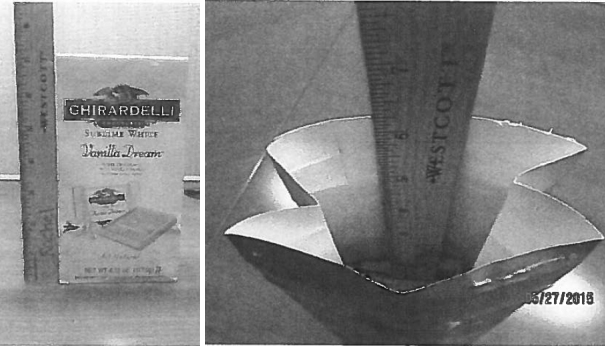
Well, that is a bit of exaggeration, just the way KFC’s tongue-in-cheek advertising is promoting the re-introduction of its notoriously messy sandwich called the Dirty Louisiana burger.
It has three sauces that tend to ooze out when eating, so KFC in the UK is warning customers who order the “dirty” burger that they will be responsible for any splatter on their face or clothing.
*MOUSE PRINT:
The notice is designed to poke fun at all the privacy disclaimers that folks are receiving throughout Europe.
In addition to the “Dirty Disclaimer,” diners are also a given a bib that looks like Colonel Sanders’ white suit and black tie.
Sprint and T-Mobile are seeking to merge. As part of that process, they have to convince the FCC that the merger will not harm competition and would be good for customers.
To this end, Sprint submitted a filing to the FCC on September 25 claiming that its LTE data network was inferior to the other major carriers and they needed a partner to compete better.
Click Chart to Enlarge
Sprint’s coverage is depicted in yellow. You can see, for example, on the map of the U.S. on the right, that Sprint has a much more limited network than Verizon (in red). In fact, the company tells the FCC that its network covers “a much smaller geography” than the other carriers and therefore it needs to merge.
However, if you compare the coverage map from the Sprint website below directed toward customers with the ones above, Sprint makes it appear that its network coverage is very robust and broad.
*MOUSE PRINT:
Only in the tiniest fine print footnote does Sprint disclose that the above map includes roaming coverage, meaning areas where other companies have coverage and share it with Sprint customers. The map also includes non-LTE data coverage that they cleverly omitted from the FCC map.
In addition, the company tells the FCC it has problems with its network:
“Poor network experience is a leading cause of Sprint’s subscriber churn.”
“…consistency challenges impact both network performance and customer perception”
“Sprint has not been able to invest sufficient capital to achieve network performance necessary to attract and retain enough subscribers to improve its scale.”
Funny thing, Sprint has advertised for years on television that there is only a 1% difference in its network reliability compared to the competition.
2016 Commercial
2018 Commercial
Noting these contradictions, we asked the PR folks at Sprint some very pointed questions:
(1) Which is more accurate — what Sprint presented to the FCC or what they advertise to customers?
(2) If the FCC coverage map is more accurate, how does Sprint respond to customers who feel the company exaggerated its coverage area?
(3) Which is correct — Sprint’s network performance is lacking or it’s 99% that of competitors?
A Sprint spokesperson tersely responded:
“Thanks for reaching out. I don’t have anything to add to the filings. If that changes, I’ll let you know.”
A little over a year ago, Staples was sold to a private equity firm. And since then, shoppers have been treated to some unpleasant new policies.
For years and years, consumers could buy reams of paper for a dollar or a full case for $9.99 after rebate. No more. Rebates have been discontinued and paper is no longer a giveaway item there.
Consumers have also complained that they can no longer earn rewards for online purchases at Staples.com.
And in mid-September, Staples.com implemented another anti-consumer change — it will no longer match prices. There was no big announcement of the change, but rather just a subtle change to the fine print on its website, noticed by reader David B.
*MOUSE PRINT:
Ten days earlier, however, Staples.com did match prices, as it has done for years.
We asked the PR folks at the company why Staples.com no longer matches prices, why they don’t publish the store price matching policy on their website so shoppers can see it before going to the store, and what are the full details of their in-store price matching policy.
This was their entire barebones answer:
Thanks for reaching out. We are still price matching, 110% in- store at Staples retail locations.
Come on, Staples, you owe customers a better explanation than that.