
When you see a celebrity using Twitter or Instagram in what looks like a personal post saying how much they love a particular product, you have to be suspicious. Were they paid by the product’s maker to casually say nice things about it, or was the post an honest sharing of the celeb’s favorite things?
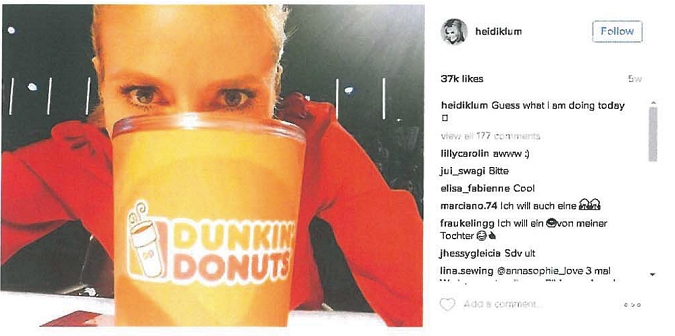
Does Heidi Klum really like Dunkin’ Donuts, or was she paid to promote them?
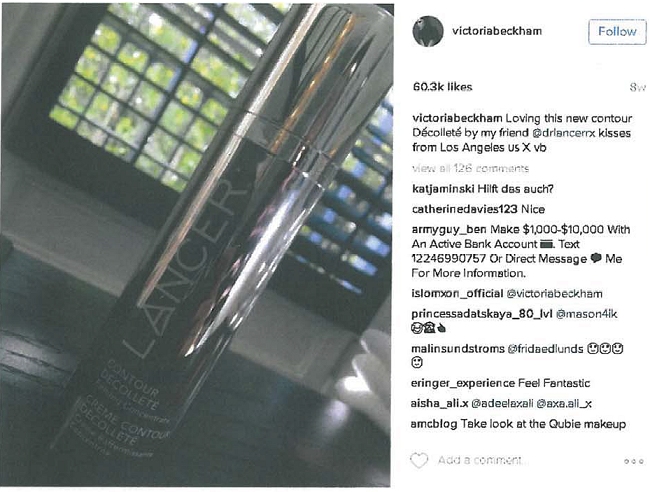
Does this fashionista really use this makeup, or was she paid to say nice things about it?
To help separate the honest opinions from the “paid to say it” posts, the FTC’s Testimonial and Endorsement Guidelines require that there be a conspicuous disclosure of any material connection between the endorser (the celeb) and the company that made the product. How often have you seen such a disclosure? Probably rarely if ever. That’s why we say the worst mouse print is the fine print disclosure that is missing in an advertisement.
This past March, the Federal Trade Commission (FTC) sent “warning” letters to close to 100 celebrities and companies “educating” them about the federal rules on disclosing when an endorsement is really a paid advertisement. The FTC could not always tell if there was a financial connection between the celeb and the product manufacturer or not, so the letters were rather gentle. Here are copies of all of them and the names were NOT redacted.
The list of those warned reads like a who’s who in entertainment, including Jennifer Lopez, Lindsay Lohan, Sofia Vergara, Heidi Klum, Victoria Beckham, and even Nicole (Snooki) Polizi. And big companies like Dunkin’ Donuts, Puma, Chanel, and Johnson & Johnson also received greetings from the FTC.
The FTC letter sent a strong message to these celebrity influencers, as they are called. The question is whether they will fess up in future posts.


