Updated every Monday!   Subscribe to free weekly newsletter.

Amazon Finally Drops Deceptive List Price Comparisons

For two decades, Amazon.com has compared its current selling price to an often illusory “list price” — a price often set by the manufacturer that few if any retailers actually charge. This comparison made consumers believe they were getting a great deal and saving a bundle. We have shown you in the past how often grossly exaggerated list prices at Amazon made a bad problem worse.

More recently, on April 1 this year, Amazon advertised a memory module claiming a whopping 65% savings.

Amazon comparison

*MOUSE PRINT:

According to CamelCamelCamel which tracks Amazon’s prices, Amazon never charged that list price of the memory module. And it has been two years since prices for that item even approached the list price.

price history

The New York Times now reports that Amazon has finally had a change of heart, and is dropping list price comparison for as much as 70% of their inventory. Here for example is that same memory module as of last week, with no savings claims made.

Amazon's price today

Why is Amazon dropping list price comparisons? Many retailers have been the subject of recent class action lawsuits alleging that customers were deceived by these false price comparisons, and they have been awarded millions of dollars. The question is will Amazon’s sales be affected because there are no savings claims? Remember what happened to J.C. Penney when their new president decided to play it straight and drop phony sales? Their revenue plummeted.

Updated every Monday!   Subscribe to free weekly newsletter.

The Windows 10 Upgrade You Can’t “X-out” of

Since last July, Microsoft has encouraged users of earlier versions of Windows to upgrade for free to Windows 10. The company used various techniques to keep reminding users to pull the trigger and authorize the upgrade.

With many millions of users still sticking with their old Windows’ versions, in May, as reported by various tech media, the company changed tactics.

Windows 10 Upgrade
ComputerWorld graphic

*MOUSE PRINT:

While it is bad enough that you are seemingly only given two choices – to upgrade immediately or accept the proposed upgrade date (and in fine print, cancel it) – something more sinister was actually happening. Microsoft changed the longstanding windows convention allowing users to cancel a proposed action merely by clicking the red X in the corner of the popup window. Unbeknownst to users, for this particular screen, clicking that red X not only closed the window but also accepted the proposed update date. And there was no fine print to explain that.

These are tactics more usually seen by purveyors of malware, or by new applications that tuck within their installation screens authorization of adware or other junkware you don’t want or expect.

Finally responding to widespread criticism, Microsoft last week introduced a much clearer option screen so users could opt-out of the Windows 10 upgrade:

Windows 10 Upgrade fix

Remember, July 29th is the last day you can upgrade a previous version of Windows (7 and 8) to Windows 10 for free, which most experts recommend doing. After that, it will cost $119.

Updated every Monday!   Subscribe to free weekly newsletter.

Lord & Taylor’s Missing Fine Print

Very often the worst type of fine print disclosure is the one that is missing, despite being required to be there. That is what retailer Lord & Taylor did (or failed to do) according to the Federal Trade Commission.

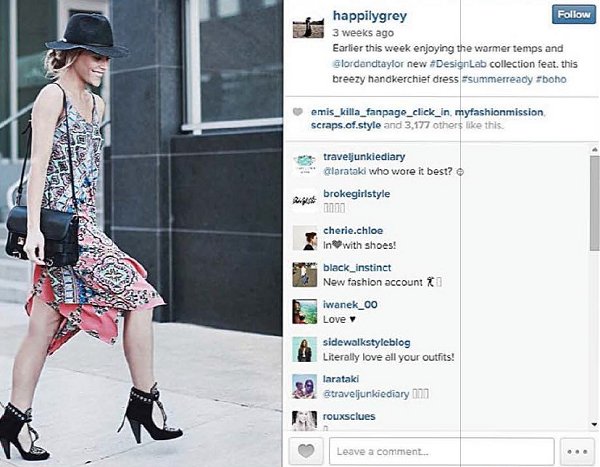
In early 2015, Lord & Taylor was coming out with a new line of clothing aimed at younger women. To help get their attention, the retail chain wisely enlisted the help of 50 “fashion influencers” — hip bloggers and fashion writers with a big following. They were given the same free dress, and paid between $1,000 and $4,000 to post a picture of themselves along with certain hashtags on Instagram.

Instagram dress

*Missing MOUSE PRINT:

Under the FTC’s Testimonial and Endorsement Guidelines, these women failed to disclose the material connection they had to Lord & Taylor, that they received the product for free, and that they were paid to promote the dress and clothing line.

Lord & Taylor didn’t stop there. They paid an online fashion magazine, Nylon, to write an article about the new clothing line, and got to review and approve it before publication.

Nylon magazine

*Missing MOUSE PRINT:

Besides violating the testimonial guidelines by not disclosing that the magazine was paid to write this story, the presentation of the story on Nylon’s website made the story appear just like any other article they publish. This is called “native advertising” when what really is an ad is deliberately made to look like independent editorial content of the publisher. Under the brand new Native Advertising Guidelines of the FTC, this content had to be clearly labeled as a “paid advertisement” or “sponsor paid content” or similar.

Why is the FTC making a big stink about this? First, consumers have a right to know whether what they are reading is an objective, real opinion of an authority on the subject, or just the opinion of the advertiser, to which they might assign less weight or credence. Secondly, disguised advertising works. In the Lord & Taylor case, the fashion influencers’ posts reached 11.4 million individual Instagram users over just two days, and the dress quickly sold out.

In its proposed consent order, the FTC says that going forward Lord & Taylor can’t falsely claim, expressly or by implication that an endorser is an independent user or ordinary consumer. If there is a material connection between the company and an endorser, Lord & Taylor must clearly disclose it in close proximity to the claim. And Lord & Taylor can’t suggest or imply that a paid ad is a statement or opinion from an independent or objective publisher or source.

No fine is being imposed.