Updated every Monday!   Subscribe to free weekly newsletter.

Red Robin’s Birthday Burger Blunder

Red RobinJohn G. is member of Red Robin’s loyalty program. He went to their Evans, Georgia restaurant earlier this month to collect on his free birthday burger that the plan promises.

When the bill came, he and his wife were surprised that only $4 had been deducted for his burger, rather than the full price. Of course, he questioned the discrepancy. The manager explained that the restaurant’s computer system applies only one promotion banked in his account to each meal purchased, and the promotion that gets applied is the one that will expire the soonest.

In other words, in John’s case, his account had a free birthday burger coupon that expires the end of July, but it also had a $4 off coupon that expires in early July, so it would get applied first. John was also told that as a program member he could have gone into his account to rank/prioritize the coupons in a different order, so the free burger coupon would have been the first one used.

John says, “unless one knows what ‘reward ranking’ is, the average customer doesn’t understand that he has to keep track of offers presented to him.”

We checked the fine print on the company’s website for the loyalty program, and it is completely contrary to what he was told in the restaurant as to the order the discounts are applied to a member’s bill.

*MOUSE PRINT:

How does Red Robin prioritize their rewards?

We do rank them in the order of highest value, but now you have the ability to choose which one you crave!

And in their terms and conditions, it says this:

If you have earned more than one Reward, just present your Program Card or your telephone number associated with your Account to your server with your form of payment, and our Program system will apply the highest ranked Reward that you have earned to your bill.

Reward Redemption Order (Rank)
•5 Visits in 5 Weeks, $20 Reward on 6th visit
•Birthday Burger — The Birthday Burger Reward includes any of our more than 24 fire-grilled gourmet burgers but does not include extra patties, extra cheese, styles or Red Robin’s Finest Burgers.
•Every 10th Item Free

In both places it clearly says that the coupon with the highest value gets applied first, which makes total sense. Yet that is not what happened to John in practice. So we wrote to the PR folks at Red Robin to get a straight answer of which policy is the real policy, and what happened.

“There are a number of factors that go into Red Robin Royalty’s reward rankings and we are unable to comment on this specific situation without a deeper investigation and additional information. While rewards are almost always ranked based on value, there are certain caveats; for example, a free birthday burger reward excludes Red Robin’s Finest burgers and non-burger items. If a guest orders an item that does not qualify for the birthday burger reward, despite it being ranked higher on their account, the system would look to redeem the next eligible reward.” —Red Robin Gourmet Burgers and Brews spokesperson

John says he didn’t order a “forbidden on your birthday burger” so we are no more clear on what actually happened in this case than John is. The manager, incidentally, did finally figure out how to give John his free burger, but the whole incident left a bad taste in his mouth.

We agree with John that consumers should not be placed in a position to remember every offer that is sent them and be required to juggle them in one’s account before trying to use a particular offer. Restaurant diners should be allowed to merely say “please use my birthday burger coupon” or be able to print it and that should be the end of it.

Updated every Monday!   Subscribe to free weekly newsletter.

Amazon Finally Drops Deceptive List Price Comparisons

For two decades, Amazon.com has compared its current selling price to an often illusory “list price” — a price often set by the manufacturer that few if any retailers actually charge. This comparison made consumers believe they were getting a great deal and saving a bundle. We have shown you in the past how often grossly exaggerated list prices at Amazon made a bad problem worse.

More recently, on April 1 this year, Amazon advertised a memory module claiming a whopping 65% savings.

Amazon comparison

*MOUSE PRINT:

According to CamelCamelCamel which tracks Amazon’s prices, Amazon never charged that list price of the memory module. And it has been two years since prices for that item even approached the list price.

price history

The New York Times now reports that Amazon has finally had a change of heart, and is dropping list price comparison for as much as 70% of their inventory. Here for example is that same memory module as of last week, with no savings claims made.

Amazon's price today

Why is Amazon dropping list price comparisons? Many retailers have been the subject of recent class action lawsuits alleging that customers were deceived by these false price comparisons, and they have been awarded millions of dollars. The question is will Amazon’s sales be affected because there are no savings claims? Remember what happened to J.C. Penney when their new president decided to play it straight and drop phony sales? Their revenue plummeted.

Updated every Monday!   Subscribe to free weekly newsletter.

Lord & Taylor’s Missing Fine Print

Very often the worst type of fine print disclosure is the one that is missing, despite being required to be there. That is what retailer Lord & Taylor did (or failed to do) according to the Federal Trade Commission.

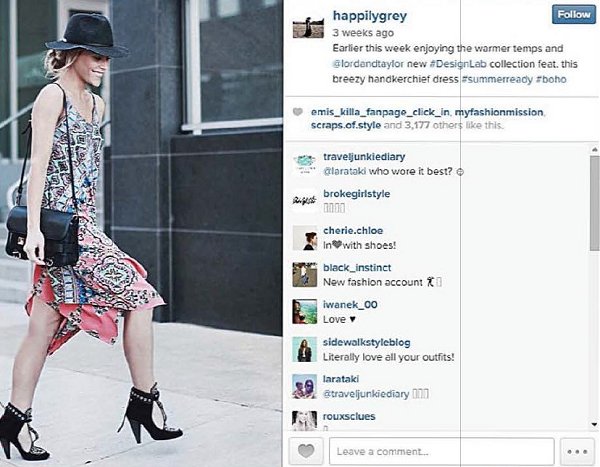
In early 2015, Lord & Taylor was coming out with a new line of clothing aimed at younger women. To help get their attention, the retail chain wisely enlisted the help of 50 “fashion influencers” — hip bloggers and fashion writers with a big following. They were given the same free dress, and paid between $1,000 and $4,000 to post a picture of themselves along with certain hashtags on Instagram.

Instagram dress

*Missing MOUSE PRINT:

Under the FTC’s Testimonial and Endorsement Guidelines, these women failed to disclose the material connection they had to Lord & Taylor, that they received the product for free, and that they were paid to promote the dress and clothing line.

Lord & Taylor didn’t stop there. They paid an online fashion magazine, Nylon, to write an article about the new clothing line, and got to review and approve it before publication.

Nylon magazine

*Missing MOUSE PRINT:

Besides violating the testimonial guidelines by not disclosing that the magazine was paid to write this story, the presentation of the story on Nylon’s website made the story appear just like any other article they publish. This is called “native advertising” when what really is an ad is deliberately made to look like independent editorial content of the publisher. Under the brand new Native Advertising Guidelines of the FTC, this content had to be clearly labeled as a “paid advertisement” or “sponsor paid content” or similar.

Why is the FTC making a big stink about this? First, consumers have a right to know whether what they are reading is an objective, real opinion of an authority on the subject, or just the opinion of the advertiser, to which they might assign less weight or credence. Secondly, disguised advertising works. In the Lord & Taylor case, the fashion influencers’ posts reached 11.4 million individual Instagram users over just two days, and the dress quickly sold out.

In its proposed consent order, the FTC says that going forward Lord & Taylor can’t falsely claim, expressly or by implication that an endorser is an independent user or ordinary consumer. If there is a material connection between the company and an endorser, Lord & Taylor must clearly disclose it in close proximity to the claim. And Lord & Taylor can’t suggest or imply that a paid ad is a statement or opinion from an independent or objective publisher or source.

No fine is being imposed.