When product manufacturers want to cut costs or increase their profits, they can do one of several things. Many don’t want to raise prices because of the consumer backlash and possible reduction in sales. So, many choose to downsize the product as we have demonstrated here. Others take a less conventional approach and reformulate their product so that it is cheaper to produce and distribute.
Breyers downsized their half-gallons of ice cream first to 56 ounces and then again to 48 ounces around 2008.

Now they have taken a new tack. They are reformulating many of their flavors.
Take a look at “old” Breyer’s Vanilla Fudge Twirl ice cream:
*MOUSE PRINT:

Now take a look at the new package of “Vanilla Fudge Twirl”:

The new one is no longer even called “ice cream” but is now “frozen dairy dessert.” It is no longer “all natural” either. And the vanilla ice cream claim has been replaced with a “vanilla flavor claim.”
*MOUSE PRINT:
Under federal law, to be called “ice cream”, a product must meet a certain standard of identity, which in this case requires that there be at least 10% milk fat in the product. That generally would come from the cream in the product. If the product does not meet the federal “recipe” for ice cream, it has to be called something else. In this case, they are calling it frozen dairy dessert which has no federal definition (other than it does not meet the standards to be called ice cream.)
Here are the ingredients statements from both vanilla fudge twirl packages:
*MOUSE PRINT:
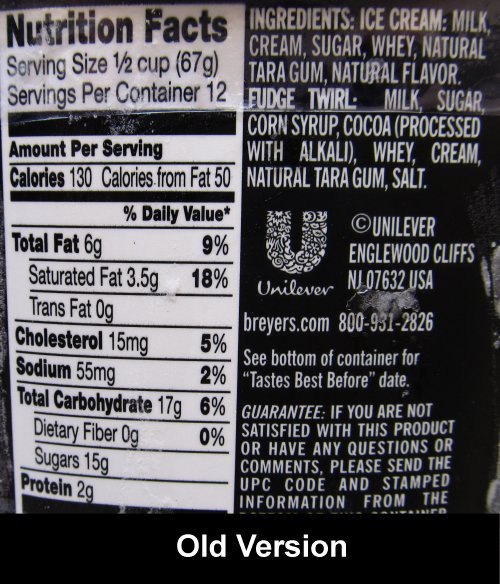
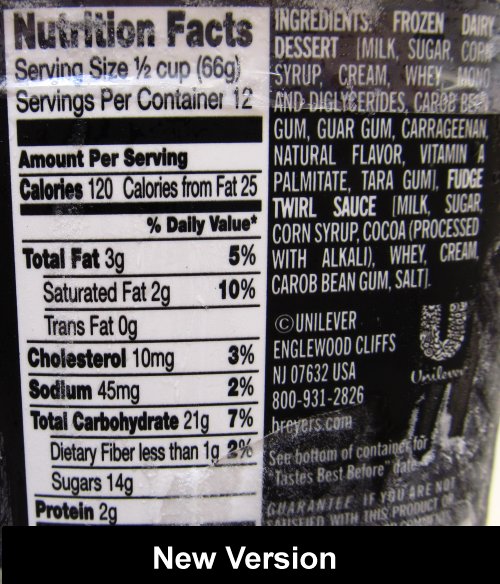
The old real ice cream product has milk and cream as the first two ingredients. The new version has cream listed as fourth (with milk, sugar and corn syrup predominating over cream). The new product also has half the fat as the old. While dieters might rejoice, the calories are nearly the same, and the taste is not likely to match the original.
The Breyers’ website spins why they changed many of their ice cream flavors to “frozen dairy dessert”:
Since 1866, Breyers products have consistently delivered high-quality ingredients, great flavors and smooth creaminess that our fans love, and we remain committed to that Pledge. Our Ice Cream and new Frozen Dairy Dessert varieties continue to use fresh milk, cream and sugar. What distinguishes our Frozen Dairy Dessert from our Ice Cream is that it’s blended in a whole new way to create a smoother texture.
Hmmm. They seem to have left out the fact that using less cream saves the company a lot of money.


