
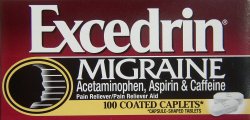
Novartis, the maker of Excedrin, has suffered from a bad headache for the past nine months because it had to recall all Excedrin products from store shelves. Apparently, they had a little problem with mixing pills from other Novartis products in Excedrin bottles, and according to the FDA they also had a little issue with contamination and ignoring consumer complaints.
The company announced last week, however, that it was resuming production, and that Excedrin will be back on store shelves soon.
Now seems the appropriate time therefore to shed a little light on the smoke and mirrors marketing tactics of the company.
People who suffer from migraine headaches may well turn to specialized products for their particular condition. One such product is Excedrin Migraine.
On their website, Novartis says that Excedrin Migraine is the “first non-prescription medicine approved by the FDA to treat all the symptoms of a migraine.”
Sounds great. But how is Excedrin Migraine different from regular Extra Strength Excedrin?
*MOUSE PRINT:Â It isn’t. When you look at their ingredients statements, you learn that they both contain exactly the same active ingredients in the same proportions.
Here is the ingredients listing for Excedrin Migraine:

And here is the ingredients listing for regular Extra Strength Excedrin:

It is interesting to note that regular Excedrin has many clinical uses, but the migraine version only lists one. Of course, both of them should be capable of doing the exact same things.
So the question is why does Novartis have a specialized migraine product when their regular one is really identical? Here is their answer:
As you may be aware, Excedrin Migraine received approval from the Food and Drug Administration on January 14, 1998 as the first over the counter product indicated to relieve the pain of mild to moderate migraine headache.
Excedrin Migraine contains 250 mg of Acetaminophen, 250 mg of aspirin and 65 mg of caffeine per tablet. It is the same Extra Strength Excedrin formulation, which has been on the market for over twenty years. When our clinical studies showed that this formulation was also effective for the relief of migraine headache pain, it had been our intention to simply add this information to our existing Extra Strength Excedrin labeling. The Food and Drug Administration, however, required that we market Excedrin Migraine as a separate product because Excedrin Migraine has important patient information, instructions and warnings for use in treating the pain of migraine. This information does not appear on Extra Strength Excedrin. This was the only reason that we came out with a separate product.
I am sure the company did’t protest too much because this gave them a great new marketing angle.
And maybe that gave the company a new idea that they could market the same exact pills under different names and increase their sales. Enter Excedrin Menstrual Complete:

Bet you can’t guess what their magical mix of three ingredients is in this product.
*MOUSE PRINT:Â

Yep. It has the exact same three ingredients in the exact same proportions as Excedrin Extra Strength and Excedrin Migraine.


 Summer is a great time for drinking a refreshing fruit punch. This one, CapriSun “All Natural” Tropical Punch, looks particularly good because the front of the package shows pineapple, orange, bananas and strawberries. The