Updated every Monday!   Subscribe to free weekly newsletter.

J.C. Penney Drops Phony “Regular” Price Comparisons

On February 1, 2012, J.C. Penney is revamping its pricing strategy to one where it offers everyday low prices, and only runs sales a couple of times a month.

This is a huge departure for a company that, along with Kohl’s, historically advertised huge discounts from inflated “regular” or “original” prices that they rarely if ever charged. In a New York Times article, JCP’s new CEO even admitted that those regular prices were phony:

Though retailers use promotional pricing to attract shoppers, even if they often vow to move away from it when it gets too pronounced, Mr. Johnson said the method used what he called “fake prices” — artificially inflated prices that are on near-constant markdowns.

In newly released commercials, J.C. Penney, makes fun of its old pricing strategy including endless sales and coupons (and impliedly makes fun of Kohl’s for continuing those practices):

Penney’s new pricing strategy is to reduce regular prices by 40% or more, and makes those the prices customers pay most of the time.

This page from their website reveals how inflated the old “regular” or “original” prices were compared to the everyday selling price now.

*MOUSE PRINT:

It will be interesting to see if consumers, who have been conditioned to only buy things on sale, will respond positively to no longer seeing sales every week with deep discounts along with coupons for additional savings (even though those savings were illusory).

Updated every Monday!   Subscribe to free weekly newsletter.

Suze Orman: Advisor or Pitchman?

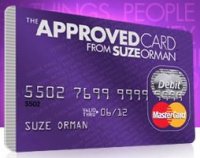
Financial counselor Suze Orman just came out with her own prepaid debit card called the Approved Card.

It is a MasterCard that you can use in retail stores to make purchases, but only up to the amount you have deposited onto the card. It is promoted as an easier, smarter way to be debt-free. Upfront she touts that it costs “only $3 a month if you use it how I tell you to.”

The card’s homepage goes on to tout nine benefits of the card including “free Transunion credit score, reports, and monitoring”, “safer than cash”, and “teach your teens financial responsibility.”

A closer look at the fee structure reveals some costly provisions besides the $3 monthly maintenance fee.

*MOUSE PRINT:

CARD PURCHASE FEE — $3
ATM WITHDRAWAL FEE — $2 (if you do not have direct deposit)
OVER-THE-COUNTER CASH WITHDRAWAL — $2

While these fees are less than other competing prepaid cards, this whole genre of card is set up to cost you money rather than save you money.

Making a deposit via direct deposit or transferring money from your checking account electronically to the car is free. (But would someone really put their entire paycheck or social security check onto a prepaid card every month? And if you already have a checking account, might not a regular debit card or ATM card be offered by your bank for free?

*MOUSE PRINT:

Conspicuously missing from their fee list is the cost to deposit money onto your card at an ATM or in person at a store.

Apparently you can only add money at locations that support either Moneygram or Western Union payments. The cost, they say, is typically $3.00 – $4.95. Whatta deal.

Here is another surprise.

*MOUSE PRINT:

If you only read the headlines about the free TransUnion credit score, report and credit monitoring benefit, you may miss the fact that the service is only free for the first year. After that, if you want to keep it, it is $143.40 a year.

Lastly, Suze proudly proclaims:

*MOUSE PRINT:

As she admits in smaller print, debit card purchase information is not part of anyone’s credit report and does not affect your credit score. She merely has a desire to see whether providing card use and purchase behavior to Trans Union will be considered in the future as a predictor of creditworthiness. Put another way, Suze has put a clever spin on the fact that she is sharing your purchase history with an outside company.

Prepaid cards have become popular as moneymakers for issuers particularly since they fall through the cracks of federal reform legislation that covers conventional credit and debit cards. If you must have a prepaid card for some reason, a better choice is the virtually fee-free American Express prepaid card. There is no monthly maintenance fee. In fact the only stated fee is $2 for ATM withdrawals after your first free one each month. Depositing money at a retail location incurs the same approximately $4.95 charge as does the Approved Card.

Updated every Monday!   Subscribe to free weekly newsletter.

Office Depot Dilemma: Multiple Rebates Require Same Original UPC

Two consumers contacted Mouse Print* and Consumer World this past week complaining that Office Depot’s current tax software promotion was misleading and a “scam.”

The offer promised $1300 in free software — 24 different titles — if you bought certain tax preparation software like TurboTax Deluxe or H&R Block Deluxe. All you had to do was pay for the free software and fill out rebate forms to get your money back. Not so simple, as it turns out because of a conflict in requirements for many of the rebates. And to add insult to injury, some rebates are debit cards instead of cash back.

For example, if you buy TurboTax, you can get a starter edition of Quicken free, as well as several Norton security products among others.

*MOUSE PRINT:

To prove you bought TurboTax and Quicken, you need to enclose:

Quicken and TurboTax UPC labels (shown below) for the eligible software products, located on the product boxes (photocopies will not be accepted).

And in order to receive a rebate on a Norton combo-pack when purchasing TurboTax, you need to enclose:

*MOUSE PRINT:

Enclose the original UPC code from Norton Internet Security 2012/Norton Utilities Premier Edition and any Turbo Tax, H&R Block, or Tax Act software or tax forms. The UPC code is a 12-digit bar code found on the bottom of box. Photocopies will not be accepted.

Oops. The same original UPC has to be included with the rebate requests for multiple companies and products. Oops. This scenario is repeated for some of the other free software products which also require the original UPC from the tax software. What is a consumer to do?

Our two consumers contacted Office Depot, but were initially given the runaround. One consumer ultimately got the store manager to lower the price of one of the software packages to compensate him for the $15 rebate card he cannot obtain. The other consumer had to jump rank and contact “executive resolutions” to get satisfaction, and was told that Symantec (Norton) was adjusting their rebates to not require the original UPC. She even followed up with Symantec and their rebate fulfillment house to ensure they would accept copies of the UPC. They said yes, but none of the PDF rebate forms have been updated to eliminate the requirement of an original UPC.

Mouse Print* asked Office Depot’s PR folks for an explanation of how they intended to handle this mess, but they did not respond.

Thanks to William-Andrew and Rebecca for contacting us about this issue.