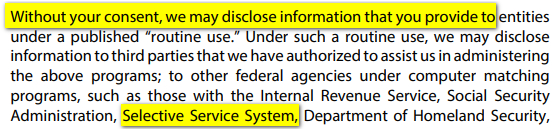
Kohl’s made a brilliant move last year by making a deal with Amazon to accept their returns at all Kohl’s stores.
According to the Kohl’s press release, the customer can simply visit a Kohl’s store and bring in an item without a box or label, and the department store will box it up and ship it back to Amazon for free.
MrConsumer decided to return a recently purchased and unopened box with a Quicken disc inside. The Amazon website indicated it qualified for “free returns” because it was “sold and shipped by Amazon.”

So, the day after Christmas, MrConsumer went to his nearby Kohl’s and got in the returns line. Once at the counter, he was told he had to go to the special Amazon returns desk at the back of the store. So he went back there and got in line again. I showed the clerk the Quicken package and my original sales receipt. He explained that I needed to show him a QR code — one of those new-fangled barcodes — and the only way to get that was for me to use my cellphone to process the return on the Amazon website, and choose Kohl’s as the dropoff location.
The Kohl’s website explains the process for making an Amazon return, which MrConsumer admittedly had not checked beforehand.
*MOUSE PRINT:
HOW TO MAKE AMAZON RETURNS AT KOHL’S STORES
1. Begin your return with Amazon’s Online Return Center
2. Select the Kohl’s Dropoff option
3. Amazon will email you a QR code
4. Bring the item(s) you’re returning to a participating Kohl’s store and show the QR code on your smartphone to a Kohl’s associate in-store
5. Kohl’s will pack, label and ship your return for free
Amazon Returns are now accepted at all Kohl’s stores (excluding Anchorage, Alaska). Return eligible Amazon.com items to Kohl’s stores and save yourself time and money. What could be more convenient?
So, I found a quiet spot and began to process the return at Amazon.com, but when I got to picking the dropoff location, there was no “Kohl’s dropoff” option. And most of the other alternatives required me to pay $7.21 to ship the item back.

I then went back to the Amazon return line, waited again, and finally got up to the counter. I showed the clerk my cellphone indicating there was no Kohl’s option for dropoff. He couldn’t quite explain the problem other than to say if the item came from a third-party seller, it did not qualify for return at Kohl’s. (It didn’t, it came from them directly — “sold and shipped by Amazon.”) He handed me a slip with a UPS location where I could pay to return the item to Amazon.
The product listing for Quicken explicitly said for this item there were no shipping charges to return it and I could pick the shipping method.
*MOUSE PRINT:
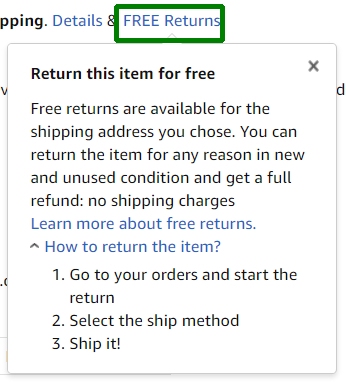
Grrr. I went home and got online to try to do the return on my desktop computer. There was indeed a free return option, but it was not at Kohl’s, not at a nearby Whole Foods, and not at the UPS desk at Staples right across the street. It was at an “Amazon Hub Locker Plus” — inconveniently located one or two towns away that I would have to drive to.
We asked both Kohl’s and Amazon why this item could not be returned to Kohl’s and why despite promising a free return shipping option there was none. Kohl’s didn’t respond to multiple requests. However, an Amazon spokesperson explained that most Amazon customers will have at least one free return option, but she would not otherwise respond directly to our questions on the record.
So Amazon returns to Kohl’s are not quite as simple and all-inclusive as the advertising suggests. MrConsumer wrongly assumed one could just walk in with the item and the original sales receipt — just like returning a Kohl’s item to Kohl’s.
We hope both companies will endeavor to be more clear and upfront about the limitations of free return options.