Updated every Monday!   Subscribe to free weekly newsletter.

Thanks for Nothing, 2019 – Part 1

“Thanks for Nothing” spotlights advertising that seemingly promises a great deal, and then lets you down big-time, or makes a product claim that proves untrue, or just makes you scratch your head and laugh.

Example 1:

Buy Dig is an online seller of electronics and other goods. Recently they advertised a pretty high-value coupon online, $50 off.

$50 off

However, if you click-through to see the actual deal, you would no doubt be disappointed.

*MOUSE PRINT:

$2000 purchase required

To save that $50, you have to make a $2000 purchase, saving a mere 2.5% off. Thanks for nothing, Buy Dig.


Example 2:

The problem with this Aunt Jemima syrup doesn’t even require you to read the fine print ingredients statement.

Butter syrup

What? Contains no butter? Thanks for nothing, Auntie.


Example 3:

Nothing turns shoppers off like high shipping costs, but this example takes the cake.

high shipping costs

A cheap, small plastic bottle costs over $18 to ship and the tax is three times the item’s price? Thanks for nothing.


Example 4:

Finally, if you want a quick meal, ramen noodles are about as fast as you can get, and dirt cheap in this offer. The trouble is you could starve before your order arrives.

ramen noodles

Thanks for nothing, Amazon


If you find an offer suitable for a “Thanks for Nothing” mention, please submit it to edgar(at symbol)MousePrint.org .

Share this story:


ADV
Updated every Monday!   Subscribe to free weekly newsletter.

It Pays to Read the Fine Print, Literally

Since 2006, we have encouraged you to always read the fine print so you don’t get snookered by the strings and catches buried in advertisements, contracts, etc. A Georgia teacher did just that a few weeks ago and got an unexpected surprise.

She had visited a travel insurance website called SquareMouth to buy a policy for an upcoming trip. Like all insurance policies, there was a ton of fine print that could trip up a purchaser. Most people don’t have the patience to wade through that stuff, but our teacher did.

*MOUSE PRINT:

Squaremouth excerpt

The section above says because most customers don’t read the fine print of travel insurance policies to their detriment, the company launched a contest to highlight this problem. It went on to say that the first person who spotted this section of the policy and contacted the company would win $10,000!

This smart Georgia teacher found the clause a mere 23 hours after the contest was launched, and is now $10,000 richer.

Squaremouth winner

Share this story:


ADV
Updated every Monday!   Subscribe to free weekly newsletter.

A $2-Million Coupon Surprise

Have you read any good coupons lately? If not, you are in for a surprise courtesy of the folks at Kimberly Clark, makers of paper products like Kleenex, ScotTissue, and Viva paper towels.

Most people don’t read the fine print of anything, let alone cents-off coupons. But maybe they should, particularly if they are trying to pull off some coupon monkey business.

*MOUSE PRINT:

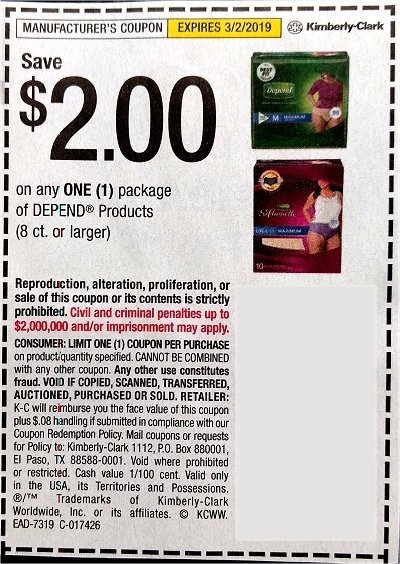
$2-mil penalty

That’s right. Kimberly Clark is threatening those who commit coupon fraud with up to $2-million in criminal or civil penalties or jail if you try to rip them off. This addition to coupons was instituted four years ago but has gone largely unnoticed.

According to the Coupon Information Corporation, the industry group that fights coupon fraud, losses from counterfeit coupons and coupon misuse cost manufacturers (and in turn consumers) millions of dollars a year. In the largest case to date, the head of a coupon clearinghouse was sentenced to 10 years in jail and ordered to pay $65 million in restitution to companies, including Kimberly Clark, after being convicted in a massive coupon fraud case.

The warning on coupons is meant as a deterrent. But for those who ignore it and get busted by the feds by surprise, they may have wished they had actually used this Kimberly Clark coupon:

Depends

Share this story:


ADV