
In October last year, Red Robin announced an upgrade — that it had a “new and improved lineup of gourmet burgers” that were “juicier and more flavorful.”
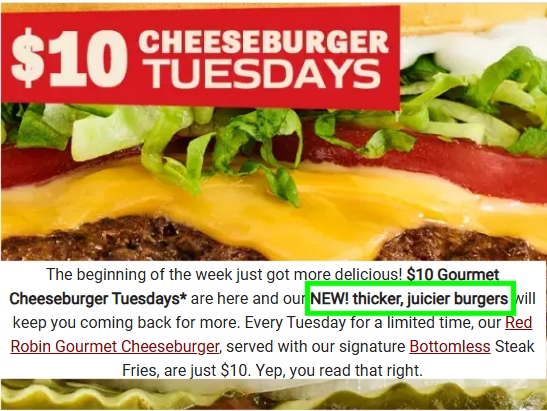
This August, Red Robin further announced a limited time promotion for a gourmet cheeseburger and unlimited fries for $10. No doubt, this is a pretty good deal given fast food prices and portion sizes today.
One Red Robin regular, WiseSofa1748, commented on their burgers in the following post, saying they are not as good as they used to be because the reason they are juicier is that they are fattier.
The new burgers they use suck. The old ones they had for years and years were so good. I asked the store manager when I last went and she told me it was really to cut costs, they went to a less lean, cheaper cut of beef that allowed it to be “juicier” aka more fat and slightly bigger bc its a crappier cut. It doesn’t taste near as good. Same for the bun and cheese she said, both were swapped out and Red Robin claimed it was for taste but as always it was to save a buck.
Are the consumer and the manager right? We did a little detective work to compare the current nutritional disclosures for their gournet cheeseburger with the previous listing from a year earlier, excerpted below.
*MOUSE PRINT:
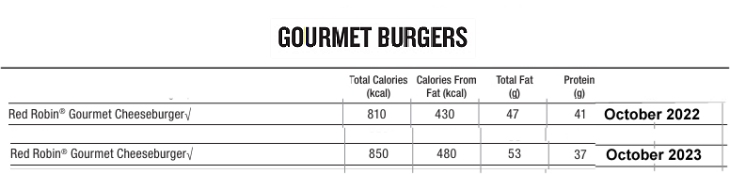
Indeed, the amount of fat content went up, while the amount of protein went down. Since the company announced that it was making its burgers bigger and juicier last year, that could account for the increase in fat. However, the amount of protein should have gone up too if the company maintained the same lean to fat ratio.
We made multiple requests of the company to find out if they made the alleged changes to their burgers, but they did not respond.
While the media focuses on shrinkflation a lot these days, skimpflation is even more insidious. With shrinkflation, at least you can objectively discover when a product shrinks. But with skimpflation, product tweaks or reformulations are not generally announced or easy to discern.
We don’t know the recipes used by restaurants, the exact portion size you normally get, the grades of meat they buy, the quality or quantity of all the ingredients used in a dish, etc. So it is even easier to tinker with these things and most consumers would be none the wiser.
If you spot an example of skimpflation, please send the details and any proof you can unearth to Edgar (at symbol) MousePrint.org. Thanks.


