Updated every Monday!   Subscribe to free weekly newsletter.

Where’s the Pork? (Hint: Not in Nathan’s Hot Dogs!)

A big national class action antitrust lawsuit was filed last week alleging that major food companies conspired to overcharge consumers for bacon, ham, hot dogs and other pork products.

In a press release issued by one of the law firms, they advise consumers who purchased any of these products that they might be entitled to some money back:

press release excerpt

As a native New Yorker who grew up eating Nathan’s hot dogs at the original Nathan’s stand in Coney Island, MrConsumer knows their frankfurters are all beef and contain no pork.

100% beef

HUGE MOUSE PRINT:

Nathan's package

While all Nathan’s frankfurters are all beef, they do have one variety of fries called “Bacon and Cheddar Crunchy Crinkle Fries.” That product, however, according to the ingredients statement on the Nathan’s website, seemingly doesn’t actually contain any bacon, just artificial or natural flavoring!

MOUSE PRINT:

bacon and cheddar ingredients

So it appears, based on the items listed on their website, that no Nathan’s Famous products contain pork and thus no Nathan’s products that a consumer may have purchased qualify for a refund or are properly included in the list of affected brands. So why was “Nathan’s Famous” listed as one of the offending brands but not a defendant in the case?

The day after the lawsuit was filed, MrConsumer wrote to the two law firms that filed the class action to find out and to advise them that it appeared that Nathan’s Famous had been wrongly accused of anti-competitive conduct. He also alerted the CEO of Nathan’s Famous that his company and products were apparently erroneously called out in the law firm’s press release.

Neither law firm nor Nathan’s responded to our request for comments and an explanation.

So how did Nathan’s Famous get wrapped up in this lawsuit? This is what appears to have happened. Nathan’s Famous is distributed by the John Morrell Company, which is owned by Smithfield Foods. And Smithfield Foods is a defendant in the lawsuit because they sell other brands and products that do contain pork. Somehow the law firms apparently did not understand that Nathan’s Famous is an independent company not owned by Smithfield and that Nathan’s only sells 100% beef franks.

MOUSE PRINT:

Nathan's distributor

How could they have known these key facts about Nathan’s? Well, they just could have picked up a package, read the fine print, read the big print, and checked the Nathan’s website!

The law firm also listed Steak-eze as an affected brand. According to the Steak-eze website, and certainly implied in their brand name, they only sell beef products also.

Updated every Monday!   Subscribe to free weekly newsletter.

This is a Weight Loss Pill, Right?

Last year, a consumer purchased a bottle of Garcinia Cambogia Extract from a Vitamin Shoppe location in California believing that this product could help her lose weight.

Vtiamin Shoppe

*MOUSE PRINT:

In much smaller print, the bottle was labeled “weight management” and “appetite control” leading her to believe this was just the type of product she was looking for. (The caret after those terms merely refers to the standard fine print disclosure on the back of the label that the FDA has not evaluated these claims.)

Apparently she did a little research after purchasing it and found a study or studies from which she concluded that this stuff had been “scientifically proven to be incapable of providing such weight-loss benefits.” So like any good consumer, rather than going back to the store to get a refund, she filed a class action lawsuit alleging misrepresentation and false advertising, among other claims.

To her surprise, the judge ruled against her, saying in his decision:

The first problem with Plaintiff’s complaint is her assertion that the phrases “Weight Management” and “Appetite Control” equate to representations that the Product provides weight-loss benefits. “Weight Management” suggests management or control of one’s weight, whose upward or downward departure may differ depending on an individual person’s goals, i.e., to gain, lose, or maintain one’s weight. “Appetite Control” indicates control of one’s appetite, which may or may not ultimately result in weight-loss. Thus, it is irrelevant whether the alleged studies disprove that the active ingredients in the Product can produce weight-loss benefits because the phrases themselves do not inherently promise weight-loss benefits.

Say what? If putting the terms “weight management” and “appetite control” on a pill bottle doesn’t suggest that the contents are good for losing weight, what do they suggest?

Updated every Monday!   Subscribe to free weekly newsletter.

Starbucks Wins Underfilled Latte Cup Case

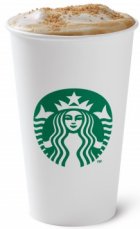
Starbucks Two years ago, we told you about an issue of Starbucks allegedly underfilling cups of its latte because it was counting the height of the milk foam in its calculations of the number of fluid ounces in each cup.

Well, a United States district court judge in California just ruled in the company’s favor. In her ruling, she deflated each of the consumer plaintiffs’ legal theories.

They first claimed that only if the cups were filled to the brim, which they tended not to be, did they hold the promised 12 ounces, 16 ounces, or 20 ounces. However, the consumers’ own expert testified that in fact the capacity of each of the cups was 14.5 fl. oz. for a Tall, 18.5 for a Grande, and 22.8 for a Venti beverage — more than enough room for the promised amount.

The consumers’ lawyers next claimed that the foam and its height should not be used to calculate the total volume of the beverage. The judge disagreed saying that since the plaintiffs themselves say that lattes are composed of three ingredients, expresso, steamed milk, and milk foam, that all three ingredients count in determining the total measure.

The plaintiffs’ final theory was that the Starbucks recipe cards themselves don’t call for enough ingredients when added together to meet the promised size of the finished drinks. The judge pointed out the recipe calls for cold milk which expands when heated, and when coupled with the required foam, does in fact come out to the promised total.

The judge seemed to have ignored Handbook 133 of the National Institute of Standards and Technology, which says you have to first dissipate the foam, and then you measure the quantity of liquid in the cup. Under the judge’s reasoning, some smart aleck coffee seller could half fill a cup with foam and possibly get away with it.