Updated every Monday!   Subscribe to free weekly newsletter.

Amazon Sued for Reneging on Some Instant Refunds

Rather than make customers wait until returned merchandise is actually received by them, Amazon has a policy of sometimes issuing instant refunds as soon as a shopper returns the product at a dropoff location like at Kohl’s, Staples, UPS, or Whole Foods.

*MOUSE PRINT:

Amazon advance returns

Of course, they reserve the right to reverse an instant refund that they issued if they never actually receive the returned items.

*MOUSE PRINT:

Amazon can recharge for returns not received

Back in 2023, Amazon was sued by a group of consumers from various states alleging that they properly brought goods to an authorized Amazon return location, got an instant refund, but then weeks and weeks later got emails claiming the goods had not actually been received by Amazon. As a result, their accounts were charged for the goods again.

In all these cases, when these consumers contacted customer service at Amazon, they acknowledged that their purchases had in fact been received, and were promised a credit and given an apology. None of them received a straight answer of how such mistakes can happen.

So Amazon is being sued in a class action for breach of contract, unfair or deceptive practices and unjust enrichment.

Just last week, a federal ruled against Amazon’s motion to dismiss, and said the case can proceed.

“Plaintiffs have adequately alleged that Amazon stole money directly from their bank accounts and continues to possess it unlawfully,” said Judge Jamal N. Whitehead of the US District Court for the Western District of Washington.


Updated every Monday!   Subscribe to free weekly newsletter.

Eggland’s Best Sued Over Free-Roaming Claims

Two Illinois consumers just sued Eggland’s Best for misrepresenting the pleasant and leisurely life its hens that lay cage free eggs supposedly experience.

The company claims inside every carton of its cage free eggs:

Eggland's Best Claim

That says “every hen is free to roam in a pleasant natural environment…” This conjures up images of hens freely taking a leisurely stroll through a lush pasture.

Hens strolling along

Of course, nothing could be further from the truth.

*MOUSE PRINT:

The lawsuit alleges:

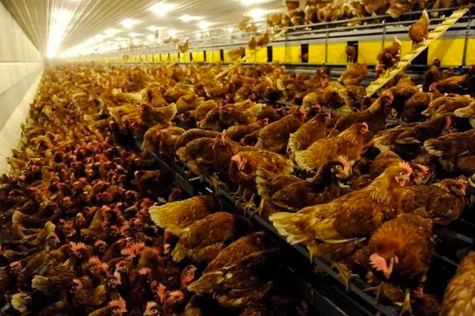
The truth is that many hens producing Cage Free eggs live in typical factory farming conditions. They are confined indoors 24 hours a day, 365 days a year. They live in windowless structures made of concrete, metal, and dirt. The structures contain hundreds of thousands of hens packed so closely together that each bird has around one square foot of floor space (or less) to itself, and many hens living in these structures never see the sun or breathe fresh air.

Eggland's old supplier2009 photo of an Eggland’s Best supplier

After the lawsuit was filed, the company appears to have modified how they describe the “pleasant natural environment” in which the hens live:

*MOUSE PRINT:

Eggland's new claim

In their legal case, the lawyers contend that these consumers paid a premium for Eggland’s Best eggs compared to conventional ones, expecting the hens to be humanely treated in the conditions described on the carton. They further contend they would not have paid extra or purchased these eggs at all if they knew the actual conditions where the eggs were harvested. They are suing the company for misrepresentation and deceptive business practices.

Updated every Monday!   Subscribe to free weekly newsletter.

Breyers to Pay $8.8-mil Over Misleading Natural Vanilla Labeling

Connoisseurs of vanilla ice cream generally prefer products made from real vanilla beans that are in the product evidenced by with those little black specs. And that is exactly what purchasers of Breyer’s Natural Vanilla ice cream should expect to get.

You can see the little black specs depicted in the scoop of ice cream right on the front of their packages along with a picture of vanilla beans and their flowers.

Breyer's Vanilla

We wrote about Breyers Natural Vanilla back in 2016 concerning a separate issue when the ingredients statement explicitly listed “vanilla beans.” Now, that is no longer stated. (See original story.)

So recently some crafty consumer lawyers decided to have the product chemically analyzed to see if it had real or artificial vanilla or both.

*MOUSE PRINT:

Laboratory analysis, specifically by the Center for Advanced Food Technology at Rutgers University, demonstrated that Breyers Natural Vanilla Ice Cream contains vanilla flavor from non-vanilla plant sources.

The testing of Breyers Natural Vanilla Ice Cream did not detect p-hydroxybenzaldehyde, vanillic acid or p-hydroxybenzoic acid, which means the Breyers Natural Vanilla Ice Cream has, at most, a small amount of real vanilla…

So they sued Unilever in June (see complaint) and believe it or not, they already announced a tentative settlement.

Therefore, if you bought any size container of Breyer’s Natural Vanilla ice cream from April 21, 2016 through August 14, 2024, you are entitled to get one dollar back for each one. If you have proofs of purchase, you can claim as many as you bought. Otherwise, the maximum claim is for eight cartons and you can get back $8. File a claim here.

The company is also being required to reformulate the product and not include vanilla flavor derived from non-vanilla plant sources.