Updated every Monday!   Subscribe to free weekly newsletter.

Does Your Fabric Softener Give You the Loads Promised?

Breaking News

If you didn’t see it, President Biden released a video on Super Bowl Sunday warning viewers to check their snack foods because many of them have gotten smaller, costing you more money. He called on manufacturers to voluntarily stop the practice of shrinkflation.


Snuggle 120 loadsA common ploy used by detergent and fabric softener manufacturers is to exaggerate the number of wash loads you get out of each bottle.

Now a Missouri consumer is suing the maker of Snuggle fabric softener for misleading practices (see complaint).

*MOUSE PRINT:

In the 120-load, 96-ounce bottle, there is a hard-to-see diamond-shaped asterisk-like symbol that leads shoppers to a disclosure on the back of the bottle.

Snuggle asterisk
Snuggle back of bottle

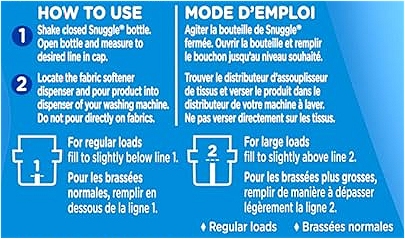
It says “120 loads” refers to “regular” loads. However, you have to use double the amount of softener for “large” loads which according to the consumer’s lawyer is the laundry load size that most users do.

19. Because consumers … expect full loads of laundry when seeing the term “load” (instead of half-loads) – consumers are being cheated out of at least 50% of what they expect, based on Defendant’s own measurements.

20. For the vast majority of consumers doing full loads of laundry, the most loads the Product provides softener for is approximately 60 or less, not 120.

The complaint points out that some fabric softener manufacturers play it straight(er) now by saying that the load size shown on the front refers only to a small wash load.

Suavatel

That is certainly better but it is still misleading since the average user does not do small loads according to the complaint.

Why can’t manufacturers just play it straight and tell purchasers the actual number of loads they will get from a bottle based on the way most consumers actually use the product?

Updated every Monday!   Subscribe to free weekly newsletter.

Verizon to Refund $100-Mil for Hidden Fees

Verizon Wireless has tentatively settled a class action lawsuit that alleged the company advertised a price for cell plans but then jacked-up consumers’ bills with hidden administrative charges.

*MOUSE PRINT:

The complaint specifically alleges:

The Administrative Charge is not disclosed to customers either before or when they agree to purchase wireless service from Verizon, and in fact the Administrative Charge is never adequately or honestly disclosed to customers.

The current amount of the Administrative Charge is $3.30 per line per month—a more than 8X increase from the original amount of the Charge [40 cents].

The first time Verizon customers can possibly learn about the existence of the Administrative Charge, or the amount of the Charge, is on the customer bills… [but] Verizon’s paper bills fail to mention the Administrative Charge at all, stating instead that a customer should “[c]heck your online bill for all surcharges, taxes and gov fees.”

[F]or years, Verizon explicitly and falsely stated on its monthly bills that the Administrative-Charge is a surcharge imposed on subscribers to “cover the costs that are billed to us by federal, state or local governments.”

For its part, Verizon has denied the claims, but says it has changed the way it describes those fees.

Verizon customers who purchased postpaid cell or data plans from the company between January 1, 2016 and November 8, 2023 are eligible to share in the $100-million proposed settlement. The maximum payment is $100, but that could be reduced based on how many consumers file claims and for how long they were a customer.

Claims must be filed by April 15, 2024 at the settlement website. Most customers were just notified via postcard of their eligibility to file a claim and were given a notice ID and confirmation code to enter on the website. If you did not receive that, here is the official claim form.

Updated every Monday!   Subscribe to free weekly newsletter.

Shoppers Sue Retailers Over Sneaky Practices – Part 3

We wrap up our series of stories where retail shoppers are mad as hell and not going to take it anymore. This time, a Massachusetts shopper is suing Stop & Shop supermarket over their store brand of flushable wipes.

Stop & Shop Flushable Wipes

The consumer contends in his lawsuit that flushable wipes he bought are not actually flushable.

*MOUSE PRINT:

…reasonable consumers expect that “flushable wipe” products will disperse in a short amount of time after flushing and therefore will not clog or cause other operational problems in household sewage lines, septic systems, and other standard wastewater equipment. To be suitable for flushing, any “flushable” product must be able to quickly disintegrate into small pieces such that it can pass through sewer systems without issue.

4. Contrary to Defendant’s representations, the Wipes are not, in fact, flushable. The Wipes do not break apart or disperse after flushing.

Neither the consumer nor his attorney presents any evidence that the Stop & Shop brand of flushable wipes were tested by them and were shown not to disintegrate quickly. They offered studies of other brands that demonstrated the likelihood they would clog drain lines. This Consumer Reports video from almost 10 years ago showed how some brands could likely clog toilets but others would not.

In addition, the consumer claims that the packaging of these wipes cleverly partially covers the warning of when these wipes should not be flushed. You have to unfold the white flap on the bottom on the package to see the entire small print disclosure.

*MOUSE PRINT:

Stop & Shop wipes warning

We’ll have to see if the consumer’s case holds up in court or disintegrates.