
Prices on paper goods are going up again, but you’d never know it because the packages look about the same and you pay the same at the checkout. But you are getting less in each package.
Kleenex Tissues
The boxes are the same size but Kleenex is giving you 10% fewer tissues. Thanks to Leif S. for spotting this downsizing in progress right now.
*MOUSE PRINT:

Brawny Paper Towels
Brawny has a long history of downsizing its paper towels. This time, packages are going from 87 sheets down to 80 sheets — almost a 10% reduction.
*MOUSE PRINT:

Downy Unstoppables
*MOUSE PRINT:
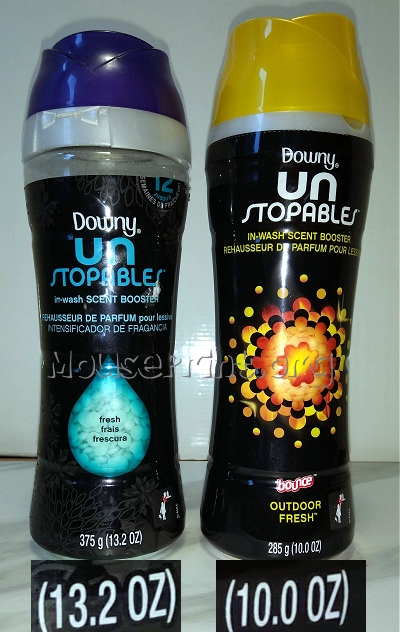
P&G recently came out with new bottles of Downy Unstoppables laundry fragrance enhancers. The bottle is slightly larger but the contents actually weigh 25% less. That’s a big downsizing… seemingly. Even more surprising, when tossing these pellets in water, they float, whereas the old ones sunk to the bottom. Checking with customer service revealed what had really changed. The product engineers at P&G removed some of the dead weight from each pellet making them lighter. That cut the net weight of each bottle by a quarter, but the number of laundry loads you get remained the same. So it only looked like Unstoppables had been downsized.
If you spot a new example of a product being downsized, please try to take a sharp picture of both the old and the new packages and send it to: edgar (at symbol) mouseprint.org . Thanks.


