Updated every Monday!   Subscribe to free weekly newsletter.

AMEX Cash Back Offers: Too Good to Be True?

American Express is known for promoting very generous cash back offers such as ones that provide $10 back if you spend $10 or more at a small business. Here are some other recent examples, good deals for sure:
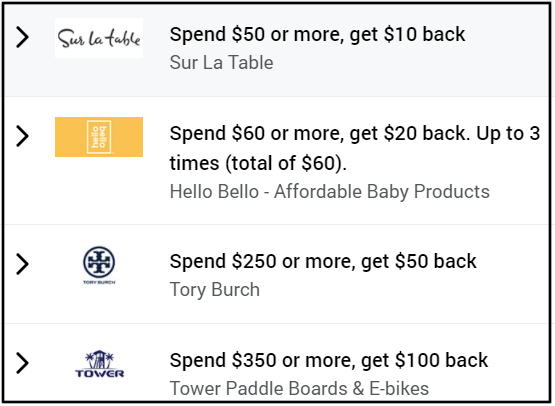
Amex typical offers

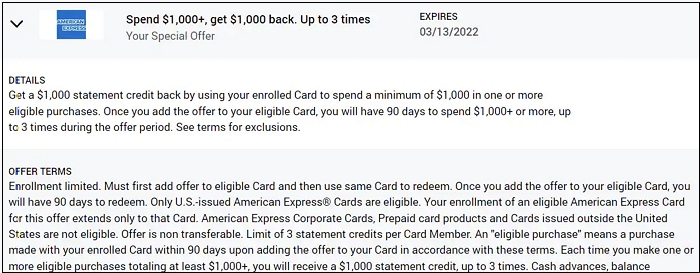
Last week, however, people on a bargain discussion board couldn’t believe their eyes when some of them found this offer in their AMEX account:

*MOUSE PRINT:
Amex 1000 off 1000

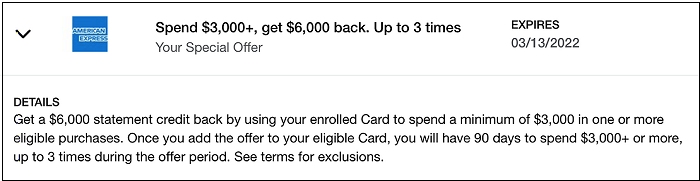
That’s right, spend $1,000 in one or more purchases and American Express will give you back a $1,000 statement credit. And you could do it three times! People couldn’t believe it. Then it got even crazier as other people checked their accounts. Most got nothing or a promise of bonus points. But others hit the jackpot, like this lucky cardholder.

*MOUSE PRINT:
AMEX 6000

Holy ****. Spend $3,000 and get back $6,000!? Keep in mind, this is on the genuine American Express website on a page of offers you see only after you log in to your account. People speculated that the company had been hacked, or there was a typo because the payback was probably meant to be “points” rather than “dollars,” or that some rogue employee decided to maliciously take revenge on the company. Others thought it was real, kept screenshots of the offer they signed up for, and hoped that AMEX would make good on it.

We asked the PR folks at American Express for an explanation. A spokesperson for the company told Consumer World:

“Due to a technical error, a small number of American Express Card Members were shown and subsequently enrolled in a statement credit offer for an incorrect amount. We quickly caught the error and removed the offer. American Express will honor this offer for the limited number of Card Members who enrolled.”

Wow! Hat’s off to American Express for honoring the erroneous offers. And merry Christmas to the several hundred cardholders who were lucky enough to get and enroll in them before they were pulled.
Updated every Monday!   Subscribe to free weekly newsletter.

Fidelity Cuts Credit Card Benefits

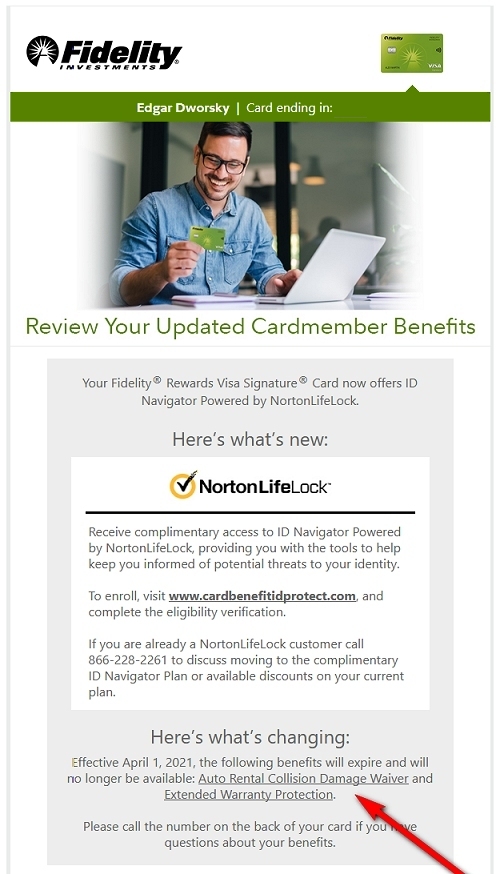
If you have a Fidelity Investments credit card (most pay 2% cash back), you may have recently received an email with good news. They are adding a new benefit to your card — a free version of NortonLifeLock protection.

However, if you didn’t read the fine print, you may have missed an even more important announcement.

*MOUSE PRINT:

Fidelity benefits cut

That’s right. They are getting rid of two core benefits of their card — extended warranty and collision damage waiver. Many big card issuers did away with doubling the manufacturer’s warranty and some other benefits a few years ago, but Fidelity held on.

You can no longer assume that you can use any card in your wallet and get rental car and warranty protection automatically. If you are counting on these protections, call your card issuer in advance of purchase or rental to double-check if your card still provides them.

Updated every Monday!   Subscribe to free weekly newsletter.

Credit Card Updater Services May Result in Unexpected Charges

When MrConsumer received a replacement Visa debit card from his bank because the old one was about to expire, there was a small note inside:

*MOUSE PRINT:

“Visa Account Updater: Your Salem Five debit card now includes Visa Account Updater. This feature automatically updates your debit card information with participating merchants you have recurring payment relationships with when your card is renewed or reissued at expiration.”

In other words, if you have certain bills like utilities, cable, or mail order pharmacy on “autopay” meaning they automatically charge your credit card or debit card every month for the balance due, Visa will tell those merchants your new expiration date or card number whenever the card is replaced.

This is good in many respects particularly for people who don’t want to be bothered having to contact each merchant with the new information, and to avoid bills not being paid on time because the card expired.

But it could also pose a problem for cardholders who deliberately give a company a soon-to-expire credit card number because they don’t want the plan they may have signed up for to self-renew. For example, you may not want your gym to keep billing you after your contract is up, or you took advantage of a free trial offer somewhere, and you don’t want them to keep charging your card because you don’t trust them.

Recently a Boston-area consumer thought the only way he could ensure that the bankrupt Boston Sports Club would stop charging her monthly fees for one of their closed locations was to change her credit card number… but he was wrong. The company transferred his membership to a new location and because of this credit “feature” they were able to start charging his new card the monthly fee again.

Some scam artists have even discovered how to use these card updater services to continue to defraud victims.

Visa is not alone in telling merchants about your new card. MasterCard has a similar program called “Automatic Billing Updater” as does American Express (“CardRefresher“).

My bank allows cardholders to opt-out of the automatic renewal notification service. (See how their Visa updater program works.)

If you don’t want your card issuer to automatically notify the companies to whom you have given your card number about updates to your card, ask if you can opt-out of that service.