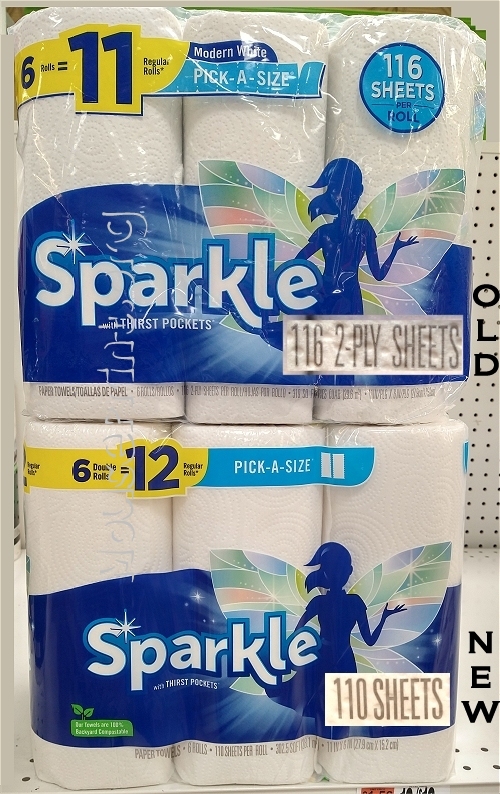
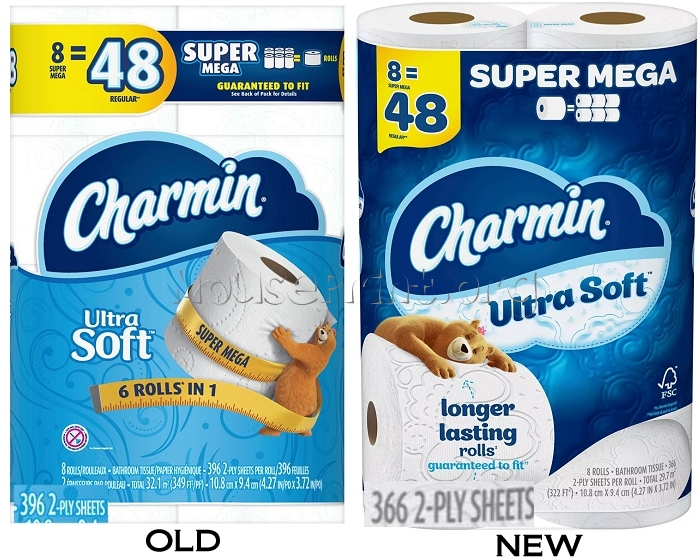
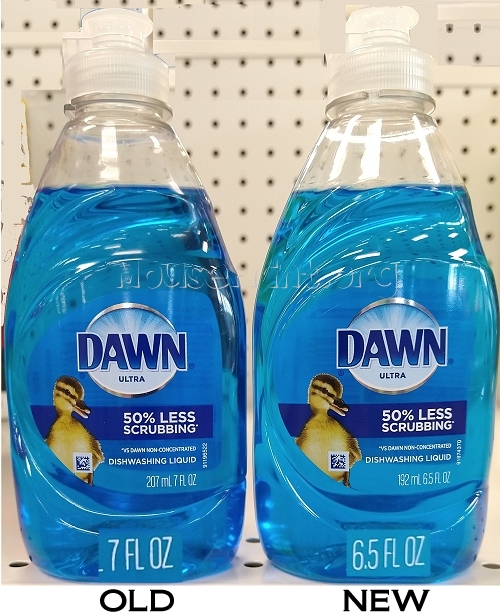
With inflation at a four-decade high, is it any wonder that some manufacturers are shrinking their products (shrinkflation) instead of, or perhaps in addition to raising the price? Since most shoppers don’t pay attention to the net weight or net count disclosure on packages, manufacturers can pass on a sneaky price increase without much notice by just making their products a little smaller. Here is part one of our latest round of products that have been downsized in 2022 or discovered this year.
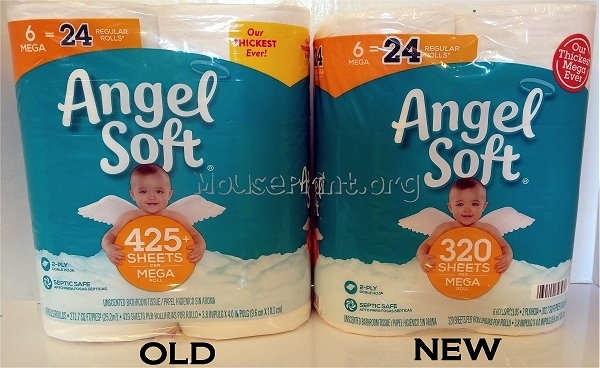
Paper towels and toilet paper are two common culprits when it comes to downsizing. This time, Angel Soft dramatically downsized its mega rolls from 425 sheets to just 320 sheets. The company did, however, make the new sheets 20% thicker they say. Amazingly, despite losing over a quarter of the sheets, the new package is virtually the same size as the old. We bought the items below at the same store, at the same time, and paid the same price for both. Thanks to our ace shrinkflation sleuth, Richard G., for this submission.
*MOUSE PRINT:
Visiting Home Depot recently, MrConsumer found a large display of Miracle-Gro Plant Food which has traditionally come in five-pound canisters. This year, if you are not careful, your $9.98 purchase price won’t go nearly as far if you pick up the wrong package.
*MOUSE PRINT:
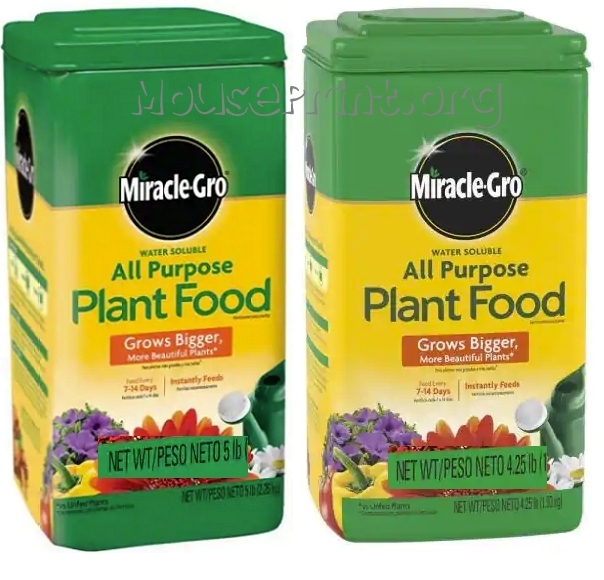
There were five-pound canisters side-by-side with ones that were only four-and-one-quarter pounds — 12 ounces less. That may be a sure way to grow company margins at the expense of customers. The company did not respond to our questions about the size change. Thanks to Stephen M. for this lead.
Various varieties of Breton crackers recently lost an ounce or more per box. Here, for example, their multigrain variety went from 8.8 ounces to 7.3 ounces — a loss of an ounce-and-a-half. Interestingly, at the store where these were found, the new, smaller box was 19 cents more expensive.
*MOUSE PRINT:

We can always count on paper goods to be subject to shrinkflation. This time it is Kleenex tissues — those little powder room boxes — five tissues disappeared from every box. That’s nearly a 10% reduction. Thanks to Greg D. for this submission.
*MOUSE PRINT:

|
Post Honey Bunches of Oats
|
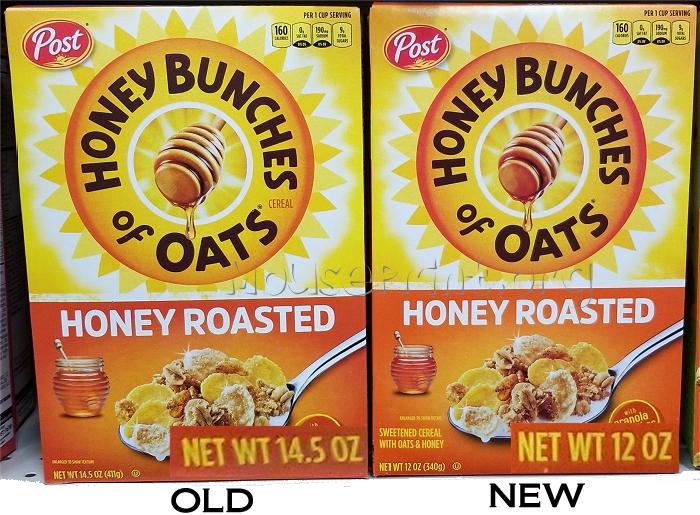
Joining the parade of cereals being downsized is Post Honey Bunches of Oats, which now has 17% less. That is almost two bowls of cereal less as their 14.5-ounce boxes went down to only 12 ounces. The boxes look identical, but in fact the new one is narrower. Thanks to Leif S. for this submission.
*MOUSE PRINT:
|
Haribo Gummy Bears – CLARIFICATION
|
The makers of Haribo Goldbears have a 5-ounce “Share Size” bag and an identical looking bag also called “Share Size” but it only has 4 ounces in it.
*MOUSE PRINT:
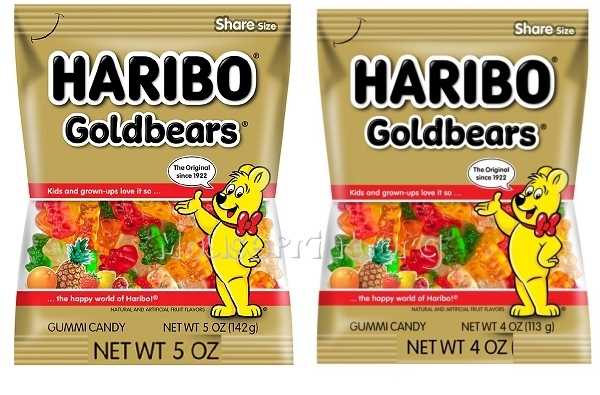
We wrote to the company three times asking if the product had been downsized from five ounces to four. The one response we got from customer service said “Our products come in various sizes to satisfy the wide-range expectations of our beloved consumers.”
After our story was published, we heard from the company’s head of corporate communications who clearly advised us that the company manufactures both a four and a five-ounce size of Goldbears and that it had not been downsized. We want to make that point clear.
Our original post raised the possibility that both sizes co-exist and that retailers may choose which one to carry. And that turned out to be the case. So, shoppers just have to be careful to pick up the bag that offers the best value.
This is a very odd one. The 75-ounce jugs of Arm & Hammer laundry detergent are now only 67.5 ounces — almost a full cup less. But the jugs and the caps are virtually identical in size. And both sizes were $5.99 at the same chain.
*MOUSE PRINT:

But… both promise to do “50 loads” of laundry. Usually this suggests the manufacturer has reformulated the product or tinkered with the dosing instructions or cap size. Inexplicably, the instructions on the old bottle said to fill the cap to line 1 for medium loads, while the new one says to fill it to line 5. There are nine different and virtually unreadable lines in the cap. Oddly, filling to line 5 provides less detergent than filling to line 3. The company did not respond to multiple requests for comment.
Come back next week for part two. And if you find a product that has been downsized, please take a sharp picture of the old one and the new one side-by-side with the net weight showing. Send you submission to Edgar (at symbol) MousePrint.org . Thanks.

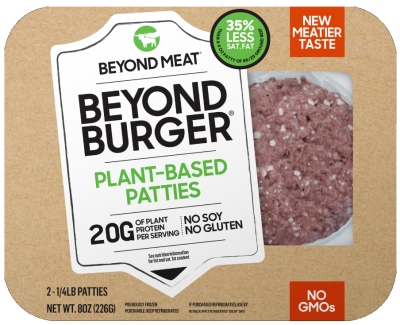 Six Illinois consumers are suing Beyond Meat, one of the leading makers of plant-based burgers and other meat substitutes, alleging that the company overstates the amount of protein in most of their products. It goes on to assert that the “daily value” percentage (“DV”) representing how much protein the product contributes to meeting the government’s daily requirement for protein is grossly exaggerated.