Updated every Monday!   Subscribe to free weekly newsletter.

Folgers Gets More Coffee Out of Fewer Beans

Folgers and other brands of coffee have faced various lawsuits recently alleging that it is impossible to get the full number of cups of coffee promised on each canister. Now the lawyers may have a real field day because Folgers has dramatically dropped the number of ounces on some its canisters but kept the number of cups that each will yield the same.

*MOUSE PRINT:

Folgers 51 -43.5

Each 51-ounce canister lost 7.5 ounces, bringing the size down to just 43.5 ounces, but you still supposedly get 400 cups. When asked on Twitter about this, the company explained the change:

We have employed a new, roasting technology that makes the most out of every bean — resulting in lighter-weight coffee grounds that deliver the same taste you love across the same number of brewed cups. Through the use of this new roasting process, we’re able to get more coffee flavor from each bean while providing the same amount of coffee servings. The total weight of our coffee products will be reduced, but the amount of coffee you receive, by way of total servings, will remain the exact same. Hope this clears up any confusion.

This reminds MrConsumer of a similar response P&G made perhaps 35 years ago about their flaked coffee. They said they had fluffed up the beans so much, exposing more surfaces of the grounds, that they could no longer fit 16 ounces in the can. But, it would still make as many cups as the original.

Folgers Flaked Coffee

Other Folgers coffee containers, old and new, spotted on retailers’ websites recently are real head-scratchers too:

Folgers differences

It is not the new math. The middle container was subject to the new bean processing technology.

Note: Packages are displayed only to show numerical changes in net contents. Physical package dimensions may or may not be to scale.
Updated every Monday!   Subscribe to free weekly newsletter.

Dunkin’ Sued Over Refused Gift Card Refunds

Dunkin' Gift CardAbout 10 states require sellers of gift cards to refund small balances of money left on previously used cards. So if a $50 card only has $4.82 left on it, you can ask for that money back. The trouble is, some gift card sellers, like Dunkin’, are allegedly refusing to make those refunds.

So earlier this month, a New Jersey consumer sued Dunkin’ in its home state of Massachusetts on behalf of all customers who have been refused refunds (see complaint).

The complaint alleges that Dunkin’ has no mechanism for making these refunds when a customer requests it despite language on its cards that says:

*MOUSE PRINT:

“Card Value may not be redeemed for cash, check or credit unless required by law [emphasis added].

Under the laws of both Massachusetts and New Jersey, when a gift card’s balance is below $5 (MA is $5 or less), upon request, the merchant must refund the balance.

*MOUSE PRINT:

A purchaser or holder of a gift certificate … which has been redeemed in part, such that the value remaining is $5.00 or less, shall make an election to receive the balance in cash or continue using the gift certificate. — M.G.L.A. 200A § 5D

[I]f a stored value card is redeemed and a balance of less than $5 remains on the card after redemption, at the owner’s request the merchant or other entity redeeming the card shall refund the balance in cash to the owner. — N.J.S.A. 46:30B-42.1(h)

The court case alleges that Dunkin’ has been unjustly enriched by pocketing all the remaining balances on cards, and is in breach of various consumer protection laws in addition to the gift card statutes. Dunkin’ did not respond to multiple requests for comment.

It will be interesting to hear what imaginative defense Dunkin’ comes up with, or perhaps it will just quickly settle the case.

Updated every Monday!   Subscribe to free weekly newsletter.

Are Nellie’s Eggs Really “Free Range?”

Nellie egg boxWith egg prices going through the roof at the moment, some companies still promote premium-priced eggs because they are seemingly raised in a more humane way such as those that are “cage-free” or “free range.”
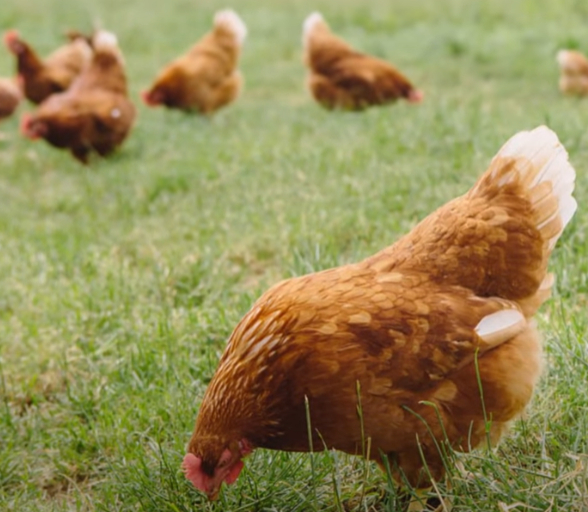

One such company, Nellie’s, sells Free Range eggs and claims in this video that unlike other egg farming factories that house their hens in overcrowded warehouses…

“Our free-range hens get to live their lives like real hens, with access to pasture everyday in good weather. Our hens can spread their wings, forage in the fields, or scratch in the dirt.”

Nellie's pasture

Even on their [previous] box, the company claims that their chickens “get to peck, perch, and play on plenty of green grass.”

Nellie box claim

But, a class action lawsuit says that a more accurate depiction of the everyday conditions Nellie’s hens face is this, taken from a PETA video:

*MOUSE PRINT:

Nellie hens

The complaint alleges:

… the conditions in Defendant’s henhouses are virtually indistinguishable as those from the example they show as being not “Free Range” where hens are essentially “liv[ing] inside a space much like a large overcrowded warehouse.” Nellie’s itself describes this as a “grim existence” for these hens. But contrary to its packaging representations, that is precisely how Nellie’s own hens live.

Defendant’s hens can only get outside through small hatches cut at intervals along the sides of the shed. The hatches are closed all winter and during inclement weather. In pleasant weather the hatches are closed at night and are not opened until 1 pm the next day.

Because of this overcrowding and limited time that the hatches are open, many of Defendant’s hens are unable to ever access the hatches or the outdoor space.

The lawsuit, therefore, alleges false and misleading claims are being made by the company. A couple of months ago, a judge denied the company’s motion to dismiss the case. Here is a little more about the case and the judge’s initial ruling.


Godiva Case Update

Back in December we told you about a class action case filed by consumers against the Godiva chocolate company for misleading customers into believing that their expensive delicacies were made in Belgium when in fact they are manufactured in Pennsylvania. (See our original story.)

Now a judge has approved a negotiated settlement between the parties giving consumers who purchased Godiva products between 2015 and 2021 up to a $25 refund with proof of purchase. Several state AGs objected saying the terms of the settlement did not benefit consumers enough, but the judge denied their claims. Oddly, the deadline for filing claims passed before the judge made his final ruling.