Updated every Monday!   Subscribe to free weekly newsletter.

Some Grocery Products Are “Price-Fixed” Preventing Deep Discounting

groceriesThis week we reveal a dirty little secret in the grocery business.

We’re in the midst of a nasty period of inflation putting pressure on many families’ grocery budgets. But in some cases, the problem is being exacerbated because of a little-known manufacturers’ policy that prevents stores from deep discounting certain products.

First, a little history. When MrConsumer was a teenager, he remembers going to wholesale showrooms with his mother to buy Corning Ware at 40% off. You could not get a discount at retail stores in New York because that brand was “fair-traded” — meaning that it had to be sold at full retail price.

Those days are gone, but the concept lives on in modified form under the retail concept called “resale price maintenance” (RPM). For years, high-end products like Sony, Apple, or Bose commanded (and still command) premium prices and are rarely advertised at deep discount. These brands are likely subject to “MAP” — minimum advertised prices. That is a related pricing scheme allowed by federal antitrust law [see pages 3-7] that permits a manufacturer to unilaterally “announce” the lowest price at which it will allow its products to be advertised. Retailers who violate “MAP” could lose out on advertising funding (co-op ad dollars) or be cut off as a distributor of the brand. However, mandatory minimum pricing contracts between manufacturers and retailers while no longer per se illegal, risk legal challenge.

In many court cases, MAP was justified in part because it was applied to sophisticated products that required salespeople at department stores to educate shoppers about the benefits of the particular brand, and the employment and training of these workers was a costly proposition. MAP gave retailers more margin to afford those extra expenses.

MrConsumer has long suspected that MAP had crept into the grocery business, where supermarkets were expected not to advertise certain famous brand products below a floor set by the manufacturer and certainly not be used as a loss leader to build store traffic.

Take this example of regular liquid Tide in the 92 oz. bottle. During early November, checking some supermarket and retail ads around the country, the price was never advertised below $11.95 (give or take a few pennies) except when it typically came with a retailer-supplied manufacturer’s $3 off coupon offered directly to customers. In that case, the price was never advertised below $8.95.

Tide from Amazon
Tide in three stores

How is it that all these independent sellers serving different parts of the country have identical sale prices and not one of them is lower? They are certainly not allowed to conspire with each other. So Tide had to be subject to MAP, I speculated. But how to prove it? Then along came Sam’s Club with the smoking gun.

*MOUSE PRINT:

Tide Sam's Club

There it was in black and white — Sam’s Club disclosed that Procter & Gamble, Tide’s manufacturer, had prevented it from advertising their price for this Tide product (a warehouse size) because their price was lower than the minimum price they were allowed to promote.

Gotcha!

We wrote to P&G to confirm this, and asked some very pointed questions. How do they justify applying MAP to grocery items (since there are no high-priced salespeople in store aisles needed to educate shoppers)? What other P&G products are subject to MAP? How common is MAP in the grocery business? And much more.

P&G has not responded despite multiple requests.

We believe that Tide and P&G are just the tip of the iceberg. The question is which other major consumer products manufacturers are preventing retailers from advertising deep discounts on grocery products at a time when shoppers’ budgets are being increasingly strained by inflation?

What are your thoughts? Should manufacturers be able to dictate sale prices to stores thus limiting discounts?

Updated every Monday!   Subscribe to free weekly newsletter.

Partially-Filled Movie Candy Boxes Case Settled

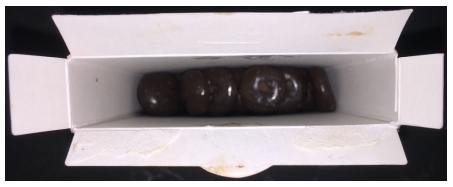
Back in 2017, we showed you how those outrageously priced boxes of candy you get at movie theaters were only partially filled. (See original story). It is called “slack fill” when packages have nonfunctional empty space in them to give the consumer the impression that the package contains more content than it actually does.

Rossen Reports Movie Candy

Now, four years and several lawsuits later, a settlement has been reached. If you bought a cardboard box of Raisinets®, Buncha Crunch®, Butterfinger Bites®, Tollhouse Semi-Sweet Chocolate Morsels®, Rainbow Nerds®, SweeTarts®, Spree®, Gobstopper®, Sno-Caps®, and Runts® candy between February 9, 2013 and September 23, 2021, you are entitled to an up to $8 refund (50 cents per box).

The deadline for filing a claim is December 27, 2021.

Going forward, the settlement requires Ferrera (the manufacturer of most of the products in question) to fill a larger percentage of each package or provide some other statement on the box regarding the amount of candy inside.

*MOUSE PRINT:

Each of the Ferrara and Ferrero Defendants may choose, in their sole discretion, the specific measures to take to achieve these aims, which may include, for example: (i) including an actual size depiction of an individual piece of the Covered Product’s candy accompanied by the term “actual size” on the product label, (ii) providing a fill line on the product label, (iii) targeting a fill level for the packaging that, measured from the top of the candy, with carton sides held rigid, would be higher than the current fill level, provided that such fill level does not interfere with the functioning of any container reseal mechanism; or (iv) including any other label statement or image, in addition to the net quantity of contents statement, that provides a piece count, volume or amount.

Of course, leaving the remedy of how to correct their past practices to the company itself may result in the least effective method to benefit customers.

Updated every Monday!   Subscribe to free weekly newsletter.

Judge Dismisses the “No Tuna” in Subway Tuna Case

Last week, a federal court judge in California dismissed the case against Subway restaurants that originally alleged that there was no tuna in Subway tuna sandwiches. (See our original story.) The case drew worldwide attention.

No Tuna Quotes

The consumers who sued said they had laboratory test results to back up their claims that “the Products are made from a mixture of various concoctions that do not constitute tuna,” but they never revealed what it really was.

In our original story, we showed pictures of the label on the bulk packages from which Subway makes their tuna sandwiches, and it clearly showed that flaked tuna was the primary ingredient. Other media outlets ran their own tests of Subway tuna, and at least one confirmed it was real tuna. (See our second story.)

Then in June, lawyers for the consumers quietly amended their complaint dropping all their original “no tuna” claims, and substituting a new claim that Subway’s tuna is “not 100% sustainably caught skipjack and yellowfin tuna” as advertised. We pointed out in our third story that the only place we could find that claim by Subway was buried in the social responsibility section of the company’s website. And no customer standing at a Subway counter first goes to check that page before ordering.

So if consumers never saw the claimed misrepresentation, how could they claim they relied on it, were misled by it, or harmed by it? And that was exactly how the judge ruled last week:

*MOUSE PRINT:

Although Plaintiffs allege that they purchased Subway sandwiches “[i]n reliance on Defendants’ misleading marketing and deceptive advertising practices,” they do not say that they actually read or heard any such advertising or packaging.

Plaintiffs are the only ones who can identify which statements they saw and relied upon and where they saw them. Subway cannot properly defend itself against a complaint that does not identify the misstatements it allegedly made. [See ruling.]

So the judge dismissed the case but is allowing the plaintiffs to refile another amended complaint.

In a statement issued by the company, Subway said, “We commend the court for dismissing the reckless and improper lawsuit surrounding Subway’s tuna.”