Updated every Monday!   Subscribe to free weekly newsletter.

Starbucks Wins Underfilled Latte Cup Case

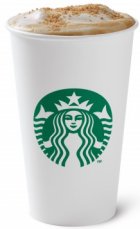
Starbucks Two years ago, we told you about an issue of Starbucks allegedly underfilling cups of its latte because it was counting the height of the milk foam in its calculations of the number of fluid ounces in each cup.

Well, a United States district court judge in California just ruled in the company’s favor. In her ruling, she deflated each of the consumer plaintiffs’ legal theories.

They first claimed that only if the cups were filled to the brim, which they tended not to be, did they hold the promised 12 ounces, 16 ounces, or 20 ounces. However, the consumers’ own expert testified that in fact the capacity of each of the cups was 14.5 fl. oz. for a Tall, 18.5 for a Grande, and 22.8 for a Venti beverage — more than enough room for the promised amount.

The consumers’ lawyers next claimed that the foam and its height should not be used to calculate the total volume of the beverage. The judge disagreed saying that since the plaintiffs themselves say that lattes are composed of three ingredients, expresso, steamed milk, and milk foam, that all three ingredients count in determining the total measure.

The plaintiffs’ final theory was that the Starbucks recipe cards themselves don’t call for enough ingredients when added together to meet the promised size of the finished drinks. The judge pointed out the recipe calls for cold milk which expands when heated, and when coupled with the required foam, does in fact come out to the promised total.

The judge seemed to have ignored Handbook 133 of the National Institute of Standards and Technology, which says you have to first dissipate the foam, and then you measure the quantity of liquid in the cup. Under the judge’s reasoning, some smart aleck coffee seller could half fill a cup with foam and possibly get away with it.

Updated every Monday!   Subscribe to free weekly newsletter.

A Sweet Ending to a Nutty Story

Two weeks ago we told you about a misbranded trail mix product that was labeled as containing primarily almonds, but in fact was mostly peanuts. The manufacturer had quietly substituted the cheaper peanuts when almond prices skyrocketed.

1 cup of trail mix

The retailer that sold the product in MrConsumer’s area, Ocean State Job Lot, was unaware of the ingredients switcheroo by the manufacturer until we pointed it out to them. They took the product off the shelves of their 129 stores in the New England/New York area immediately.

And now they are donating all 3,200+ bags of the mislabeled trail mix to the Greater Boston Food Bank.

That’s a sweet ending to this nutty story.

Not so sweet, however, is the retailer’s reluctance to invite their customers to return the product for a refund or replacement. And we’ll update you if and when the FDA takes any enforcement against the manufacturer.

Updated every Monday!   Subscribe to free weekly newsletter.

Some Diners Don’t Appreciate “Kitchen Appreciation”

Friends of MrConsumer have been trained to check the fine print of their transactions. A bit of scrutiny of a recent restaurant bill revealed a surprising add-on to the check:

*MOUSE PRINT:

Kitchen appreication

An extra charge of $1.29 called “kitchen appreciation” was added to the tab. When my friend asked the server what that was, he got kind of a muddled explanation, and was told to check the menu.

On the Sweet Cheeks menu (which is owned by first season Top Chef finalist Tiffany Faison) there is a disclosure that reads in part:

WE ARE IMPLEMENTING A 3% KITCHEN APPRECIATION FEE TO THE GUEST CHECK THAT WILL DIRECTLY BENEFIT OUR BACK OF THE HOUSE (BOH) TEAM.

WE STRUGGLE WITH THE DISPARITIES BETWEEN FRONT OF THE HOUSE (FOH) AND BOH WAGES.

THE WAGE GAP BETWEEN THE FOH AND BOH HAS BECOME STAGGERING. FOH EMPLOYEES EARN NEARLY THREE TIMES MORE THAN THEIR BOH COUNTERPARTS.

THE KITCHEN APPRECIATION FEE ALLOWS ALL BOH EMPLOYEES TO DIRECTLY BENEFIT FROM THE TOP LINE SUCCESS OF THE RESTAURANT.

Put simply, the customer is being told that they must subsidize the comparatively low wages of the kitchen staff by being surcharged 3-percent on the total bill. (MrConsumer might point out that the restaurant then appears to charge meals tax on top of this kitchen tip which is probably not authorized under state law.)

Sweet Cheeks didn’t come up with this idea on their own. Famous New York restaurateur Danny Meyer two years ago started the ball rolling by no longer allowing tipping so he could instead charge more for meals and then more equitably distribute the extra income between servers and kitchen staff. Other restaurants began adding hospitality fees as a way to better pay and retain kitchen staff.

So, what do you think about adding a 3-percent “kitchen appreciation” fee automatically to restaurant bills? Add your comments below.