
 All three major drugstore chains (CVS, Rite Aid, and Walgreens) now advertise sale items only for loyalty cardholders. No card, no savings. Unlike the old days, when you saw Bufferin on sale for $1.99 and actually paid $1.99 for it, now you pay maybe $2.99 (at CVS and Rite Aid) but a get a $1 coupon on your register receipt good only toward a future purchase. It is like getting an IOU for the savings they promised, rather than them giving it to you on the spot. Some would say it is almost like a pyramid scheme.
There are several problems from a consumer standpoint with this scheme. You don’t get instant savings, you are forced to come back again to use up the coupons, you might lose the coupons and thus lose the savings, the coupons expire in 14 days (Rite Aid) and 30 days (CVS), failing to use the coupons means in essence you will have often paid regular price for the advertised items, you may be forced to buy something you don’t want to use up the value of the coupons, and if you buy another sale item with the coupons you will be issued more coupons that will trigger the whole process again.
MrConsumer hates shopping at CVS and Rite Aid for those very reasons. When he does, he places back to back orders at the checkout, with items that will spit out coupons first. He then uses those very coupons immediately on his second order of non-coupon generating items. It a complete pain not just for the customer, but for the checkout clerk as well.
Not able to resist a Black Friday sale even at the drugstore, MrConsumer went to Rite Aid to buy some Russell Stover chocolates and some butter cookies. The chocolates came with a $3 coupon back from Rite Aid and the cookies were a straight $1.69 a tin. The plan was to first buy the candy in one transaction, and then use the $3 coupon toward the $3.39 for two cans of cookies in a second transaction.
As MrConsumer got closer to the checkout he overhead the cashier telling a customer some disturbing news. She said that their coupons are no longer printed out on the bottom of the sales receipt, but rather loaded automatically onto the customer’s loyalty card. Smart idea, I thought. Then she said that the value of the coupons loaded onto the card would not be available until the next day.
What? You are going to make me make a second trip back to the store just to use that damn $3 coupon on the butter cookies?
Upon protesting this change of policy, the manager on duty who happened to be nearby said that anyone can opt-out of the “load2card” program and they can do it right at the register.
Sure enough, they could, they did, and it worked.
Checking to see if people who sign up online for “load2card” are told about the opt-out provision, there it was in the fine print:
*MOUSE PRINT:

By opting out, coupons will continue to print at the register and back-to-back transactions will still be possible.
The worst part about “load2card” for shoppers is this: with no coupons to shove into your wallet or pin onto your refrigerator, you are more likely to forget to use up those dollars before they expire in 14 days. How clever of those execs at Rite Aid to make the coupons out of site, out of mind. To be fair, however, they do offer an app for your smartphone to remind you what coupons are still loaded on your card.
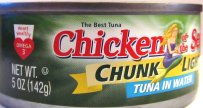 Next time you go to the supermarket, pick up a can of chunk light tuna fish and shake it close to your ear. You will hear a lot of sloshing around of water, making it sound like there is more ocean than tuna in the can.
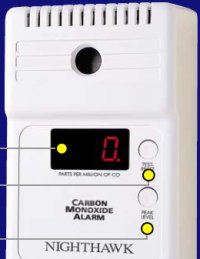 To help prevent illness and death, some states require carbon monoxide alarms to be installed in various parts of your home.