Updated every Monday!   Subscribe to free weekly newsletter.

Death Wish Coffee Lives Up to its Name

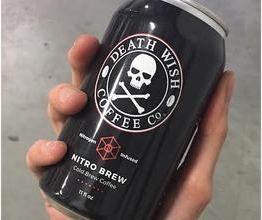
Death Wish CoffeeSometimes companies take a little literary license when naming their product or company to the dismay of consumer protection regulators. For example, is BJ’s Wholesale Club really selling its merchandise at wholesale prices? Similarly, is Poland Spring water really from a spring? (A recent lawsuit against the company suggests otherwise.)

Now we have a company that calls itself “Death Wish Coffee,” with a skull and crossbones right on the label as part of its logo. Are they saying their coffee is poisonous and you might die if you drink it?

Ironically that could be the case because the aptly named company just issued a product recall for its Death Wish Nitro Cold Brew coffee in 11 ounce cans.

*MOUSE PRINT:

According to the recall notice posted on the FDA’s website:

Death Wish in conjunction with an outside Process Authority has determined that the current process [to make its Nitro Brew] could lead to the growth and production of the deadly toxin, botulin, in low acid foods commercialized in reduced oxygen packaging.

Botulism, a potentially fatal form of food poisoning, can cause the following symptoms: general weakness, dizziness, double-vision and trouble with speaking or swallowing. Difficulty in breathing, weakness of other muscles, abdominal distention and constipation may also be common symptoms. People experiencing these problems should seek immediate medical attention.

So, true to its name, this product could kill you. Fortunately, no one has yet died or even gotten sick, according to the company.

And no, this is not a Halloween prank.

Updated every Monday!   Subscribe to free weekly newsletter.

FDA to Manufacturer: If You Make a Product with Love, Don’t Advertise It

Some federal agencies have been subjected to criticism lately that they are not policing the marketplace as much as they did in the past to protect consumers. For example, Bloomberg reported two weeks ago that the Food and Drug Administration was sending 30 percent fewer warning letters to companies about serious health and safety violations than they did every year since 2008.

Now comes news that in September, the FDA sent a warning letter to Nashoba Brook Bakery in Massachusetts alleging serious violations discovered when it spent three days inspecting their manufacturing facility.

FDA warning letter

Besides citing instances of unsanitary conditions that inspectors discovered, it noted a serious labeling violation on packages of Nashoba Granola.

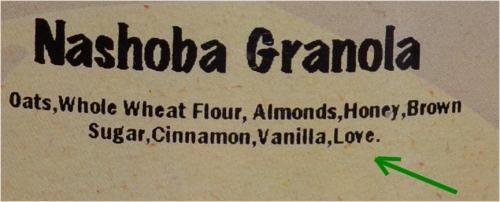
Nashoba granola

*MOUSE PRINT:

Love ingredient

Love ingredient

Yes, dear friends, Nashoba Brook Bakery was charged with selling misbranded products because they creatively made their granola with “love” and included that on the label.

John Gates, the CEO of the bakery, explained to Mouse Print* that while they will remedy the sanitary deficiencies cited by the FDA, “we will continue to put care, attention, passion and LOVE at the center of what we do. That’s who we are and who we want to be.”

We say the FDA should concentrate on real health and safety violations like the other findings in their letter. But, have a little heart (and common sense) when it comes to unofficial ingredients like love.

Updated every Monday!   Subscribe to free weekly newsletter.

Free Wi-Fi Users Ignore Terms and Conditions and Get Pranked

An Internet company in Manchester, England called Purple decided recently to prove that consumers access free wi-fi services carelessly by not spending the time to click and read the terms and conditions of its use.

Purple terms

The company pranked users for a period of two weeks by tucking a “Community Service Clause” into their public wi-fi terms.

*MOUSE PRINT:

The user may be be required, at Purple’s discretion, to carry out 1,000 hours of community service. This may include the following:

• Cleansing local parks of animal waste
• Providing hugs to stray cats and dogs
• Manually relieving sewer blockages
• Cleaning portable lavatories at local festivals and events
• Painting snail shells to brighten up their existence
• Scraping chewing gum off the streets

So how many consumers using their free wi-fi services clicked the “accept” button despite being potentially being required shovel poop out of blocked pipes? A staggering 22,000 people! And how many people caught the catch? Exactly one!