Updated every Monday!   Subscribe to free weekly newsletter.

Lime-A-Way: Money Back (Not) Guaranteed

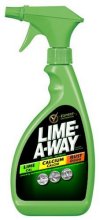
Lime-A-WayRecently, MrConsumer needed to clean some pavers that had a cloudy white stain on them. At the supermarket, he was attracted to Lime-A-Way bottles because of a sticker promising a full price rebate just to try the product. He could not read the terms of the rebate because the sticker was really a plastic envelope and one would have to tear along the perforation lines to remove the sticker and reveal the details that were inside.

After coming home, MrConsumer broke the seal to discover the rebate had actually expired about two months earlier. Drats.

*MOUSE PRINT:

Lime-A-Way Try Me

MrConsumer then checked the Lime-A-Way website, and right there on the homepage was a money back guarantee if you were not satisfied with the product’s performance.

Since in fact it did nothing to remove the cloudy white stain from the pavers, MrConsumer enclosed the receipt and the guarantee form from their website and sent it off to the company. A few weeks later, a surprise came in the mail:

lime-a-way envelope

It said “Return to Sender. Offer Expired. Box Closed.”

In fact, according to the form that was mailed in, the money back guarantee didn’t expire until December 31, 2015.

*MOUSE PRINT:

Lime-A-Way deadline

Two refund attempts… two failures. So we wrote to the PR folks at Reckitt Benckiser to ask why they didn’t put the expiration date of the “try me” rebate on the outside of the package so shoppers could see it in the store, and how is it that their P.O. box to accept refund requests through the end of the year was closed. Their UK headquarters forwarded our request to their US office, and no further response was received from the company. However, curiously, the Lime-A-Way website has been changed, and no longer has a money back guarantee.

Updated every Monday!   Subscribe to free weekly newsletter.

The Macy’s Columbus Day Sale that Wasn’t

About fifty years ago (yikes, how time flies), MrConsumer discovered Macy’s big “Whale of a Sale” on Columbus day. Van Heusen button down shirts were $1.99 and Levi’s were about $6. These were crazy deals, even back then.

Five decades later, Columbus Day sales are not what they used to be. But, this year Macy’s advertised $49 button down shirts for $5.99 — not bad, given 50 years of inflation.

Macy's 5.99 shirts

So MrConsumer hightailed it down to the big, flagship Macy’s store in downtown Boston in search of those shirts. Walking in circles around the men’s department led nowhere. Three salespeople who were shown the ad looked like they never knew these shirts were on sale. A fourth paced the store in search of them. Having no luck, she finally called the department manager. The manager indicated to her that this was a national ad and this store didn’t carry them. What? An advertisement that is distributed locally does not have that merchandise available locally?

More incredible is the fine print footnote in the Macy’s circular:

*MOUSE PRINT:

Macy's yes we got no bananas

What? A disclaimer that says we may not have what we advertise? As a friend is fond of saying, “I have lived too long.”

We asked Macy’s to comment on the non-availability of any $5.99 shirts and how they believed that their small disclaimer could overcome various advertising laws that require stores to have the goods they advertised. A PR spokesperson for the retailer replied:

The advertising that you referenced was noted as “clearance” merchandise, and the image shown was selected to represent the category (in this case men’s sportswear, sportshirts, knit tops and more – also evidenced by the range of original prices). As this is remaining clearance inventory – which varies by store based on sales in each location – we include the notation that the pictured items may not be available at your local Macy’s.

We don’t think that any reasonable consumer would expect to find THAT particular shirt, but clearly there is an expectation of finding SOME $5.99 shirts.

Updated every Monday!   Subscribe to free weekly newsletter.

Kiss Your Written Warranty Goodbye

warrantyFor decades, federal law has required manufacturers that guarantee their products to include a written warranty on or in the box containing the product. Retailers have also had to make available a physical copy of all warranties for review by prospective purchasers right in the store.

That is all about to change because of a revision of the Magnuson-Moss Warranty Act of 1975 that was just signed into the law on September 24. The amendment, called the E-Warranty Act of 2015 directs the Federal Trade Commission to revise its rules within one year to allow e-distribution of product warranties.

*MOUSE PRINT:

Manufacturers will now be allowed to merely include a link on or in their product packaging directing the purchaser to the warranty on its website. To accommodate those without Internet access, manufacturers must provide a telephone number or physical mailing address to contact the manufacturer to obtain a copy.

Similarly, retailers will no longer have to have physical copies of all warranties in a binder for customers to review before purchase, but can alternatively provide access to them electronically in the store.

Is this good for consumers? MrConsumer says absolutely not! Why should I as a purchaser have to jump through hoops just to get a copy of the manufacturer’s warranty for the product I just purchased? It should be there right in the box. Period. If they don’t provide you with a copy of the warranty in the box, aren’t you less likely to know you even have one and less likely to use it? And who do you think that is going to benefit?

This past June, Consumer World conducted a spot-check of 20 online stores which revealed that they failed to post the warranty electronically on their websites for four-out-of-five items checked. Under current FTC rules, online sellers either had to post the actual warranty on their website or tell customers how to obtain it. So while the idea of making warranties available electronically may be forward thinking, if stores or manufacturers don’t actually do it, thanks for nothing.

If there is any bright side to this new law, it is that the FTC can now fix an oversight in the recent review of its warranties rules, and require online sellers to post the actual product warranty for everything they sell (rather than be able to direct shoppers to the manufacturer).