Updated every Monday!   Subscribe to free weekly newsletter.

That Unreadable Jibberish in TV Show Credits

For this holiday week, a change of pace to a lighter subject. Most people don’t read the credits at the end of television programs. Even fewer folks have probably noticed what appears to be a screen full of boilerplate language at the end of the CBS programs “Two and a Half Men” and “The Big Bang Theory.”  The microtype fills the screen and only appears for two seconds.  No one can read it, even if they wanted to, unless you can freeze frame that moment on the screen.

While the casual observer may have assumed this was some type of elaborate copyright notice, in fact, the screens of tiny white letters on a black background are called “vanity cards” authored by the show’s executive producer, Chuck Lorre.  And they change every week.

Here is the very first one he wrote in 1997 when he produced the show Dharma and Greg:

*MOUSE PRINT:

Chuck Lorre

Mr. Lorre has now authored over 200 of these vanity cards, that range from Seinfeldian rants about nothing, to chiding the brass at CBS for some slight, and everything in between.

Even the Wall Street Journal noticed his two-second treatises and wrote a story about them.  For a slide show of a few vanity cards, click here. His entire collection of vanity cards is immortalized on Chuck Lorre’s own website.  Enjoy.

Updated every Monday!   Subscribe to free weekly newsletter.

ShopSmart: Hiding the Real Price of Magazine Subscriptions

For years, airlines, car rental agencies, and cell carriers have advertised eye-catching but incomplete prices. In a very calculated way, they leave out of the big print price certain fees, taxes, and other charges to make the advertised price seem lower than the price the consumer will actually pay.

This practice has now made its way into the publishing industry for some magazine subscriptions.

Here is a subscription card for ShopSmart;) magazine:

ShopSmart

Nowhere is the total price disclosed. Rather, you are made to do the math yourself — 6 issues times $3 an issue is $18. Right?

*MOUSE PRINT:

*PLUS $4.95 S/H

Shipping and handling is extra? For a magazine subscription?

Worse, what kind of sleazy publisher would pull this kind of stunt? The last one you would ever expect — Consumers Union — the publisher of Consumer Reports. Ironically, they are known for pointing out lapses like this on their Selling It page each month.

When questioned why the total price was not stated, and why they resorted to using a fine print disclosure to indicate that the advertised price was not the actual price customers would pay, a spokesperson emailed:

“Unlike many other publications, ShopSmart takes no ads and we need to depend upon revenue from newsstand sales and subscribers for this publication. Part of the reason that Consumers Union charges shipping and handling for ShopSmart is that it is a newer title with a relatively small circulation; it’s not afforded the economies of scale that benefit larger publications.

Our marketing team believes that the S+H notices listed elsewhere on the advertisement were both reasonable and appropriate.

As you know, we are a mission-driven, non-profit organization. Revenue from this product helps support our ongoing product testing and research.

Our hope is that potential subscribers will see the value of ShopSmart and that we will be able to reach, and inform, a new audience of savvy shoppers.”

Wow… sounds like the type of denial that an ordinary publisher might sling. Please don’t get me wrong. Consumers Union is a fine organization that has earned the public’s respect for decades for the invaluable services they provide. And ShopSmart;) is actually quite a good magazine with features of great value to many, particularly those interested in consumerism. What I do object to is this type of advertising tactic. They are the last organization in the world I would ever expect to engage in such a ploy.

Updated every Monday!   Subscribe to free weekly newsletter.

The Reality of Reality TV Show Top Prizes

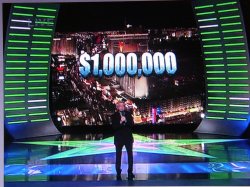
America's Got TalentLast week, Neal E. Boyd won the top prize on NBC’s America’s Got Talent program.  In addition to headlining one show at a Las Vegas hotel, he also won a much ballyhooed $1,000,000, or so it seemed.

Throughout the season, host Jerry Springer reminded contestants of the big prize and the chance to become America’s most talented winner.

Let’s hope that Mr. Boyd wiped the stars out of his eyes long enough to read his contract with the program, and the fine print that rolled by during the credits at the end of the show.

*MOUSE PRINT:

annuity

Translation:  Like the lottery, the big prize is doled out in small increments over decades.  In this case, the winner would wind up getting less than $500 a week for 40 years.  That’s a mere $25,000 a year.  Hardly an amount that would change one’s life.  The alternative lump sum amount is not stated, but after taxes, it is likely to be in the $300,000 range. 

The million dollar prize certainly was an attention getter for the thousands that tried out for the show, and to create excitement amongst viewers.  The winner got his shot at fame, which he might say was priceless, and worth more than the somewhat illusory million dollar cash prize.

It appears that other reality shows have also touted big top prizes that were never quite what they appeared, and sometimes, they were not even awarded.  (See end of this story.)