Updated every Monday!   Subscribe to free weekly newsletter.

When It Comes to Eye Drops, They Can’t All Be the #1 Doctor Recommended Brand

MrConsumer has been having trouble focusing on his computer screen, and his eye doctor recommended using eye drops for dry eyes. In reviewing the websites and product labels of various brands, I discovered a curious thing — three companies all claimed their products to be the “#1 doctor recommended” brand!

Systane by Alcon

Systane

*MOUSE PRINT:

On their website, Alcon, the maker of Systane, shows all their tears products with the #1 claim on the box, and says the claim is based on an IQVIA ProVoice Survey of Eye Care Professionals 12 months ending December 31, 2021.


Refresh by Allergan

On its website, Allergan, the maker of Refresh brand eye drops also says that its family of products is #1 doctor recommended. Their claim is based on an Ipsos survey done in 2021.

Refresh


iVizia by Similasan

And just to further confuse the situation of dueling #1 claims, now comes a new product entrant into the U.S. market called iVizia.

iVizia

*MOUSE PRINT:

It boldly says “#1 Doctor Prescribed.” But in smaller type it is not that this specific product is most prescribed, but rather this manufacturer is number one in Europe.


Company Response

We wrote to the makers of both Systane and Refresh to ask some very pointed questions of how they both could be making the same #1 claim. We requested details of the survey, who qualified as an eye care professional, how the key question upon which their claim was based was worded, and whether they thought consumers picking up a specific product would understand that the number one claim was not necessarily about that product but rather an overall brand preference.

Abbvie, the maker of Refresh, did not reply to multiple requests for comment. Alcon, the maker of Systane, said in a not particularly responsive prepared statement:

“Alcon stands behind the #1 doctor recommended brand of artificial tears claim, which is substantiated by an IQVIA ProVoice Survey of 4,441 eye care professionals during the period January 1 to December 31, 2021. IQVIA is a third party that specializes in advanced analytics and clinical research services to the life sciences industry. Alcon complies with all applicable advertising and marketing laws and regulations in making the claim.”

We didn’t ask the makers of iVizia about its claim since it clearly distinguishes its claim as an overseas recommendation.

Without more facts to better evaluate and understand the basis for the other claims, however, the truth just becomes blurred.
Share this story:


ADV
Updated every Monday!   Subscribe to free weekly newsletter.

When Canceling a Flight, Do You Get a Cash Refund or Credit for Future Travel?

Last week, the federal Department of Transportation proposed revised regulations to update airline refund rules. (See news story.)

In particular, much of the news coverage talked about airlines having to provide vouchers for future travel to passengers. Well, if you paid for your ticket by credit card or with cash, do you really want a voucher for future travel rather than a full refund? And whose choice is it for cash back or future credit?

It all depends on whom is doing the canceling. The proposed regulations add a new rule about what happens when the passenger cancels a reservation on a nonrefundable ticket because of serious communicable illness (and not the common cold).

*MOUSE PRINT:

A ticketed passenger would be entitled to a non-expiring travel voucher but not a refund if he or she is advised:

…not to travel by air because the consumer has or may have contracted a serious communicable disease as defined in 14 CFR 260.2, and the consumer’s condition is such that traveling on a commercial flight would pose a direct threat to the health of others.

Proof of a public health emergency, government restriction on travel, or a letter from a medical professional documenting the serious medical condition that could be contagious to others when traveling may be required by the airline.

And here’s a little wrinkle that has not been publicized: The airline can also deduct a service fee for processing the voucher if the amount of the fee was disclosed at the time the ticket was purchased.

Now what happens if it is the airline that cancels or substantially changes/delays a flight? The proposed regulation says that a delay of three hours or more or an outright cancellation qualifies you for a “cash” or credit card refund.

*MOUSE PRINT:

(5) … [provide] prompt refunds, within 7 days of a refund request as required by 14 CFR 374.3 for credit card purchases, and within 20 days after receiving a refund request for cash or check or other forms of purchases. Carriers may choose to provide the refunds in the original form of payment …, or in another form of payment that is cash equivalent as defined in 14 CFR 260.2. Carriers may offer travel credits, vouchers, or other compensation in lieu of refunds, but carriers first must inform consumers that they are entitled to a refund. Carriers must clearly disclose any material restrictions, conditions, or limitations on these compensations they offer, so consumers can make informed choices about the refund or other compensation that would best suit their needs.

As noted above, the airline can try to offer you a voucher for future travel in these circumstances, but they have to tell you that you are entitled to money back instead. You don’t have to accept a voucher. You can demand a refund.

The proposed rules are subject to public hearings and comment and won’t go into effect for some time.

Share this story:


ADV
Updated every Monday!   Subscribe to free weekly newsletter.

The No Tequila in “Lime-A-Rita” Case Nears Settlement

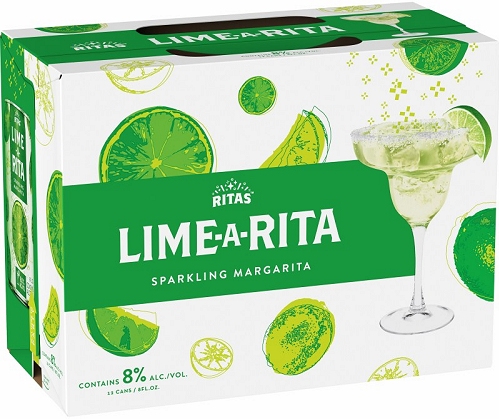
In May, we reported that a tentative settlement was reached in a case against Anheuser-Busch for marketing its Rita brand of drinks like Lime-A-Rita, which did not contain tequila, Ritas Sangria Spritz, which did not contain red wine, and Ritas Mohito Fizz when in fact it did not contain rum.

The only disclosure about this was on the bottom of the carton, where consumers are not likely to look nor understand that fact based on the wording they used.

Lime-a-Rita

Now the parties have reach a more specific agreement.

*MOUSE PRINT:

Settlement Class members may seek a refund for a maximum total refund of $21.25 per Household with Proof of Purchase. Settlement Class members may seek a maximum total refund of $9.75 per Household without Proof of Purchase.

A-B has also agreed to make changes to the marketing, labeling, and packaging of the Products, including the addition of the word Malt Beverage on the consumer facing panels of the Product packaging, and clear disclaimers on the website noting that each of the Products Does not contain distilled spirits.

One New Label Samplenew label

So the company will modify their labeling and pay ten or twenty dollars to affected consumers. But honestly, the mock-up of this part of their new label doesn’t seem to communicate an awful lot new in a conspicuous manner.

The judge still has to approve the settlement. We’ll provide a link in Consumer World to the claim form at that time.

Share this story:


ADV