Updated every Monday!   Subscribe to free weekly newsletter.

Anheuser-Busch Settles “Lime-a-Rita” Case

With the popularity of margaritas, sangrias, mohitos and other specialty cocktails, it is no wonder that big beverage companies would want to mass market some of those drinks. And that is exactly what beer giant Anheuser-Busch did by introducing the “Ritas” brand of drinks like “Lime-A-Rita,” “Ritas Sangria Spritz,” and “Ritas Mohito Fizz.”
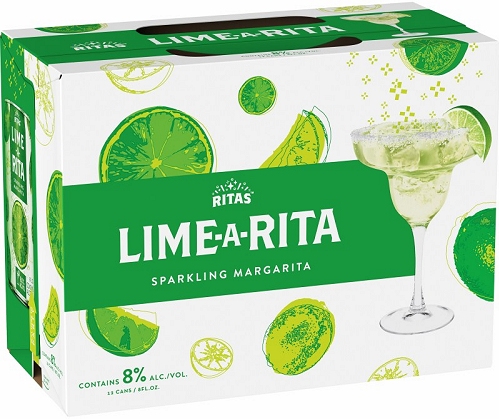
Lime-a-Rita

There was just one problem according to a couple of class action lawsuits [second lawsuit] filed against the company.

*MOUSE PRINT:

…reasonable consumers of the Margarita Products expect that based on the word “MARGARITA” on the package of the Margarita Products the products would contain tequila. This belief is further reinforced by the image of a salted margarita glass on the packaging.

However, unbeknownst to those consumers, the Margarita Products do not contain tequila.

Moreover, nowhere on the front, sides, or top panel of the packaging (the consumer facing panels) does Defendant state that the Margarita Products do not have tequila, or that the Margarita Products are actually just flavored beers that taste like a margarita. Instead, the bottom panel of the packaging, where no reasonable consumer would look prior to purchase, contains a small font statement that the Margarita Products are actually “Malt Beverage[s] With Natural Flavors and Caramel Color”.

In any event, to the extent seen on the underside packaging, reasonable consumers are unlikely to understand the foregoing “malt beverage” statement as meaning that the Margarita Products do not contain tequila…

So this margarita drink which most consumers would expect to contain tequila, has none. And the only disclosure about that is on the bottom of the carton, where consumers are not likely to look nor understand that fact based on the wording there.

The plaintiffs also allege that the company’s sister products don’t contain the specialty alcohol normally associated with that type of drink. So, their sangria doesn’t contain red wine, and their mohito doesn’t contain rum. Basically, these products are all just flavored beers. That means, according to the consumers’ lawyers, that Anheuser-Busch mispresented these products in violation of consumer protection laws.

In a bit of legal maneuvering, one of the cases was withdrawn and the other was just tentatively settled. Details of the settlement were not available at publication time.

Share this story:


ADV
Updated every Monday!   Subscribe to free weekly newsletter.

Thanks for Nothing – Deal or No Deal Edition

Welcome to a special “Deal or No Deal” edition of our popular “Thanks for Nothing” series. All these sellers make you think they’re having a big sale or making a great offer, but that may not be the case in reality.

Big Ham Sale at Aldi

Just in time for Easter a few weeks ago, Aldi’s featured sale item was their spiral sliced ham. But depending on where you lived, you either got a deal or no deal.

*MOUSE PRINT:

Aldi ham sale

We invited the president of Aldi to discuss these price differences, but never heard back from him. So, for the folks in Boston, Long Island, Miami, and Kansas City who were charged almost twice the price for Easter hams, thanks for nothing, Aldi… no deal.


CapitalOne $200 Annual Cash Bonus

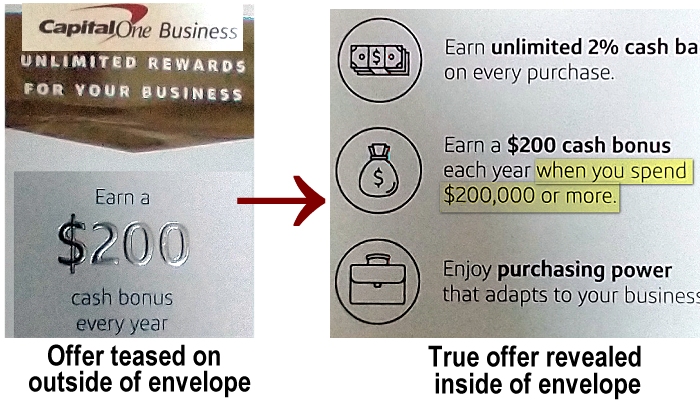
A big fancy envelope from CapitalOne was proclaiming a $200 annual bonus if you signed up for their business credit card.

*MOUSE PRINT:

CapitalOne $200 bonus

Inside, the truth — you only get the bonus when you spend $200,000 a year. Thanks for nothing, CapitalOne… no deal. But hat tip to David B. for submitting this ad.


Groupon — Save Extra With Promo Code

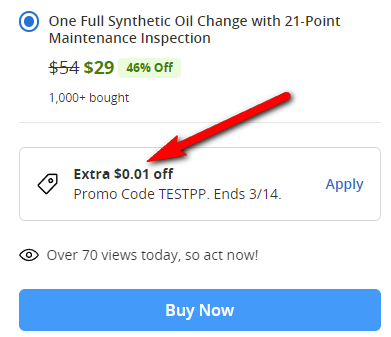
Who doesn’t like to save a little extra money when buying a sale item and then getting an additional discount if you apply a coupon or promo code online? Recently, Groupon offered such an extra bonus on an oil change.

*MOUSE PRINT:

Groupon penny off

What… get an extra penny off? Thanks for nothing, Groupon… no deal.


Lowe’s — LED Light Bulb Clearance Sale

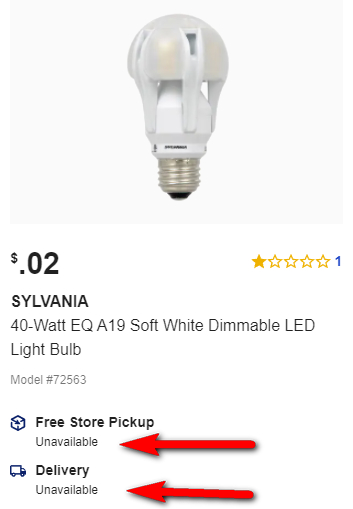
Nothing perks up a bargain hunter’s ears like a good clearance sale. For some reason, Lowe’s was practically giving away certain LED light bulbs recently, but there was one small problem.

*MOUSE PRINT:

Lowe's lightbulbs

You could neither pick-up nor order the two-cent bulbs. Thanks for nothing, Lowe’s… no deal.


Target — 50% Off Grill Sale

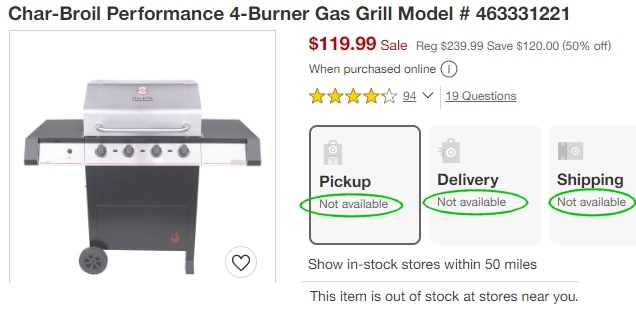
Lowe’s is not alone in offering great deals when they don’t have any in-stock. This week (April 24) right at the beginning of grilling season, Target advertised a great Internet only half price sale on this Char-Broil grill.

*MOUSE PRINT:

Target grill

The trouble is that it is not available for pickup, delivery, nor for shipping. Maybe you’ll be luckier in your state. But in the Boston area, thanks for nothing, Target… no deal.


Quantity Discount on Lay’s Chips

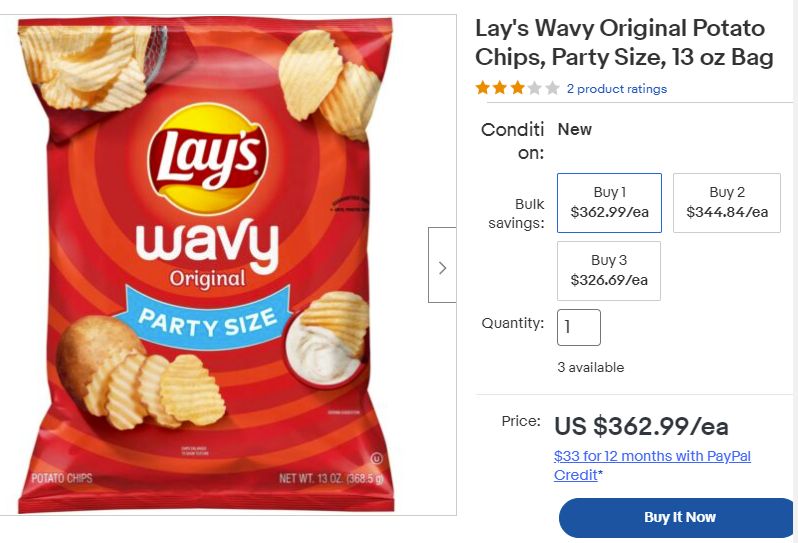
More and more sellers are either requiring the purchase of multiple items in order to get the sale price or are giving you a bulk discount on each item the more you buy. Whatta deal this guy is offering.

*MOUSE PRINT:

Lay's Wavy Chips

Who could resist a deal to save $36 a bag when Lay’s chips are only $326.69 each in quantities of three? Thanks for nothing, third-party seller… no deal.


If you find an ad suitable for inclusion in our “Thanks for Nothing” series, please send it to: edgar (at symbol) MousePrint.org . Thanks.

Share this story:


ADV
Updated every Monday!   Subscribe to free weekly newsletter.

Are Stihl’s Tools All “Made in America?”

Products that carry the “Made in USA” slogan have a distinct marketing advantage, particularly among a big segment of the population that believes in buying American-made products. So it is no wonder that many companies like to wrap themselves in the flag as part of their sales strategy.

A regular reader, David B., recently brought this commercial to our attention from Stihl, a leading maker of portable outdoor power tools.

Did you catch that virtually unreadable fine print footnote on the screen for three seconds at the end of commercial?

*MOUSE PRINT:

Stihl Made in America

“A majority of Stihl products are made in America of U.S. and foreign made materials.”

That statement probably doesn’t square with the net impression that the commercial conveys to the average viewer. The orally unqualified “Made in America” claim drowns out the tiny disclaimer that most people probably couldn’t read. Taken literally, the fine print could mean that as few as 51% of their products are actually made in the USA.

In the last year, the Federal Trade Commission has gotten more active in investigating “made in USA” claims, publicizing its advertising guidelines, issuing a new “Made in USA” labeling rule, and settling a number of cases. Key in these settlements is the requirement that the company must not make any representation, expressly or by implication, that a product or service is “Made in the United States” unless:

A. … all or virtually all ingredients or components of the product are made and sourced in the United States; or

B. A Clear and Conspicuous qualification appears immediately adjacent to the representation that accurately conveys the extent to which the product contains foreign parts, ingredients or components, and/or processing; …

In our opinion, Stihl’s fine print limitation on their “Made in America” claim is not clear and conspicuous and could subject them to FTC scrutiny. We asked the company about that, what percentage of their products are made here, what percentage contain foreign parts, and whether the company plans to modify their advertisement. The company responded in relevant part:

Over 75% of STIHL outdoor power equipment sold in the United States is manufactured in the United States in our Virginia Beach facility of foreign and domestic components.

STIHL Inc. firmly believes that its advertising of the significant manufacturing processes occurring in Virginia Beach is in line with FTC guidance. STIHL Inc. does not make an unqualified “Made in America” claim, and consistently and clearly disclaims that qualifying equipment is made of U.S. and foreign components. The specific disclaimer at issue is clearly visible on the screen the entire time the “made in America” claim is being made (spoken or written), and is sufficient to qualify the claim, per FTC guidelines.

Share this story:


ADV