NOTE: The next new Mouse Print* story will be published on January 1st.
Some big brands are continuing to downsize their products despite some easing of the inflation rate… so shrinkflation continues as we wrap up 2023.
Better get those very young grandchildren potty-trained because there are 64 fewer Huggies baby wipes in every carton.
*MOUSE PRINT:

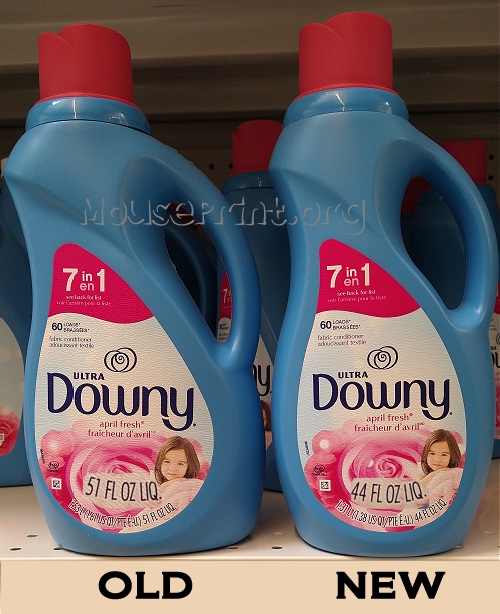
Through the miracle of modern chemistry, P&G has reduced the size of Downy fabric softener by seven ounces a bottle, but you still get 60 washloads out of each bottle. Presumably they concentrated the product and adjusted the hard-to-see dosage lines inside the cap.
*MOUSE PRINT:
One of our readers, Steven T., discovered that Walmart’s brand of liquid hand soap recently seemed skinnier. It lost more than 10-percent of its contents, going from a 56-ounce bottle down to only 50 ounces. Remember, it is not just name brands that shrink — stores brands continue to get into the act as well.
*MOUSE PRINT:

Coffee has historically been one of the categories of groceries that has been downsized repeatedly through the decades. This time it is Folger’s Breakfast Blend, which went from 25.4 ounces to 22.6 ounces. And through the magic of modern science, you still theoretically get the same 210 cups of coffee out of every canister. Thanks to Herb W., the Consumerman, for this submission.
*MOUSE PRINT:

|
Pepperidge Farm Gold Fish
|
There are fewer of those happy little goldfish in every Pepperidge Farm carton these days. The old large 30-ounce carton was reduced by almost 10-percent and is now only 27.3 ounces. Thanks to Richard G. and Reddit for this submission.
*MOUSE PRINT:

M&Ms, like many candies, have changed bag sizes so many times, it is impossible to keep track. Some months ago their “sharing size” package went from 10.70 ounces to 10.05 ounces. Who comes up with these crazy weights? Whatever happened to simple eight, 12 or 16-ounce bags?
*MOUSE PRINT:

Potato chips have not cornered the market on snacks that have been subject to shrinkflation. Pita chip bags have been downsized also, including Stacy’s pita chips that have lost two ounces.
*MOUSE PRINT:

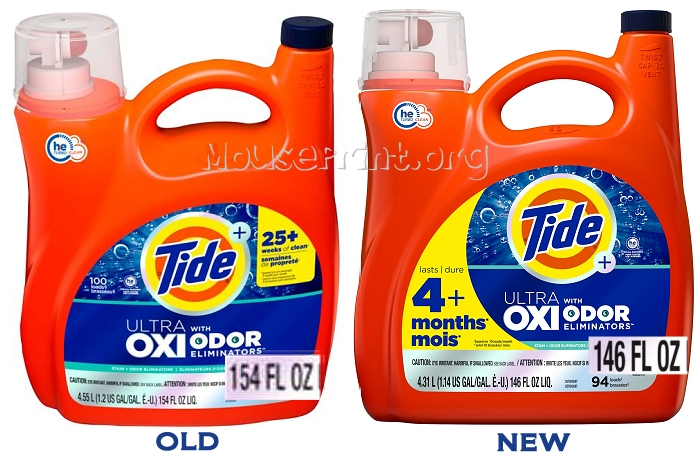
Since P&G downsized Downy, how could they leave Tide behind? The oxi-version of Tide in large jugs went from 154 ounces down to 146 ounces, and you even get fewer loads the new bottle!
*MOUSE PRINT:
It is not just name brands that downsize their paper products. Walgreens recently lopped off 40 sheets on their Ultra Soft toilet tissue with no fanfare.
*MOUSE PRINT:

When Charmin added a scalloped edge to Charmin recently to make sheets tear more easily, they also cut off 30 sheets sheets from each mega roll. Thanks to our ace shrinkflation spotter, Richard G. for this submission.
*MOUSE PRINT:

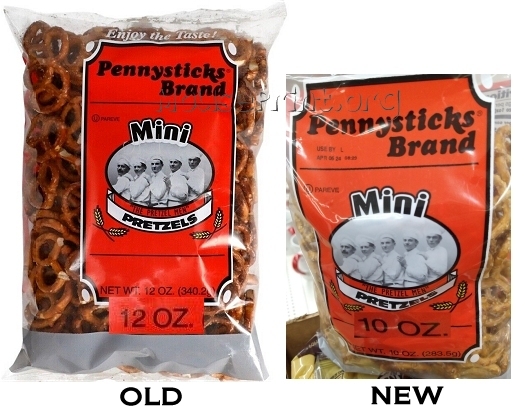
A dollar store staple has been has been Prennysticks brand of pretzel sticks and twists. They have been sold in 12-ounce bags forever, it seems. Then for the past couple of months they disappeared from Dollar Tree. But now they are back … with two ounces less in every bag.
*MOUSE PRINT:
In what may be one of the largest downsizings ever, Arm & Hammer Sensitive Skim detergent took 49 ounces out of their 189-ounce jugs, but magically you still get 140 loads out of each bottle. One gets the impression that we must have been paying for an awful lot of water in the jugs for years.
*MOUSE PRINT:

Phil L. reported that Nutri Sounce large breed dog food downsized from 30 pounds to 26 pounds this past spring, so he loaded up before suffering a four-pound loss on every bag. The price remained at $61.99 for him.
*MOUSE PRINT:

|
Campbell’s Home Style Soup
|
Richard G. spotted a complete change in packaging for Campbell’s Home Style soup. The can is smaller and it lost two-and-a-half ounces.
*MOUSE PRINT:

Apologies to other readers who sent in submissions that we did not use this year. Some were regional brands, or more obscure products, or changes that were not recent.
But in 2024, if you find a product that has recently downsized, please send clear before and after pictures including the net weight or net count to Edgar (at symbol) MousePrint.org .