MrConsumer has been having trouble focusing on his computer screen, and his eye doctor recommended using eye drops for dry eyes. In reviewing the websites and product labels of various brands, I discovered a curious thing — three companies all claimed their products to be the “#1 doctor recommended” brand!
| Systane by Alcon |
|---|

*MOUSE PRINT:
On their website, Alcon, the maker of Systane, shows all their tears products with the #1 claim on the box, and says the claim is based on an IQVIA ProVoice Survey of Eye Care Professionals 12 months ending December 31, 2021.
| Refresh by Allergan |
|---|
On its website, Allergan, the maker of Refresh brand eye drops also says that its family of products is #1 doctor recommended. Their claim is based on an Ipsos survey done in 2021.

| iVizia by Similasan |
|---|
And just to further confuse the situation of dueling #1 claims, now comes a new product entrant into the U.S. market called iVizia.

*MOUSE PRINT:
It boldly says “#1 Doctor Prescribed.” But in smaller type it is not that this specific product is most prescribed, but rather this manufacturer is number one in Europe.
| Company Response |
|---|
We wrote to the makers of both Systane and Refresh to ask some very pointed questions of how they both could be making the same #1 claim. We requested details of the survey, who qualified as an eye care professional, how the key question upon which their claim was based was worded, and whether they thought consumers picking up a specific product would understand that the number one claim was not necessarily about that product but rather an overall brand preference.
Abbvie, the maker of Refresh, did not reply to multiple requests for comment. Alcon, the maker of Systane, said in a not particularly responsive prepared statement:
“Alcon stands behind the #1 doctor recommended brand of artificial tears claim, which is substantiated by an IQVIA ProVoice Survey of 4,441 eye care professionals during the period January 1 to December 31, 2021. IQVIA is a third party that specializes in advanced analytics and clinical research services to the life sciences industry. Alcon complies with all applicable advertising and marketing laws and regulations in making the claim.”
We didn’t ask the makers of iVizia about its claim since it clearly distinguishes its claim as an overseas recommendation.
Without more facts to better evaluate and understand the basis for the other claims, however, the truth just becomes blurred.
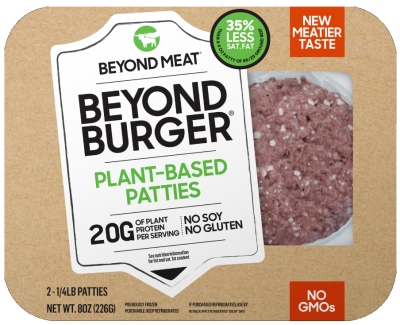 Six Illinois consumers are suing Beyond Meat, one of the leading makers of plant-based burgers and other meat substitutes, alleging that the company overstates the amount of protein in most of their products. It goes on to assert that the “daily value” percentage (“DV”) representing how much protein the product contributes to meeting the government’s daily requirement for protein is grossly exaggerated.
 With egg prices going through the roof at the moment, some companies still promote premium-priced eggs because they are seemingly raised in a more humane way such as those that are “cage-free” or “free range.”