Updated every Monday!   Subscribe to free weekly newsletter.

Starbucks Wins Underfilled Latte Cup Case

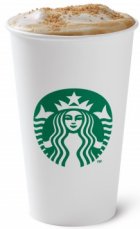
Starbucks Two years ago, we told you about an issue of Starbucks allegedly underfilling cups of its latte because it was counting the height of the milk foam in its calculations of the number of fluid ounces in each cup.

Well, a United States district court judge in California just ruled in the company’s favor. In her ruling, she deflated each of the consumer plaintiffs’ legal theories.

They first claimed that only if the cups were filled to the brim, which they tended not to be, did they hold the promised 12 ounces, 16 ounces, or 20 ounces. However, the consumers’ own expert testified that in fact the capacity of each of the cups was 14.5 fl. oz. for a Tall, 18.5 for a Grande, and 22.8 for a Venti beverage — more than enough room for the promised amount.

The consumers’ lawyers next claimed that the foam and its height should not be used to calculate the total volume of the beverage. The judge disagreed saying that since the plaintiffs themselves say that lattes are composed of three ingredients, expresso, steamed milk, and milk foam, that all three ingredients count in determining the total measure.

The plaintiffs’ final theory was that the Starbucks recipe cards themselves don’t call for enough ingredients when added together to meet the promised size of the finished drinks. The judge pointed out the recipe calls for cold milk which expands when heated, and when coupled with the required foam, does in fact come out to the promised total.

The judge seemed to have ignored Handbook 133 of the National Institute of Standards and Technology, which says you have to first dissipate the foam, and then you measure the quantity of liquid in the cup. Under the judge’s reasoning, some smart aleck coffee seller could half fill a cup with foam and possibly get away with it.

Share this story:


ADV
Updated every Monday!   Subscribe to free weekly newsletter.

Best Buy’s (Not So) Generous Birthday Offer

MrConsumer celebrates his birthday in January and has been receiving birthday offers from various retailers and restaurants.

Among them was an email from Best Buy offering a surprise:

Best Buy birthday email

What could it be? A big screen TV? $100 off an item of your choice? A free major appliance?

Clicking through to Best Buy, these delusions of grandeur quickly evaporate.

Best Buy Birthday gift

Okay… I’ll take 10% off. But a big catch looms with the dreaded list of exclusions.

*MOUSE PRINT:

Best Buy exclusions

At least they didn’t exclude sale items… or did they? Two savvy readers point out the first line of the disclaimer which says “Markdowns taken from regular or Was prices.” What does that mean? Is that just standard language in disclaimers that many retailers use, or did they really mean to say that the 10% discount is only applicable to regular priced items?

Share this story:


ADV
Updated every Monday!   Subscribe to free weekly newsletter.

When it Comes to Price, Shoppers Like to be Fooled

Back in 2013, StubHub changed the way it priced tickets on its website moving to an all-in model that included all service charges and fees. Under this pricing method, the price you saw was the price you paid. How novel and how pro-consumer! No surprise charges or extra fees. But here’s the problem: when buyers used ticket comparison websites, StubHub’s prices seemed higher compared to the other sellers that posted artificially low prices without including all their added fees. As a result, StubHub’s sales went down dramatically.

So in 2015, StubHub reverted to its old way of pricing tickets — showing a lower price, and then tacking on hefty fees. Here, for example, is the price they advertised for seats on the “Green Monster” at Fenway Park for a particular game just after re-instituting the original, old system:

Green Monster 1

And when you clickthrough to order tickets, this is the surprise you get:

*MOUSE PRINT:

$600 tickets

$90 in fees!? Of course, to add insult to injury, Green Monster M2 seats can have a face value of just $110 to $165.

Within days of advertising low-ball prices again, StubHub was able to significantly increase their market share, according to the Wall Street Journal. [Story not free]

Now fast forward to today, and see what StubHub is doing now. After you choose your tickets (in this example two $125 tickets) and BEFORE they disclose what the fees are and what the real total price of your order is, the system forces you to enter your credit card number and name and address.

*MOUSE PRINT:

Stub Hub 2018

Maybe this is a technique to make you feel more committed to buying tickets even if you experience price shock when the final cost is eventually displayed to you.

We shouldn’t have to put up with practices like this, but we do. And judging by their increased sales when they advertised a price before fees were added, we tolerate that practice too.

We seemingly like being tricked into thinking we are paying a lower price or getting a great deal even when we are not. The poster child for this somewhat irrational behavior was J.C. Penney, when its new president, Ron Johnson, a few years ago did away with their phony 50% off sales and discounts. Sales plummeted. And then Ron Johnson lost his job. New management reverted back to advertising big discounts from inflated regular prices, and guess what happened? Sales starting jumping back.

What does this say about us as shoppers?

Share this story:


ADV