The above title does not contain a typo. This is part one of a story about Skippy, the most famous brand of peanut butter.
You may not have noticed, but Skippy has a new product on the shelves (or at least new to MrConsumer), called Skippy Natural. Many would expect that this product will be nothing but ground peanuts and salt.
Not so fast.
*MOUSE PRINT:Â Here is the ingredients listing:

How can this be? The recipe is like regular Skippy: peanuts, sugar, oil, and salt. First, the federal government does not have strict rules about use of the word “natural”. So we shouldn’t assume it means just nuts, even though competitors like Smuckers Natural Creamy peanut butter and Teddie Old Fashioned Natural peanut butter contain only nuts and salt. More interesting is another bit of Mouse Print* that most people miss:
*MOUSE PRINT:

The product is not really peanut butter, but rather “peanut butter spread.” What in the world is peanut butter spread? It is a fanciful term used by product manufacturers when they cannot legally call their product “peanut butter” because it does not meet the federal standard of identity for peanut butter.Â
§ 164.150 Peanut butter.
(a) Peanut butter is the food prepared by grinding one of the shelled and roasted peanut ingredients provided for by paragraph (b) of this section, to which may be added safe and suitable seasoning and stabilizing ingredients provided for by paragraph (c) of this section, but such seasoning and stabilizing ingredients do not in the aggregate exceed 10 percent of the weight of the finished food.Â
Translation: To be called peanut butter, the recipe must include at least 90% peanuts, and can include a stabilizer to keep the product from separating. If the stabilizer is oil, it must be hydrogenated or partially hydrogenated. And therein lies the reason(s) it can’t be called peanut butter. It uses non-hydrogenated palm oil — an oil higher in saturated fat — than the type used in regular Skippy as an emulsifier. Here is how the company explained it:
“Since Skippy Natural uses palm oil as a stabilizing ingredient, which as an oil is not hydrogenated or partially hydrogenated, Skippy Natural cannot legally be claimed a Peanut Butter, as per the FDA. However, Skippy Natural does qualify as a Peanut Butter Spread, just like many of the Reduced Fat and Low Carb peanut butters on the market. Skippy Natural is made with ingredients that are minimally and non-chemically processed. The FDA does not have a definition for natural products, like it does for organic foods, but the general ruling is that natural foods should be minimally and non-chemically processed.”
After tasting Skippy Natural, and not sensing much of a peanuty flavor, MrConsumer wondered whether the company also tinkered with the amount of nuts in the recipe since they no longer had to meet the 90% standard anyway. It took two attempts to find out whether they still put in at least 90% peanuts. Here is their answer:
“We do not provide percentages for ingredients used in our products. This is considered proprietary information.”
So, if you want natural peanut butter, defined as just peanuts and nothing else but maybe salt, better stick with another brand.
Part 2 of “Skimpy” peanut butter will focus on a new packaging trick used by the company.

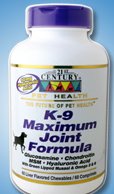 Recently, a Mouse Print* reader (Faith) who had purchased a bottle of 21st Century K-9 Maximum Joint Formula, wrote a note of concern about a warning she found on the back of the bottle.