
This week we continue our series on shrinkflation — the downsizing of grocery products — everything from toilet paper to shampoo to sardines. This is our biggest display of downsized items ever. (See last week’s part one.)
| Bounty Paper Towels |
|---|
Last winter, paper products manufacturers alerted shoppers that prices would go up this past June because of higher manufacturing and distribution costs. And while some prices might have increased directly, some may gone up indirectly through downsizing. Here triple rolls of Bounty paper towels lost 18 sheets per roll going from 165 sheets to just 147.
*MOUSE PRINT:

| Costco-Kirkland Toilet Paper |
|---|
After downsizing its paper towels, Costco has now turned to its Kirkland brand of toilet paper. The new roll went from 425 sheets down to 380 sheets. The packages stayed the same price ($19.99 online/delivered), but you lost the equivalent of over three rolls in each package. The label does say the new rolls are “thicker than ever before.”
*MOUSE PRINT:

| Season Sardines |
|---|
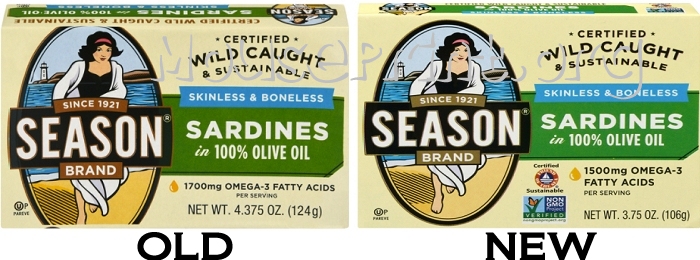
Thanks to a California reader named Dave, we have some fishy downsizing. He discovered cans of Season sardines at his local Walmart store going from 4.375 ounces down to 3.75 ounces. Aren’t sardines small enough already? We found both cans at Walmart.com selling for the same $3.
*MOUSE PRINT:
| Tresemme Keratin Shampoo |
|---|
We have a repeat offender next. The big black bottles of Tresemme shampoo downsized years ago from 32 ounces to just 28. And around 2018, the red bottles of Tresemme Keratin went from 25 ounces to 22 ounces. Now, eagle-eyed shopper C.S. spotted yet another reduction — this time, down to just 20 ounces.
*MOUSE PRINT:

| Ziploc Bags |
|---|
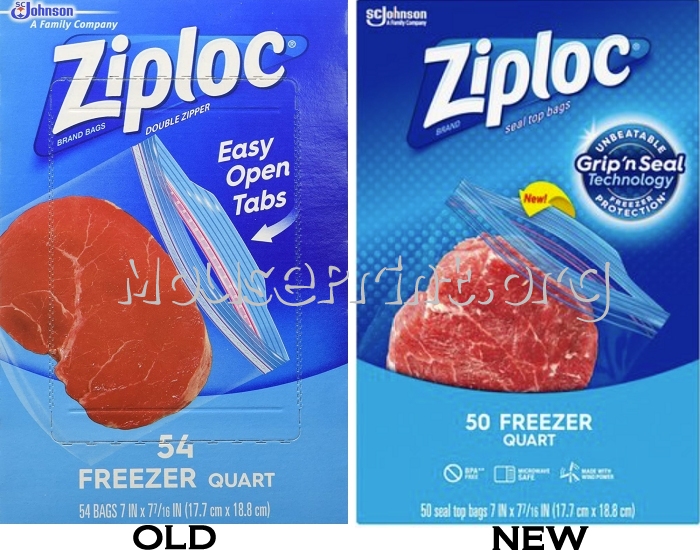
It is really hard to keep track of the number of bags in each box of these products. Ziploc removed four bags from their boxes of 54.
*MOUSE PRINT:
| Walmart Chicken Caesar Salad |
|---|
Laura G. wrote to us complaining about her favorite Marketside Chicken Caesar salad from Walmart. It disappeared last month and then suddenly reappeared, but in a much smaller portion at a similar price. The package actually went from 14.375 ounces to just 12.1 ounces. She concluded, “not happy with the changes.”
*MOUSE PRINT:

| Tostitos Hint of … |
|---|
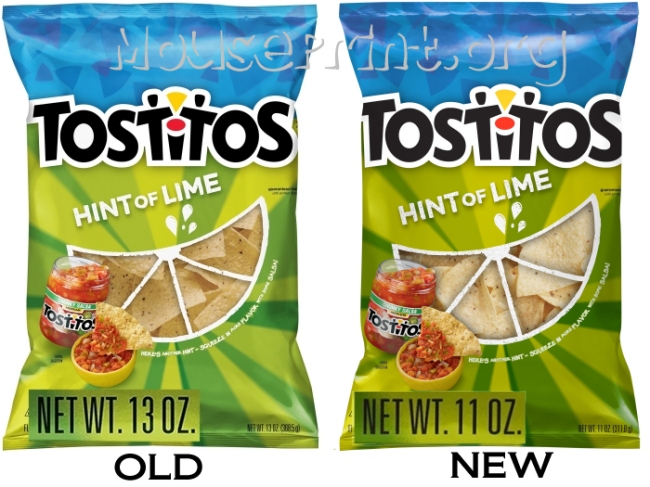
Frito-Lay is once again tinkering with the sizes of their bags of chips. This time, Tostitos Hint of Guacamole shrank by one ounce from 12 to 11 ounces, and Hint of Lime went from 13 ounces to just 11.
*MOUSE PRINT:

| Quaker Instant Oatmeal |
|---|
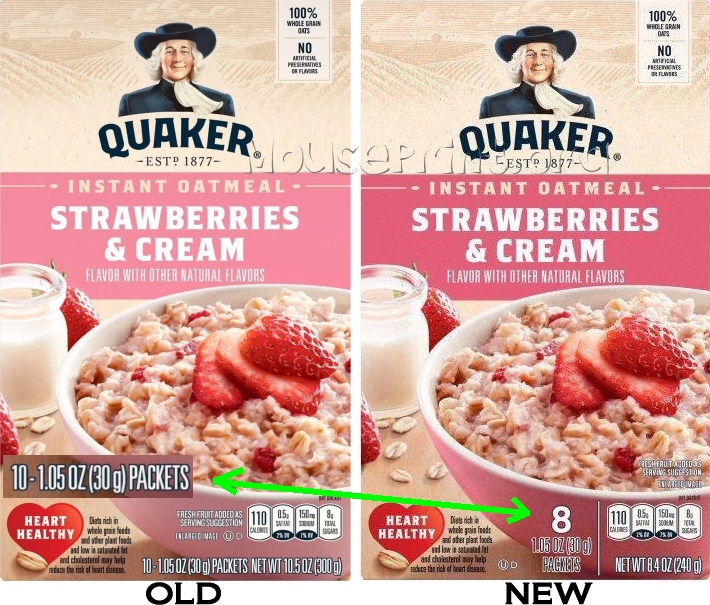
Quaker is in the process of removing twenty percent of the pouches in some of their instant oatmeal packages. Whereas you used get 10 servings in a box, now you only get eight. Looking at the boxes head-on, they are identical, but sideways, the old one is deeper. On the bright side, they made the font bigger for the number of packets in each box.
*MOUSE PRINT:
| Dial Body Wash |
|---|
If your Dial body wash bottle seems to run out more quickly, it is not your imagination. Bottles recently lost almost 25% of the contents, going from 21 ounces to only 16.
*MOUSE PRINT:

If you find a product that has been downsized, please try to take a sharp picture of both the old and the new package and submit them to Edgar (at symbol) MousePrint.org . Thanks.


