Updated every Monday!   Subscribe to free weekly newsletter.

FDA to Manufacturer: If You Make a Product with Love, Don’t Advertise It

Some federal agencies have been subjected to criticism lately that they are not policing the marketplace as much as they did in the past to protect consumers. For example, Bloomberg reported two weeks ago that the Food and Drug Administration was sending 30 percent fewer warning letters to companies about serious health and safety violations than they did every year since 2008.

Now comes news that in September, the FDA sent a warning letter to Nashoba Brook Bakery in Massachusetts alleging serious violations discovered when it spent three days inspecting their manufacturing facility.

FDA warning letter

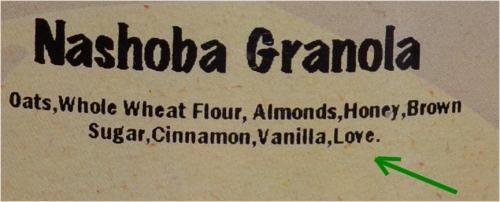
Besides citing instances of unsanitary conditions that inspectors discovered, it noted a serious labeling violation on packages of Nashoba Granola.

Nashoba granola

*MOUSE PRINT:

Love ingredient

Love ingredient

Yes, dear friends, Nashoba Brook Bakery was charged with selling misbranded products because they creatively made their granola with “love” and included that on the label.

John Gates, the CEO of the bakery, explained to Mouse Print* that while they will remedy the sanitary deficiencies cited by the FDA, “we will continue to put care, attention, passion and LOVE at the center of what we do. That’s who we are and who we want to be.”

We say the FDA should concentrate on real health and safety violations like the other findings in their letter. But, have a little heart (and common sense) when it comes to unofficial ingredients like love.

Updated every Monday!   Subscribe to free weekly newsletter.

Beefers: Where’s the Beef?

Clara Peller, the famed octogenarian who squawked “Where’s the Beef?” when confronted with skimpy burgers in Wendy’s commercials of yesteryear, would possibly have suffered a heart attack on camera had she ever seen these beef patties.

They are I&J Beefers, the top-selling frozen hamburger in South Africa.

Beefers

They look like pretty normal frozen beef patties. But there is a secret lurking on the back.

*MOUSE PRINT:

Beefers ingredients

What? They are only 36% beef? Yep! And the rest of it is mostly water and soy flour.

South Africa’s labeling regulation requires food manufacturers that emphasize a key expensive ingredient in the name or description of a product to declare the percentage of that ingredient in bold type on the front of the pack. The company says they comply with the law. While the package above clearly did not, new packages do:

Beefers percentage

I&J, the manufacturer of Beefers, also sells frozen fried fish. We can only imagine what’s under the breading.

Updated every Monday!   Subscribe to free weekly newsletter.

How Much Milk Can You Squeeze Out of an Almond?

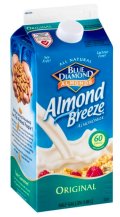
Almond BreezeElsie the cow would probably turn over in her grave if she could see all the newfangled milks on the dairy shelf, like Milkwise, which we wrote about in 2015. And there are a lot of soy milks and almond milks.

Almond Breeze is one of the big brands. It looks and sounds wholesome and nutritious. But even checking the ingredients listing doesn’t give you a full picture of what you are really buying.

*MOUSE PRINT:

Almond Breeze

It may seem like a bit of circular reasoning, but “almondmilk” is the first ingredient in almond milk. But if you are just casually reviewing the list, it appears that almonds are the second ingredient in the order of predominance after water. But that is a bit of word trickery — almonds are not really second overall. After that is a form of sugar, which might give a clue to what you are really buying. And the nutrition label offers yet another clue by noting it only has one gram of protein.

The trouble is we really don’t know how much of the product is derived from almonds. I don’t know about you, but when I squeeze an almond, I can’t get any milk out of it. 🙂 So leave it to some industrious lawyers who found out the answer.

*MOUSE PRINT:

According to a lawsuit they have filed in 2015, Blue Diamond Almond Milk only contains two-percent almonds.

So the product is really just a bunch of water and sugar with a pinch of almonds. While the flavor may be pleasing to many, the nutritional value of the product seems questionable at best.

Fast forward to late 2016 and early 2017.

A settlement of this class action was announced last month that will cost Blue Diamond $9-million. And of course, the company denies any wrongdoing and stands by its advertising. Consumers who purchased Almond Breeze are entitled to $1 back per container, for up to 10 containers, depending on whether they have proof of purchase or not. The deadline for filing a claim is April 13, 2017.

Last November, 25 members of Congress wrote to the Food and Drug Administration calling on the agency to investigate and take action against any producers of “milk” products that are not derived from cows.

And just last week, Wisconsin Senator Tammy Baldwin introduced a bill in Congress to fight back against nondairy products mislabeled as milk, yogurt or cheese.