We continue our series of products that have been downsized or as people say today, they have been subject to shrinkflation.
Note: Packages are displayed only to show numerical changes in net contents. Physical package dimensions may or may not be to scale depending on the graphic used.
| Sparkle Paper Towels |
|---|
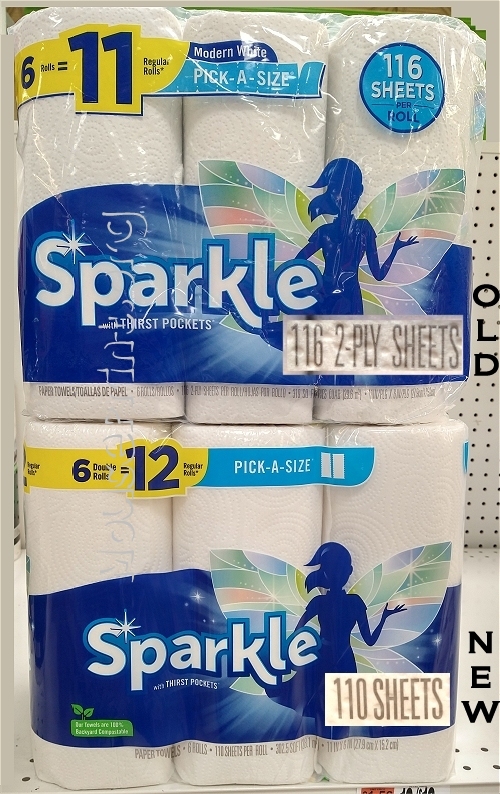
Paper towels and toilet paper are two common culprits when it comes to downsizing. This time, Sparkle paper towels lopped off six sheets from every roll, going from 116 “pick-a-size” sheets to just 110. Georgia-Pacific customer service confirms that the towels are still two-ply despite the fact that that designation is missing from the front of the package. The company’s PR folks say they lowered the suggested retail price of the new packages, but we bought both packages below at the same time, at the same store, and got no extra discount on the smaller one.
*MOUSE PRINT:
| Cocoa Pebbles |
|---|
After General Mills downsized their family size boxes of cereal last year, Post was not too far behind. We found these boxes side-by-side in a local supermarket in February. About a bowl of cereal was taken out of the new packages.
*MOUSE PRINT:

| Quaker Life Cereal |
|---|
Pete B. noticed that Quaker Life cereal not only downsized their big boxes of cereal from 24.8 ounces to 22.3, but they also changed the size name from “Giant” to “Family.” In fact, the new box is almost three-quarters of an inch taller, but half an inch less deep. Thanks to Pete for finding this change.
*MOUSE PRINT:

| Charmin Super Mega Toilet Paper |
|---|
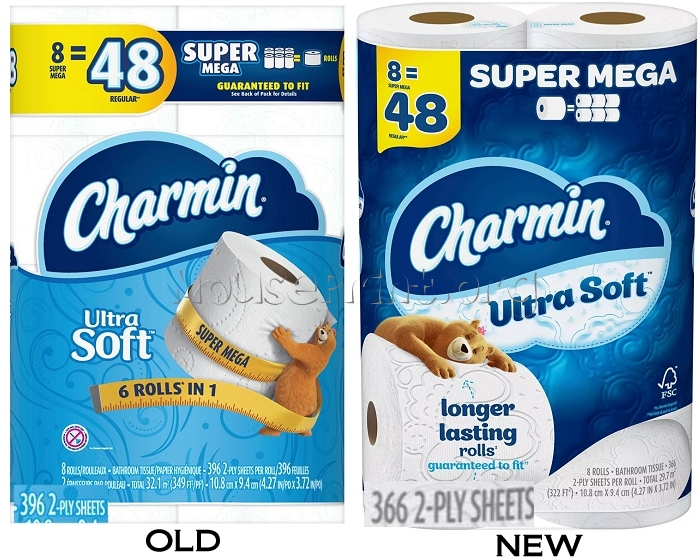
Even Charmin’s Ultra Soft “super mega” rolls are getting smaller. In February, Richard G. tipped us off that P&G reduced the size of these rolls from 396 sheets to 366. Charmin Ultra Strong in the red package is still 396 sheets, but eventually it will shrink too. Keep in mind the original single-ply Charmin of the 1960s had 650 sheets on a roll.
*MOUSE PRINT:
| Pedigree Dog Food |
|---|
Pedigree resized some of their dry dog food products including this one. While both old and new packages claim you are getting a bonus in every bag, the net change is that you are getting six pounds less. And our tipster, Brendan B. says the price stayed the same.
*MOUSE PRINT:

At least Chewy.com alerted readers to the change.
| Utz Pretzels |
|---|
Snack foods like potato chips are constantly being downsized, so as not to feel left out, Utz is now taking two ounces of pretzels out of it big jars. They are now 26 ounces instead of 28. Thanks to Tim B. for this submission.
*MOUSE PRINT:

| Dawn Dishwashing Liquid |
|---|
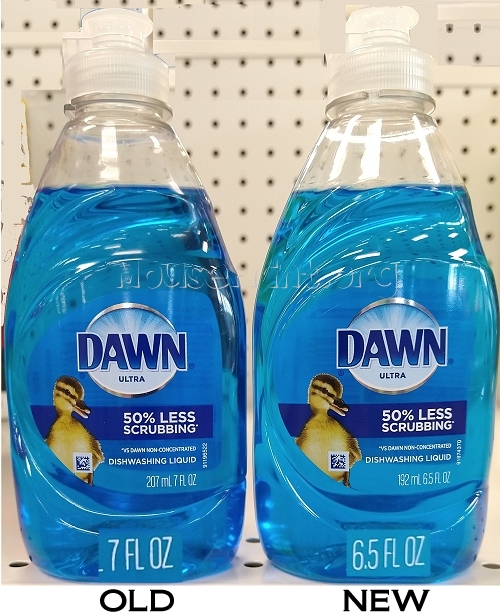
P&G periodically downsizes Dawn. This time the bottle lost half an ounce. It is down to just 6.5 ounces for the smallest size. Both bottles scanned at $1.79 at CVS in May.
*MOUSE PRINT:
| Aveeno Lotion |
|---|
New bottles of Aveeno won’t soothe your wallet. There’s 10% less moisturizing lotion in every one.
*MOUSE PRINT:

If you find an item that has downsized, please try to take a picture of the old and new one side-by-side with the net weight clearly shown. Just email submissions to edgar (at symbol) MousePrint.org . Thanks!